



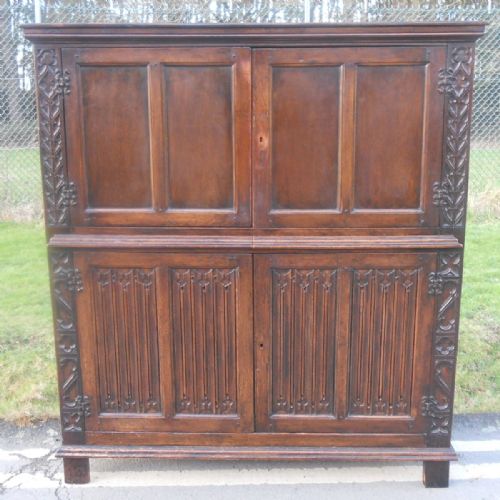
Tudor Style Cabinet
These pieces sold under the name tudor style cabinet bring substantial timber presence and period revival character into a room.
Tudor Style Cabinet
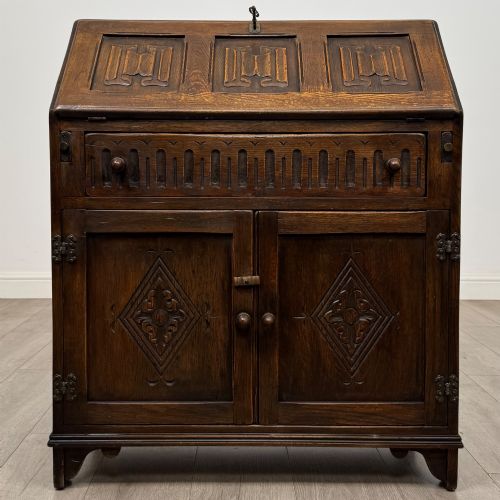
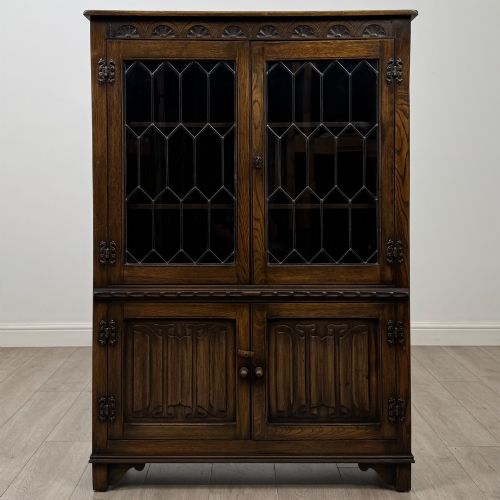
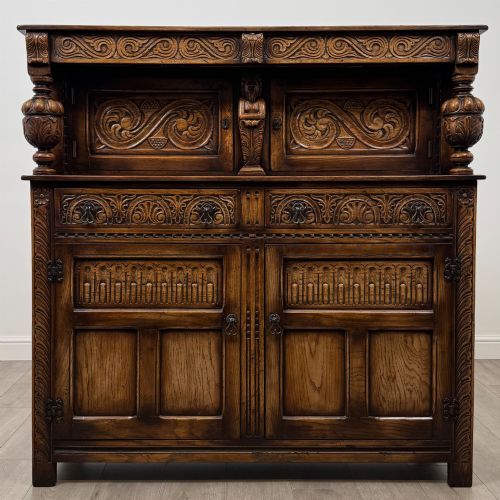
A search for tudor style cabinet directs you towards robust revival furniture, most commonly found as Edwardian oak court cupboards, linenfold pieces, and solid storage units from the early twentieth century. You will frequently encounter heavy cupboards, display cabinets, and bureaus built with explicit historical references.
The objects appearing under this description span from Edwardian interpretations to pieces bearing 16th-century style traits made around 1930. While true Tudor originals belong in museums, these revival iterations capture the substantial proportions and dark wood aesthetic desired for period interiors.
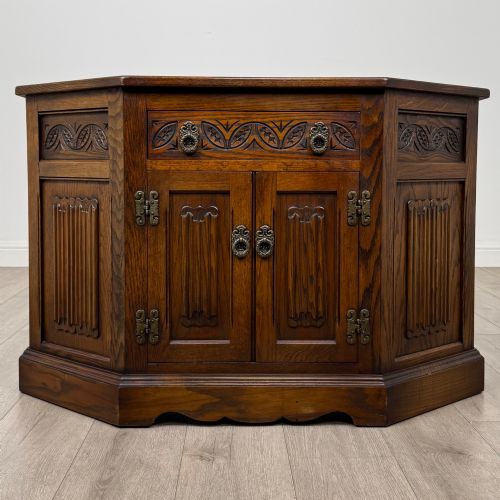
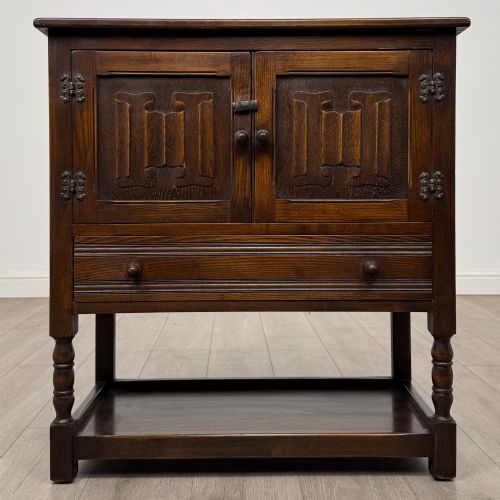
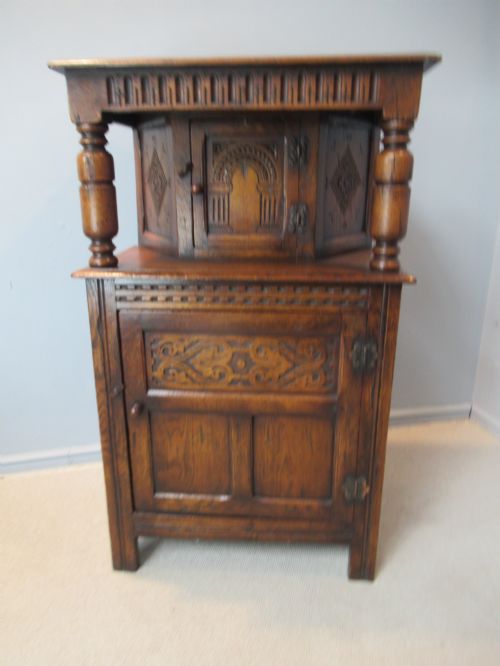
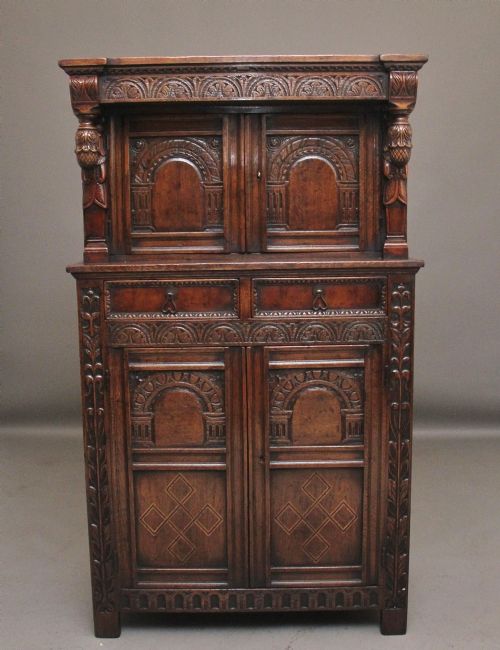
Makers working in these historical revival modes produced everything from small side cabinets to large golden oak court cupboards. The construction leans heavily on traditional forms like linenfold panelling, carved decoration, and substantial door arrangements.
Construction and materials
Oak dominates the construction of these revival pieces, frequently chosen for its grain and association with early English furniture. Workshops utilised solid oak planks alongside iron and brass hardware such as hinges and handles to complete the heavy structural framework.
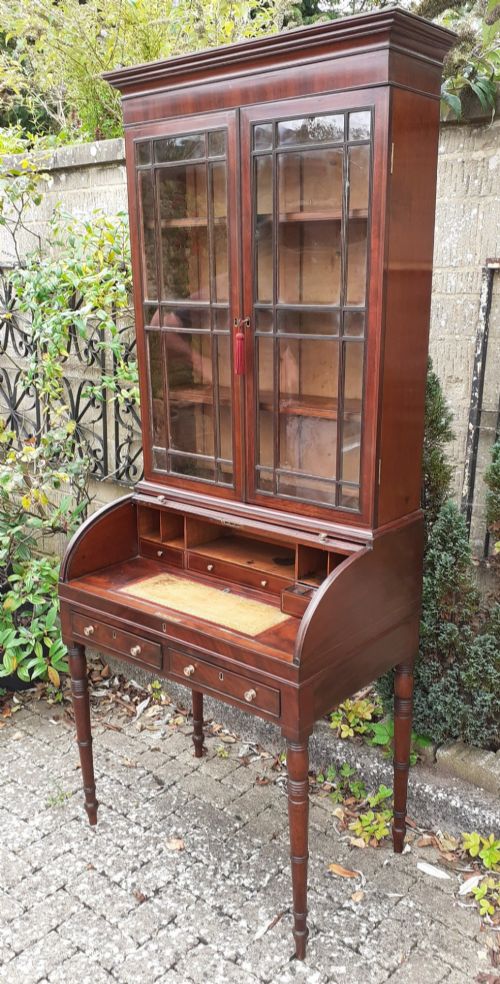
Surface ornamentation relies on traditional woodworking techniques including hand carving and linenfold panels. Secondary materials such as glass, lead, leather, and mahogany appear in specific forms like display cabinets, writing bureaus, and bookcase combinations.
If your court cupboard smells faintly of beeswax and old timber, you are sharing air with a century of domestic history.
Assessing quality in revival furniture
The distinction between standard production and superior craftsmanship rests in the depth and crispness of the carved details. Cabinets featuring deeply undercut timber work and well-executed linenfold panels demonstrate a higher level of joiner skill than those with shallow, machine-pressed surface decoration.
Material selection and structural weight dictate the overall caliber of the piece. Dense golden oak and substantial framing distinguish the better-made cupboards and court cupboards from lighter, more utilitarian storage boxes.
Tudor and Burrey
The Tudor Style Cabinet Glossary
- Linenfold
- A style of wood carving that mimics folded fabric or linen, commonly seen on Tudor and revival cabinet doors. This decorative motif adds texture to flat wooden panels.
- Court cupboard
- A heavy, partitioned sideboard or storage cupboard with enclosed upper or lower sections, typical of early English domestic interiors. These forms were frequently reproduced during the Edwardian period and the 1920s.
- Jacobean Revival
- A design movement drawing inspiration from the early 17th century, featuring dark oak, geometric mouldings, and turned legs. It shares close visual ties with Tudor revival furniture.
- Bureau bookcase
- A writing desk combined with shelving above, enclosed by doors that are often glazed with leaded glass. This form provides both workspace and display capacity.
Tudor Style Cabinet: Frequently Asked Questions
Are these cabinets genuinely from the Tudor period?
Almost all pieces found under this heading date from the Edwardian era, the 1920s, or the 1930s. They are deliberate revivals rather than authentic 16th-century survivals.
Craftsmen of the early twentieth century adopted older vernacular styles to satisfy a widespread demand for historicist interior decoration.
What is a court cupboard?
A court cupboard is a traditional enclosed storage unit, often built in sections with heavy timber framing and carved panel doors. They served as primary storage furniture in important households.
Revival versions from the 19th and 20th centuries replicate these proportions to provide deep shelving and a commanding visual presence.
How do I recognise linenfold panelling?
Linenfold is a specialised carving technique where wooden panels are shaped to resemble folded cloth. It creates a vertical, textured pattern across cabinet doors.
This detail is a hallmark of Tudor and Jacobean design that makers reused extensively on Edwardian oak cupboards and chests.
Where should I place a heavy oak cabinet?
These dense wooden pieces suit reception rooms, dining spaces, or hallways where their dark grain and substantial weight can anchor the room. Ensure the floor can support heavy solid timber furniture.
Keep them away from direct heat sources to prevent the oak panels from drying out and splitting over time.