





Tripod Floor Light
A tripod floor light brings both height and character to a room, offering adaptable illumination through traditional craftsmanship.
Tripod Floor Light
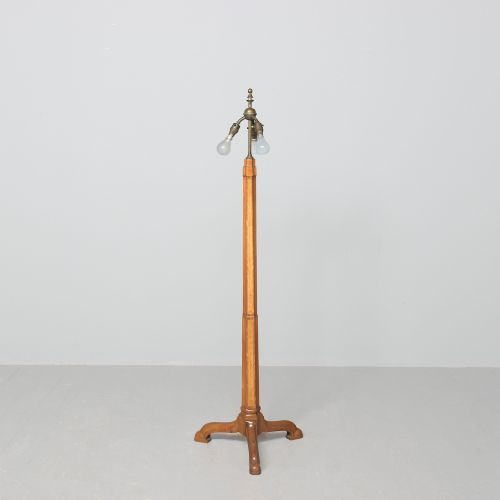
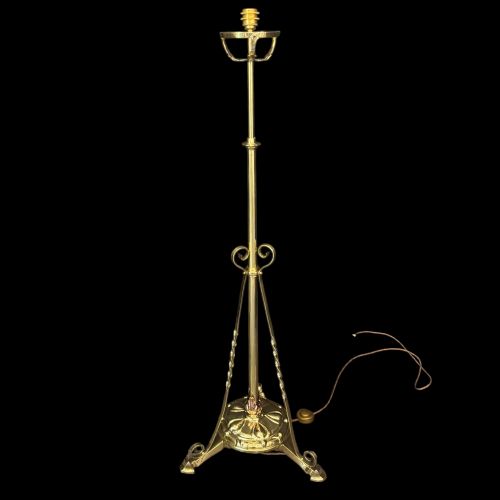
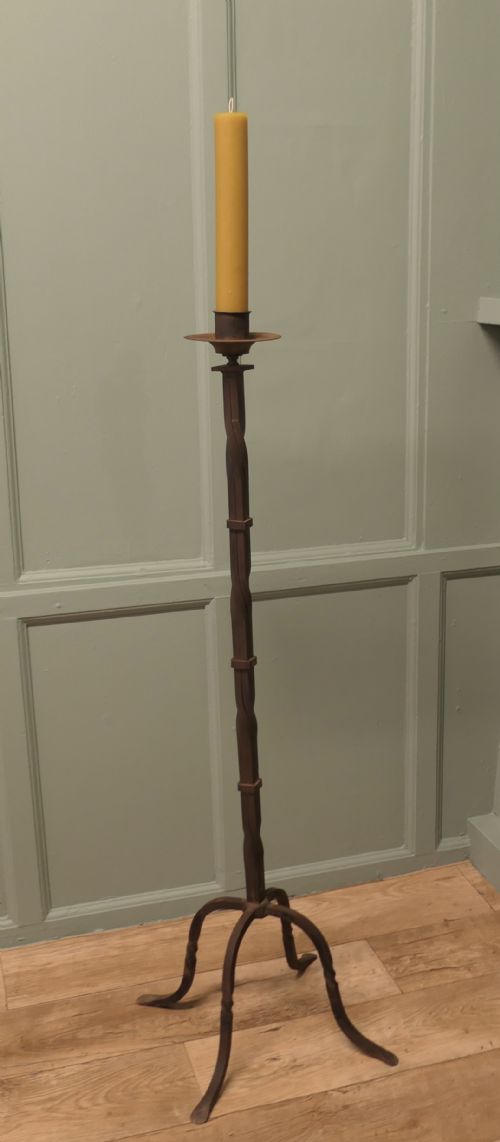
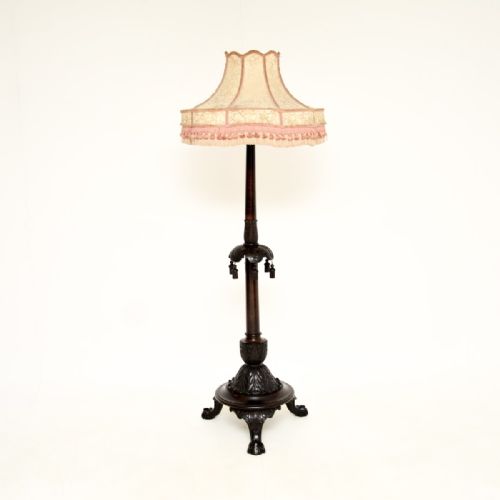
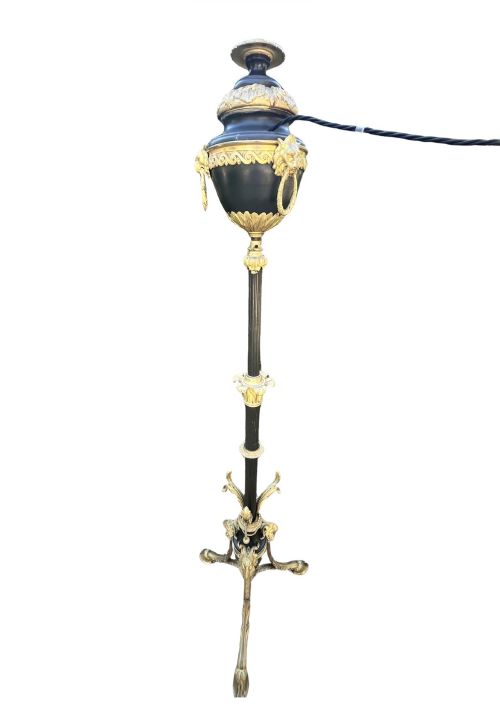
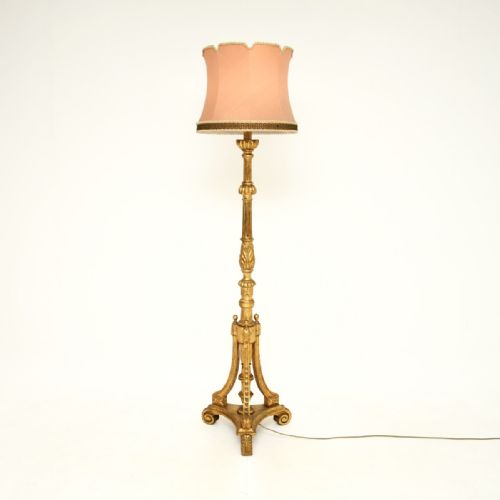
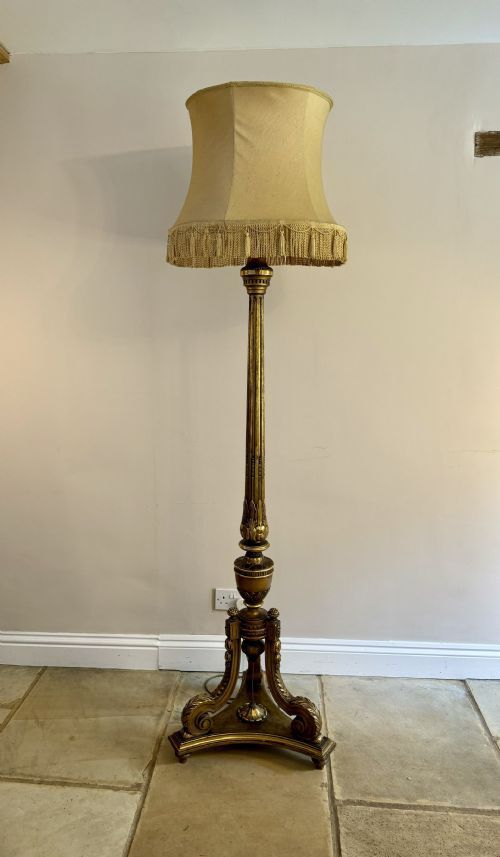
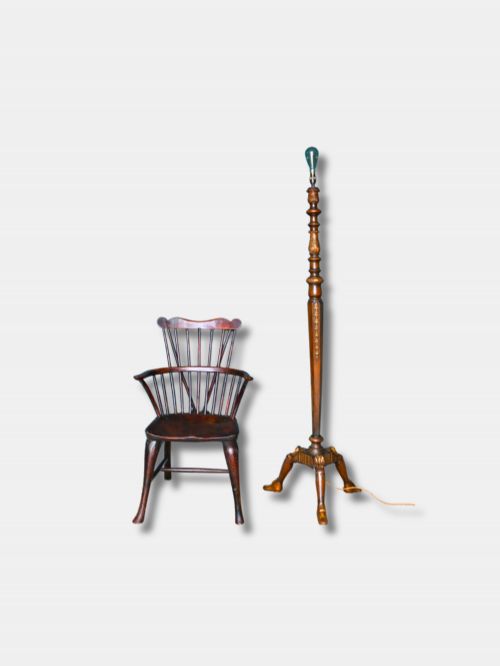
When searching for a tripod floor light, buyers encounter a diverse selection of tall lighting forms, ranging from standard lamps to converted oil lamps and floor candlesticks. These fixtures emerge from periods spanning the nineteenth century through the 1930s, including Victorian, Edwardian, and Art Nouveau eras.
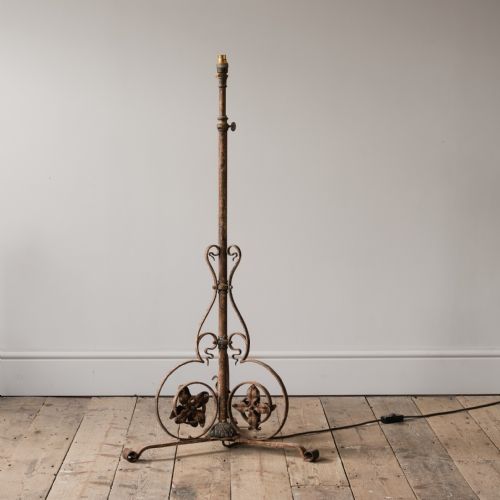
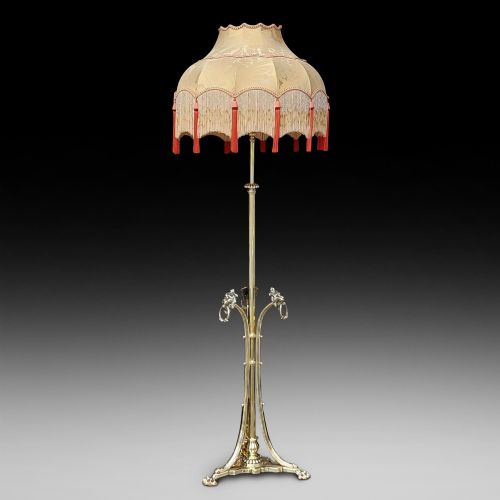
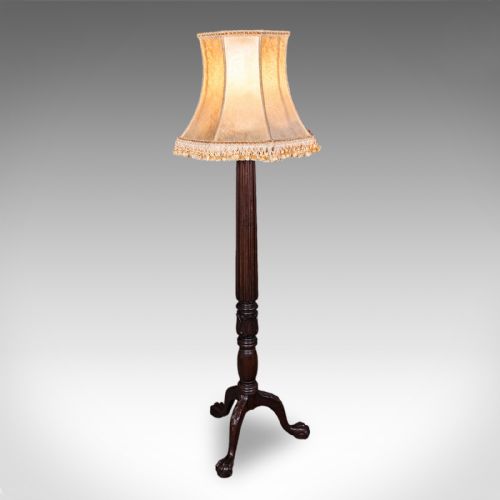
The most common examples on this page are standard lamps and floor lamps resting on three-legged supports, frequently utilising adjustable heights or telescopic stems. Materials vary considerably, taking shape in brass, carved mahogany, wrought iron, and gilt wood.
Makers and designers from these earlier decades adapted diverse regional aesthetics, producing styles that stretch from Gothic Revival and Regency to French Arts and Crafts. Buyers find both purely electrical conversions and earlier candle or oil-burning apparatuses adapted for modern use.
How they were made
Metals such as brass, copper, and wrought iron form the backbone of many pieces, often shaped by blacksmiths or cast into slender telescopic stems and sturdy tripod feet. Artisans utilised hand-carving techniques for timber versions rendered in mahogany, walnut, or gilt wood.
Surface treatments combine polished finishes with patinated metals and gilded wood, while fabric shades and glass elements complete the structural composition. Many stands integrate mechanical adjustments like screws or keys to alter the height of the light source.
Tripod Floor Light Retail Price Guide 2026
Typical asking prices for tripod floor light among the pieces listed under this phrase on Sellingantiques today, from the lower quarter to the upper quarter. They describe what is for sale here now, not the wider market.
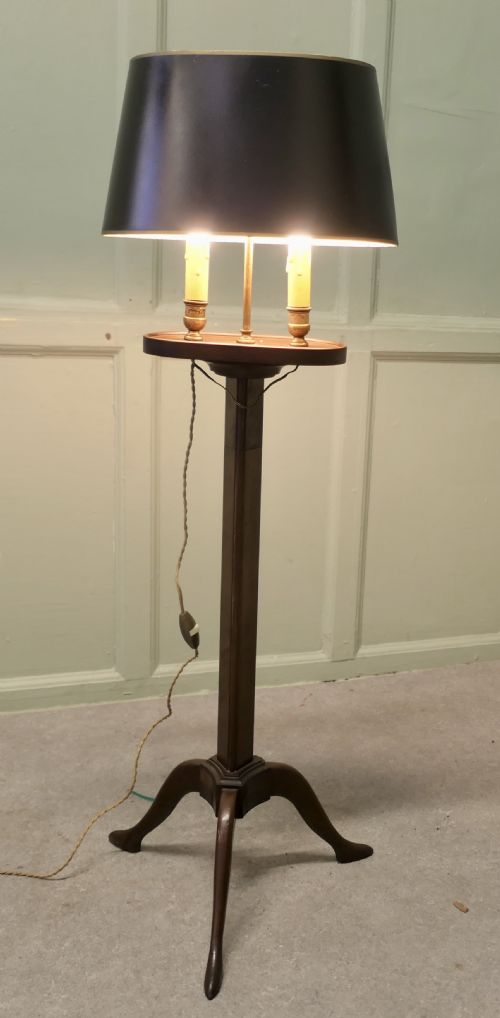
Several stands double as small tables, letting your floor light hold a book while standing at attention.
What varies in quality
The distinction between standard examples and the finest items rests on the execution of the carving, the weight of the cast metal, and the integrity of any mechanical adjustment mechanisms. Superior pieces exhibit crisp detail in gilt woodwork or balanced proportions in forged iron and brass.
Proportion and material authenticity also dictate the standing of a piece, separating straightforward utilitarian lighting from decorative works incorporating detailed brass fittings, glass stems, or refined French styling.
The Tripod Floor Light Glossary
- Telescopic standard lamp
- A floor-standing lamp featuring a sliding stem that allows the total height to be adjusted. This mechanism is frequently locked in place with a small thumbscrew.
- Standard lamp
- A traditional British term for a tall floor lamp designed to stand beside a chair or table to provide ambient or reading light.
- Bouillotte lamp
- A style of traditional French reading lamp typically featuring one or more light sources paired with a central upright shaft and an adjustable shade.
- Standard oil lamp
- A tall lighting fixture originally designed to burn oil in a reservoir before being converted later for electrical use.
- Giltwood
- Timber that has been coated with a thin layer of gold leaf or gold paint to provide a decorative surface finish.
Tripod Floor Light: Frequently Asked Questions
How do I adjust the height on these lamps?
Many older standard lamps use a telescopic mechanism secured by a side screw or key. Loosening this allows the inner shaft to slide up or down.
Care should be taken when adjusting older brass or iron stems to avoid straining historical metalwork or internal wiring.
What is the difference between a standard lamp and a floor candlestick?
A standard lamp is built specifically to hold a bulb and shade for general illumination. A floor candlestick or candle stand was originally constructed to hold wax candles.
Candle stands often feature spike-like prickets or drip pans rather than electrical hardware, though some have been adapted over time.
How do I date an antique tripod floor light?
Dating relies on observing material choices, manufacturing techniques, and stylistic markers such as Art Nouveau curves or Victorian carved mahogany motifs. The presence of hand-forged ironwork often points to nineteenth-century blacksmith production.
Stamped makers' marks, screw types, and wiring methods also provide clues regarding the decade of manufacture.