




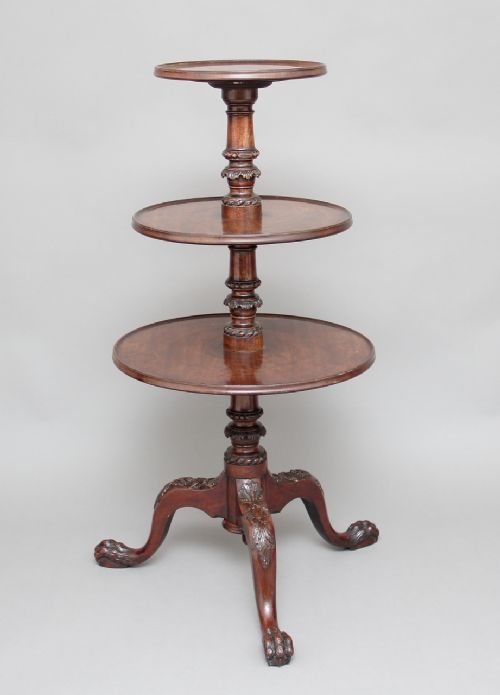


Tripod Dessert Stand
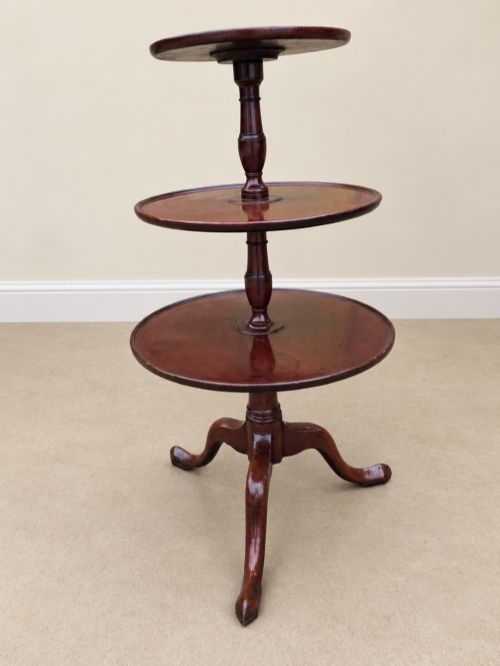
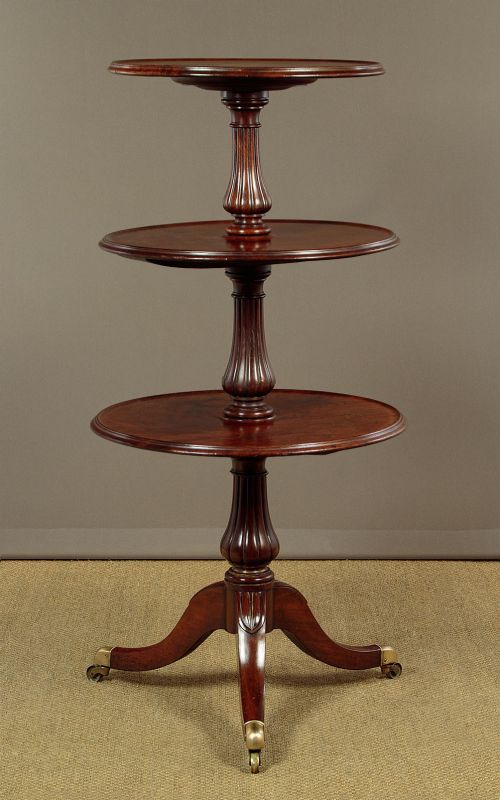
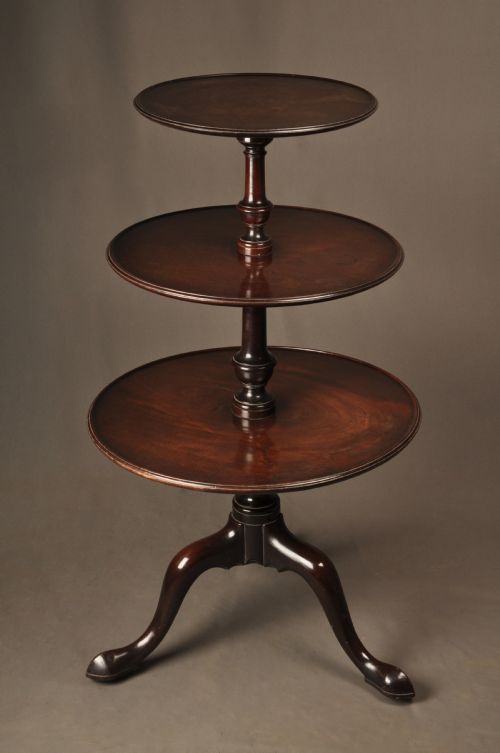
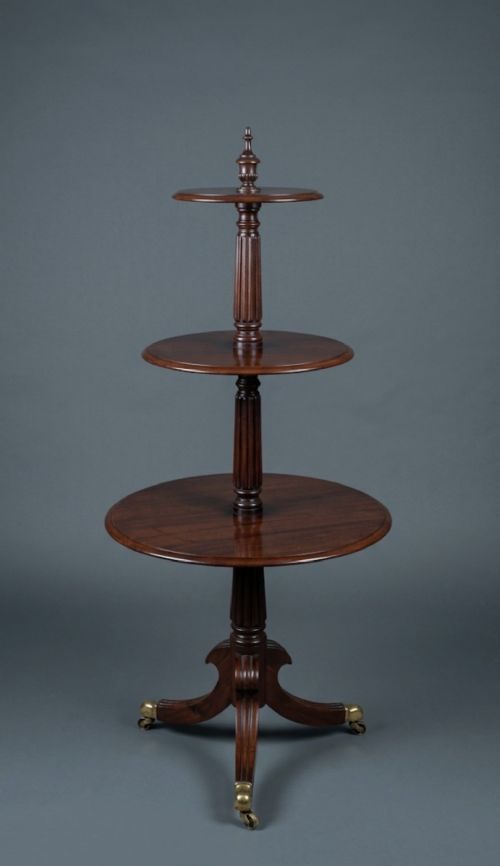
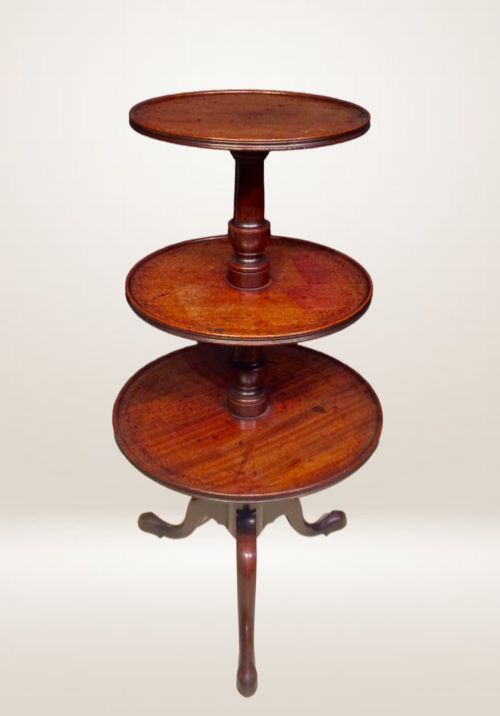
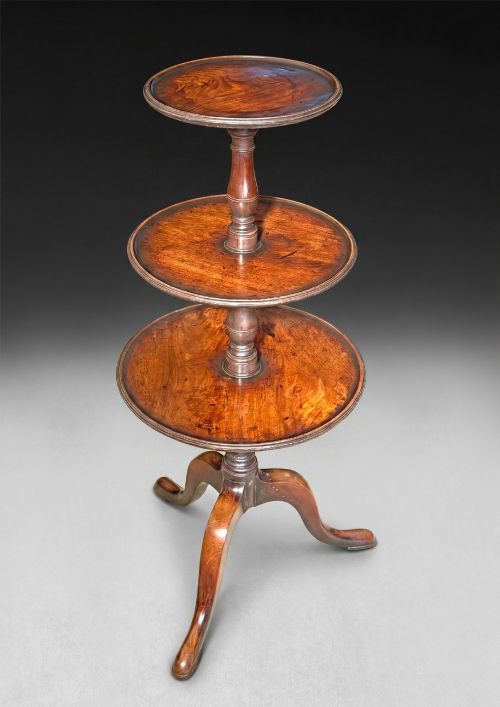
These tripod dessert stand items, known historically as dumb waiters, are tiered serving tables designed to hold food and drink without the need for servants at the table.
Tripod Dessert Stand
A tripod dessert stand, most frequently encountered here as a mahogany dumb waiter, functions as a revolving or tiered serving piece for dining rooms. The pieces span periods from the Georgian and George III eras through to the Regency, William IV, and Victorian periods, with some later twentieth century examples also appearing.
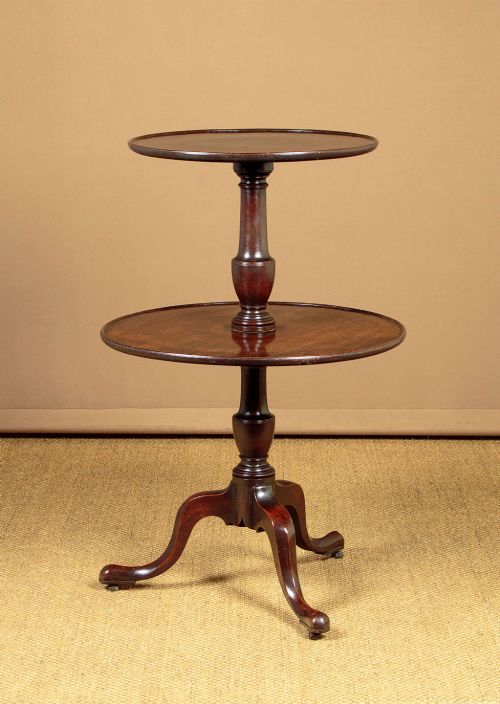
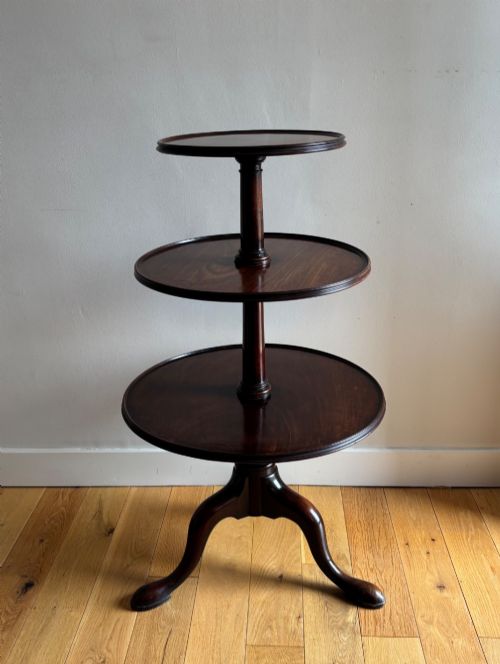
Most examples take the form of circular tiered tables, utilising two or three graduated tiers supported on a central pillar with tripod legs. Buyers will also find forms described as dumbwaiters, occasional tables, side tables, and folding serving stands.
What varies in quality
Quality rests in the choice of timber figures, such as the rich grain of mahogany and walnut, alongside the crispness of turned columns and carved tripod legs. Finer pieces demonstrate superior stability in their revolving tiered mechanisms and precise fitting of any folding joints.
The sophistication of decorative details, including subtle inlay work or galleried edges on the circular tiers, separates standard utility furniture from the finest examples produced in the manner of notable workshops.
Tripod Dessert Stand Retail Price Guide 2026
Typical asking prices for tripod dessert stand among the pieces listed under this phrase on Sellingantiques today, from the lower quarter to the upper quarter. They describe what is for sale here now, not the wider market.
Listings span multiple eras including Georgian, Regency, and Victorian periods, constructed predominantly from mahogany with occasional walnut and marquetry inlay.
Gillows
The Tripod Dessert Stand Glossary
- Dumb waiter
- A tiered freestanding serving table used during meals to hold dishes, glassware, and dessert without requiring attendants in the room.
- Tripod base
- A three-legged support structure radiating from a central pillar, commonly fitted with pad feet or castors to steady heavy tiered stands.
- Tiered table
- A piece of furniture featuring multiple horizontal surfaces stacked vertically above one another on a single central shaft.
- Marquetry inlay
- Decorative patterns formed by fitting contrasting pieces of wood veneer into a primary timber background.
- Galleried edge
- A raised wooden border surrounding the perimeter of a tabletop or tray to prevent items from sliding off.
Tripod Dessert Stand: Frequently Asked Questions
What is a tripod dessert stand used for?
These pieces served as multi-level side tables during formal dining, holding extra plates, glasses, and courses within reach of the diners.
By placing them beside the dining table, households could manage courses independently without servants present in the room.
How do I identify a Georgian dumb waiter?
Look for characteristic Georgian markers such as rich mahogany timbers, turned central pillars, and tripod bases with pad feet or brass castors.
Many period examples also feature graduated circular tiers that either revolve independently or fold downward on hinges.
Are these tables sturdy enough for daily use?
The three-legged tripod design provides a surprisingly stable footprint, though the weight distribution across multiple tiers requires sensible loading.
They function well in modern interiors as lamp tables, plant stands, or display surfaces for decorative objects.
What is the difference between two and three tiers?
Two-tier examples offer a simpler profile with a larger top surface and one lower tray, making them slightly more compact.
Three-tier variations stack additional graduated trays upwards, creating a taller silhouette designed to maximise serving capacity.