

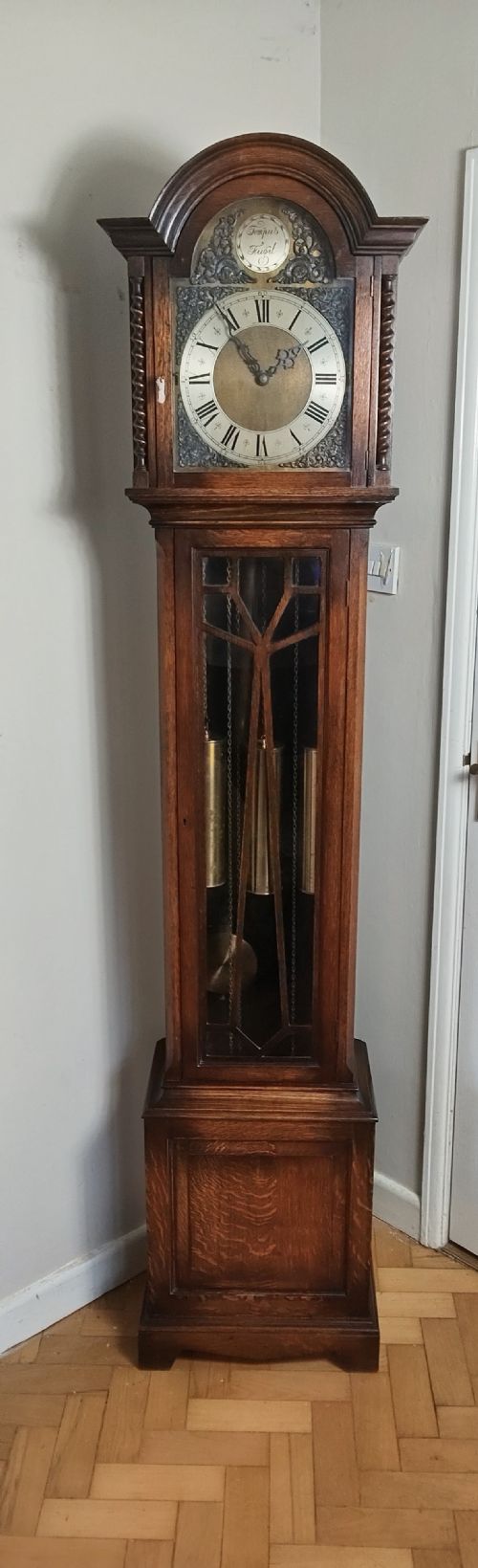


Triple Chime Clock
A triple chime clock brings musical movement into the room, marking the quarters with distinct melodies through weights, fusees or gongs.
Triple Chime Clock
When you search for a triple chime clock, you encounter mechanical timepieces designed to play multiple tunes or chime selections, most frequently represented here by oak longcase clocks like grandfathers and grandmothers alongside substantial bracket and mantel clocks.
The pieces span the Victorian, Edwardian and early twentieth century periods, showing traditional British styles as well as Gothic Revival and Jacobean Revival influences.
Floor-standing longcases dominate the selection alongside tabletop bracket clocks, housing movements capable of striking the hours and chiming on the quarters.
How they were made
Cases utilise timber such as oak, walnut, mahogany and ebonised wood, often featuring glass panels and brass fittings.
Internal mechanisms rely on brass, steel and enamel dials, driven by triple weight systems or triple fusee arrangements paired with bells or gongs.
Triple Chime Clock Retail Price Guide 2026
Typical asking prices for triple chime clock among the pieces listed under this phrase on Sellingantiques today, from the lower quarter to the upper quarter. They describe what is for sale here now, not the wider market.
Listings feature movements ranging from standard triple weight longcases to complex triple fusee bracket clocks utilising bells and gongs.
What varies in quality
The distinction between standard examples and the finest pieces lies in the complexity of the movement, such as triple fusee setups versus standard weight drives, and the richness of the musical tunes played.
Cabinetwork separates the output, with select pieces showing figured burr walnut, astragal glazed doors and pad tops, while others feature simpler oak cases.
George Wadham·Gustav Becker·Arundel Clocks·Norland of England·Camerer Cuss·Winterhalder
The Triple Chime Clock Glossary
- Triple fusee
- A movement driven by three separate fusee cones and chains or cords, maintaining equal tension on the gear train to ensure accurate timekeeping.
- Grandmother clock
- A smaller version of the traditional grandfather longcase clock, popular during the Edwardian period and later.
- Bracket clock
- A portable tabletop or shelf clock, historically designed to sit upon a wall bracket.
- Grande sonnerie
- A striking mechanism that sounds the hours and quarters automatically on every quarter hour.
- Astragal glazed
- A glass door divided into panes by small wooden strips called glazing bars or astragals.
Triple Chime Clock: Frequently Asked Questions
How do I wind a triple chime clock?
Winding requires using a key for each of the three winding holes on the dial face, which power the timekeeping, striking and chiming trains independently.
Care must be taken not to overwind the springs or weights, ensuring the mechanism continues to run smoothly without damaging the internal gears.
What tunes do these clocks play?
Many examples play Westminster chimes on the quarters, while others include multiple selections such as Whittington and St Michael tunes.
Lever controls on the dial often allow the owner to select a specific melody or silence the chimes entirely during the night.
What is the difference between a bracket clock and a longcase clock?
Bracket clocks are compact timepieces designed for placement on tables, brackets or mantelpieces, often utilising brass carrying handles and fusee movements.
Longcase clocks are floor-standing pieces driven by hanging weights, housing tall wooden trunks with glazed doors to display the swinging pendulum.