
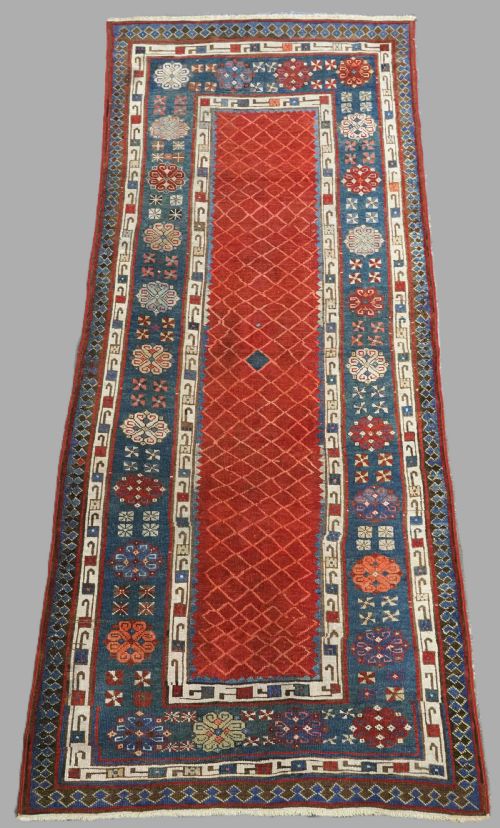
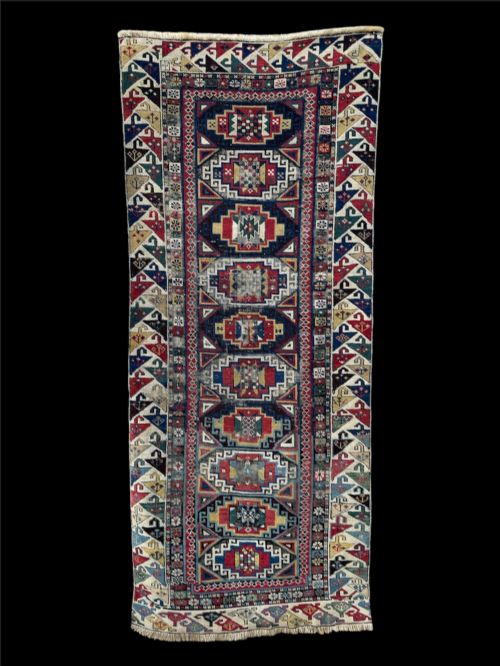
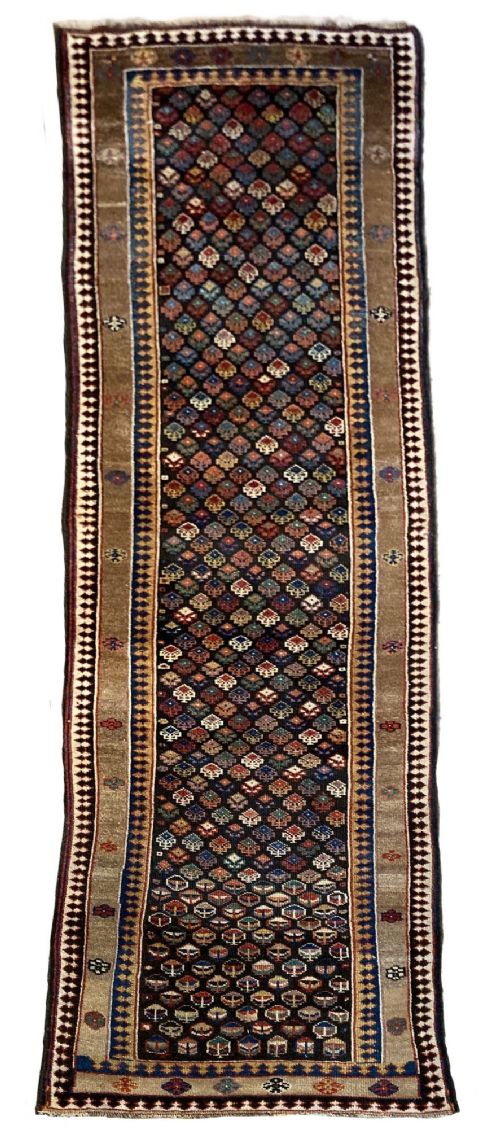


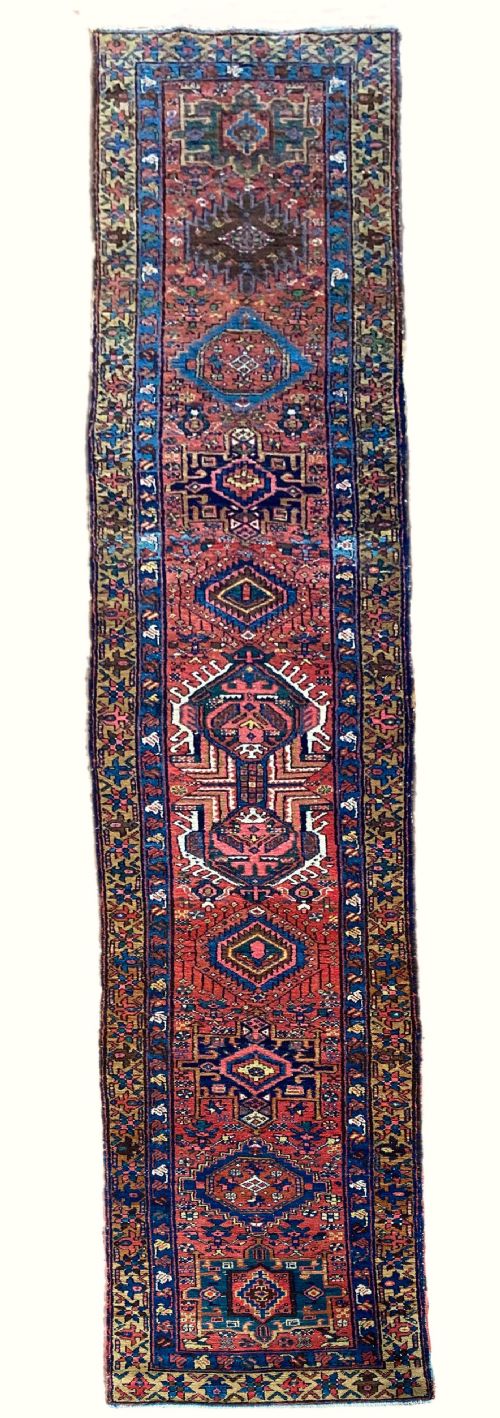


Tribal Passage Carpet
A tribal passage carpet brings distinct geometry and rich wool warmth to a long hallway or narrow floor.
Tribal Passage Carpet
When you search for a tribal passage carpet, you encounter elongated floor coverings designed specifically for corridors, hallways, and narrow spaces. These textiles encompass runner rugs and long carpets originating from various weaving traditions.
The selections available here span the nineteenth century and the early decades of the twentieth century. They include pieces attributed to Kurdish, Caucasian, and Persian origins, such as Heriz, Bidjar, Shirvan, and Talish regions.
Makers produced these long formats to span passages while displaying traditional motifs like lattice patterns, garden designs, and diagonal stripes. Their narrow proportions distinguish them from standard square or rectangular room carpets.
How they were made
Weavers constructed these long carpets using natural wool for the pile and foundation, often combined with cotton for structural stability. This pairing provided the durability necessary for high-traffic corridors and staircases.
Dyers utilised natural materials to achieve deep tones on backgrounds of ivory, olive green, and blue. Hand-knotting techniques secured the dense pile that characterises these vintage runners.
Regional attributions span Caucasian, Persian Heriz, Kurdish, and Hamadan weaving traditions within the narrow passage format.
What varies in quality
The refinement of the knot count and the precision of the geometric design separate standard pieces from finer examples. Tighter knotting allows for sharper delineation of motifs like boteh and lattice patterns.
The preservation of the original pile depth and the vibrancy of the dyed wool dictate the overall integrity of each runner. Uniform width along extended lengths also indicates careful historic production.
The Tribal Passage Carpet Glossary
- Runner
- A long, narrow carpet format intended for corridors, staircases, and passages. These pieces measure significantly longer than they are wide.
- Pile
- The vertical tufts of wool that form the usable surface of the carpet. A full pile retains its original height and density.
- Boteh
- A stylised floral or almond-shaped motif commonly found in traditional Persian and Kurdish weaving. This pattern often repeats along the central axis of the rug.
- Lattice
- An intersecting network of lines forming a grid pattern across the field of the carpet. Weavers frequently fill these geometric compartments with stylised flora.
Tribal Passage Carpet: Frequently Asked Questions
Where should I place a passage carpet?
These narrow formats suit hallways, long corridors, and wide entryways where rectangular rugs do not fit. Their elongated dimensions guide movement through domestic spaces while protecting wooden floors.
They also function effectively in narrow kitchens or alongside large beds. The dense wool construction absorbs sound and cushions footsteps in high-traffic zones.
How do I identify a Kurdish runner?
Kurdish runners typically display robust geometric designs, saturated colour palettes, and sturdy wool foundations. Weavers in these communities favoured expressive, stylised motifs rather than rigid court patterns.
Many examples feature distinct village structures with variations in width along the runner length. Examining the knotting style and wool texture helps confirm this regional origin.
What is a Caucasian long rug?
Caucasian long rugs originate from the Caucasus region and are known for crisp geometry and striking colour contrasts. They frequently incorporate diagonal stripes, star motifs, or structured lattice designs.
These pieces often utilise crisp blue or ivory grounds that make the geometric elements stand out sharply. Their distinct aesthetic differs markedly from softer curvilinear Persian styles.
How do I care for vintage wool runners?
Regular gentle vacuuming without a rotating brush roll prevents dust accumulation within the wool pile. Professional cleaning suited for vintage textiles preserves the natural lanolin in the fibres.
Using an appropriate underlay prevents slipping on hard floors and reduces friction during daily use. This simple addition extends the working life of historic foundation threads.