



Tray Candle Holder
These tray candle holders combine functional utility with period craft, offering collectors solid brass, silver plate and copper designs spanning multiple centuries.
Tray Candle Holder
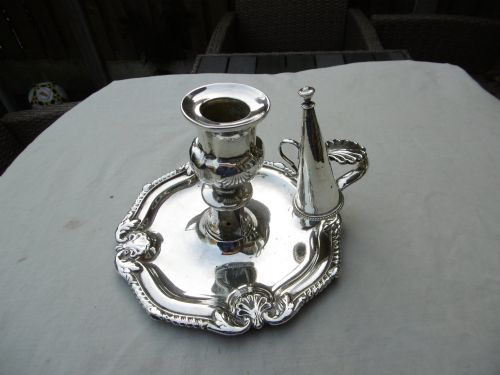
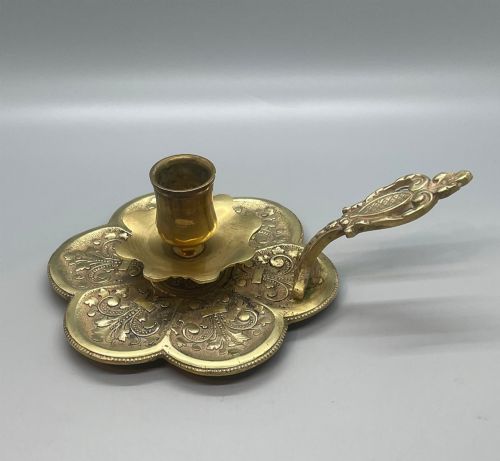
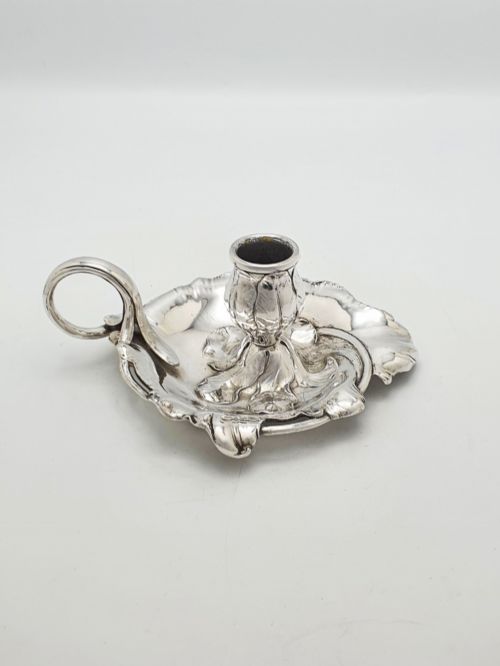
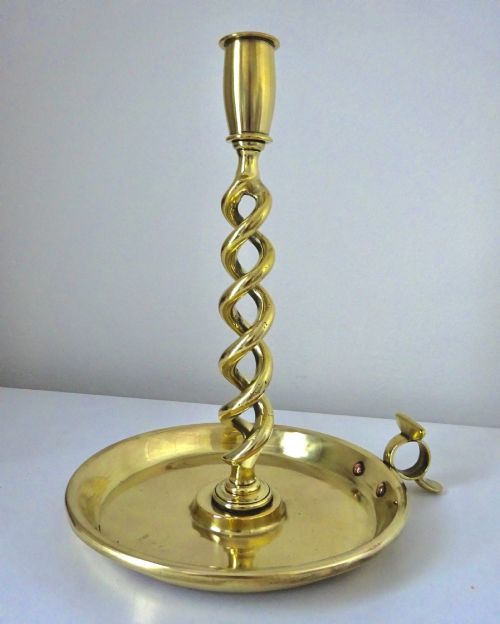
A tray candle holder, often termed a chamberstick or chamber candlestick, is designed to catch wax while carrying a light through a room. When you examine a tray candle holder, you encounter forms ranging from simple domestic brass pieces to elaborate silver plated designs with fitted handles and snuffers.
The selections span from the seventeenth century through to the mid-twentieth century, capturing shifts in domestic lighting from the Low Countries to Victorian England. You will frequently meet nineteenth-century brass and silver-plated examples alongside earlier regional brass work and decorative Arts and Crafts interpretations.
Regional variations appear in the forms, including circular brass bases, trefoil trays, and travelling olive wood Brighton buns. These items served a daily purpose in bedchambers and hallways before the arrival of gas and electric lighting.
Materials and construction
Metalworking dominates the construction of these pieces, utilising cast and spun brass, copper, and various silver plating techniques over base metals like Old Sheffield plate. Makers shaped sheet copper and brass into drip pans and fitted them with soldered or riveted handle loops and socket cups.
Alternative materials include carved stone and marble found in Grand Tour pieces, as well as turned olive wood utilised for compact travelling candlesticks. Surface finishes range from polished yellow brass and warm patinated copper to silver plate showing the underlying metal beneath worn areas.
Tray Candle Holder Retail Price Guide 2026
Typical asking prices for tray candle holder among the pieces listed under this phrase on Sellingantiques today, from the lower quarter to the upper quarter. They describe what is for sale here now, not the wider market.
Materials span heavy cast brass, copper, silver plate, turned olive wood, and marble.
Assessing quality and execution
Quality rests upon the weight of the metal, the integrity of soldered joints, and the crispness of casting details in handles and drip trays. Superior examples maintain their original push-up ejector mechanisms inside the socket and retain balanced proportions across the base and tray.
The distinction between standard domestic hardware and finer pieces lies in decorative restraint, maker attribution, and the preservation of original plating or surface patination without aggressive over-cleaning.
Benhan and Froud·Liberty and Co·WMF
The Tray Candle Holder Glossary
- Chamberstick
- A portable candlestick mounted in a shallow tray or saucer, usually equipped with a loop handle for carrying. These items were essential for navigating unlit corridors in historic homes.
- Heemskerk candlestick
- An early brass candlestick design originating in the Netherlands, characterised by a central drip pan and a bell-shaped base. Collectors prize these seventeenth and eighteenth-century examples for their heavy cast construction.
- Old Sheffield plate
- An early form of composite metal made by fusing a thin sheet of silver to a thicker copper ingot before rolling. This technique predates electroplating and exhibits a characteristic rich warmth.
- Brighton bun
- A small, compact travelling candlestick turned from wood, shaped like a bun that unscrews to store the candle inside. They were popular for packing into luggage during the nineteenth and early twentieth centuries.
- Push-up
- An internal sliding mechanism operated by a small side knob that elevates the candle stub for easy removal. This mechanical detail is often found in better-quality brass chambersticks.
Tray Candle Holder: Frequently Asked Questions
What is a tray candle holder?
A tray candle holder is a portable candlestick set within a saucer or dish, designed to catch wax drips while moving through a dark house.
The integrated handle allowed safe transport before electric lighting, making it a staple of historic bedroom furnishings.
How do I date a brass chamberstick?
Dating relies on manufacturing techniques, such as cast versus spun brass components, alongside the style of the handle and socket.
Earlier pieces from the seventeenth and eighteenth centuries tend to feature heavier, multi-component castings, while Victorian versions often incorporate stamped trays and attached handle loops.
What is the difference between a chamberstick and a candlestick?
A standard candlestick stands independently on a table or mantelpiece, whereas a chamberstick includes a wide tray base and a loop handle.
The tray was specifically engineered to protect the user's hand from hot wax and to hold a small snuffer cone.
How should I clean antique brass and silver plate?
Maintenance requires gentle dusting and occasional cleaning with non-abrasive metal creams, preserving the darker patination in recessed areas.
Over-polishing removes historical wear and diminishes the visual depth that collectors value in older metals.