




Traditional Wooden Clothes Airer
These traditional wooden clothes airer pieces are sturdy household frames built for drying laundry, offering functional charm and period character for any interior.
Traditional Wooden Clothes Airer
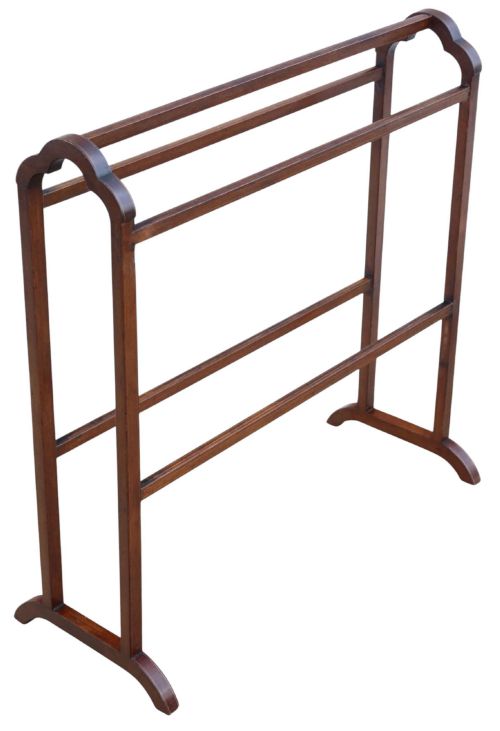
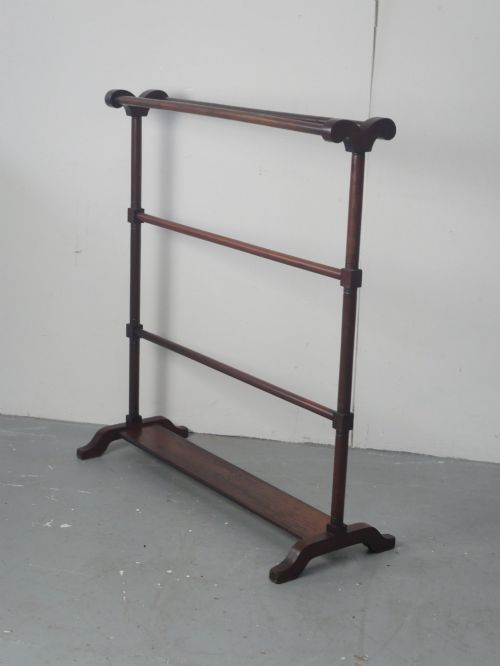
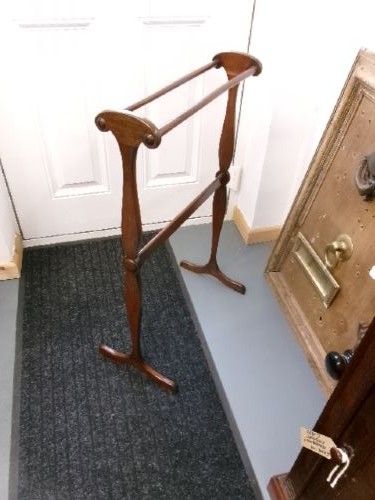
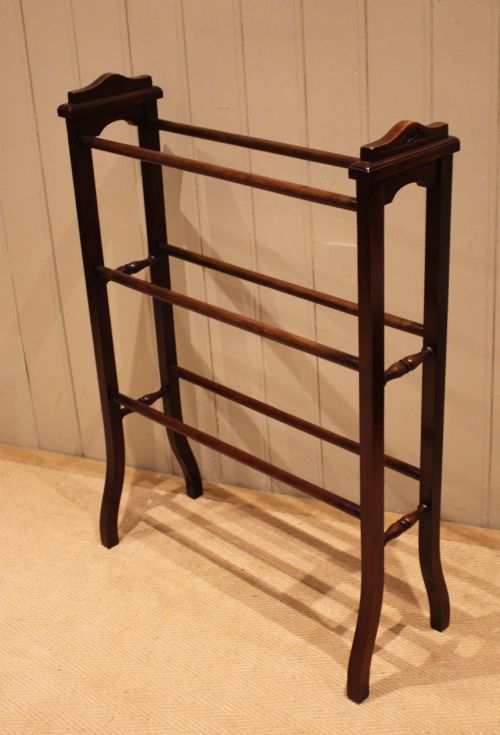
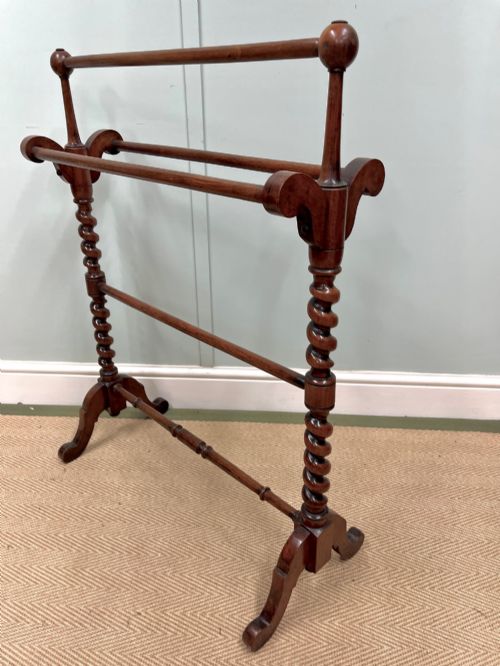
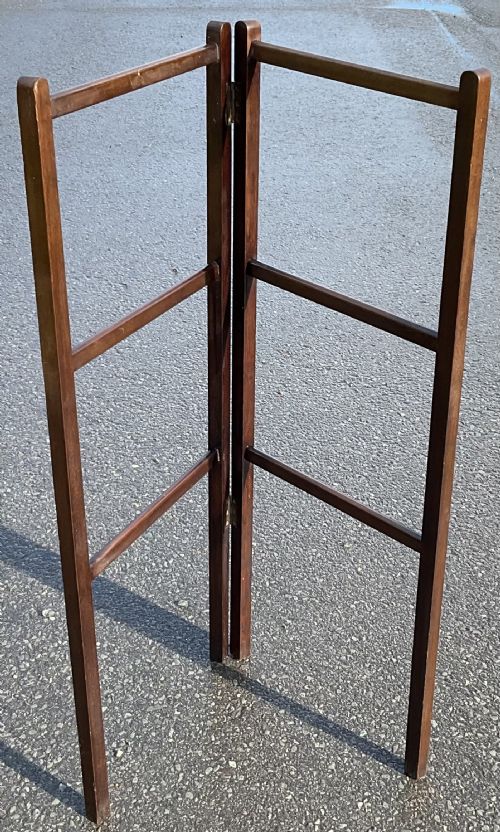
A traditional wooden clothes airer takes the form of standing towel rail stands, folding rails, and kitchen hanging racks designed for practical utility in the home. These items span periods from the nineteenth century through the Victorian and Edwardian eras, reflecting the domestic needs of their times.
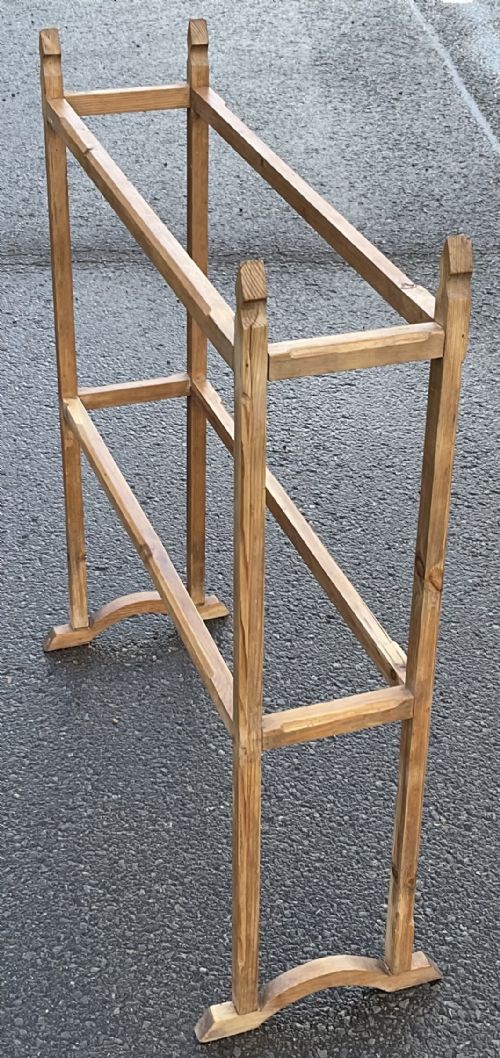
Buyers will most frequently encounter standing and folding designs constructed from mahogany and pine, alongside occasional oak kitchen hanging racks. These pieces range from simple utilitarian frames to more refined multi-bar stands featuring five rails.
The origins of these items trace back to nineteenth century English workshops, encompassing rustic farmhouse styles as well as more polished Regency and Edwardian interpretations. Each piece serves the dual purpose of a functional clothes airer and a decorative wooden furnishing.
How they were made
Makers utilised solid timbers such as mahogany, pine, and oak to construct the main frames and rails of these airers. Hardwood and ebonised wood also appear in the construction, providing robust structures capable of supporting damp textiles.
Decorative touches include satinwood inlay and boxwood details, which elevate simple utility items into polished household furnishings. Brass components and fittings are integrated into certain stands to strengthen joints and aid folding mechanisms.
Many a Victorian laundry day relied on these sturdy wooden bars to keep smalls from scorching too close to the coal fire.
What varies in quality
The choice of primary timber and secondary ornamentation dictates the standing of a piece within the range, moving from basic pine frames to finely figured mahogany models. Timber selection determines the structural weight and durability of the standing frame over decades of use.
Artisanal touches such as satinwood inlay, boxwood stringing, and ebonised finishes separate standard utility airers from finer examples produced for formal rooms. The integration of brass hardware and the precision of folding or multi-bar designs further distinguish finer items.
Gillows
The Traditional Wooden Clothes Airer Glossary
- Ebonised wood
- Timber treated with a dark stain or finish to imitate expensive ebony. This technique gained popularity during the nineteenth century for decorative contrast.
- Satinwood inlay
- Decorative wood veneer inserted into recesses of a contrasting timber base. It adds pale, golden highlights to darker woods like mahogany.
- Standing towel rail
- A freestanding wooden frame with multiple horizontal bars designed for airing laundry or hanging towels. These pieces rest directly on the floor without wall fixings.
- Kitchen hanging rack
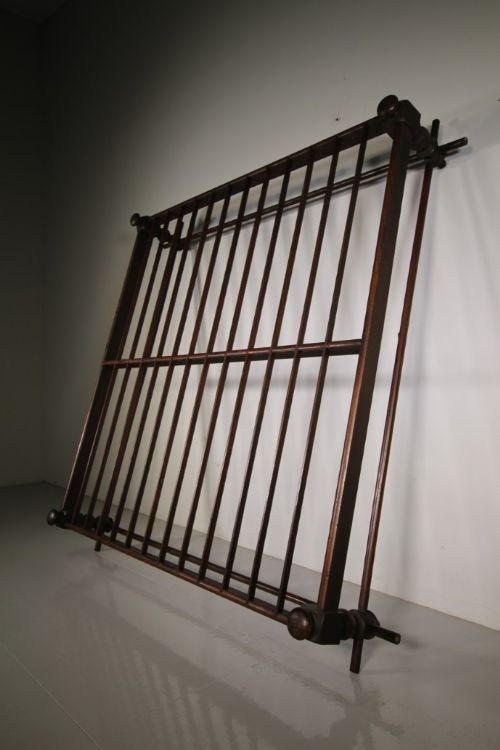
- A ceiling or wall-mounted wooden frame used originally for drying food or linens in the warmth of the kitchen. They often feature robust hooks and large wooden slats.
Traditional Wooden Clothes Airer: Frequently Asked Questions
How were traditional clothes airers used?
These frames stood near hearths or kitchen ranges to dry laundry and towels efficiently in homes before modern central heating. They were easily moved around rooms to catch the warmth.
Larger kitchen racks hung from ceilings where rising heat assisted the drying process for heavier linens and foodstuffs.
Where should I place a wooden airer?
Standing rails fit well in utility rooms, bathrooms, or bedrooms to provide practical hanging space while adding period character. Their folding designs allow them to be tucked away when floor space is needed.
Keep wooden airers away from direct, intense heat sources to prevent the timber from warping or splitting over time.
How do I date a wooden towel rail?
Dating relies on observing the timber types, construction methods, and stylistic details associated with periods like the Victorian or Edwardian eras. Mahogany and ebonised finishes often point towards the nineteenth century.
Simpler pine versions frequently date from the later nineteenth or early twentieth century, reflecting practical farmhouse utility.
What is the difference between rails and racks?
Rails are freestanding standing structures with multiple horizontal bars designed to rest on the floor for everyday laundry use. They can often fold flat when not in use.
Racks are typically fixed structures, such as kitchen hanging frames, designed to utilise overhead space in rooms with traditional hearths.