

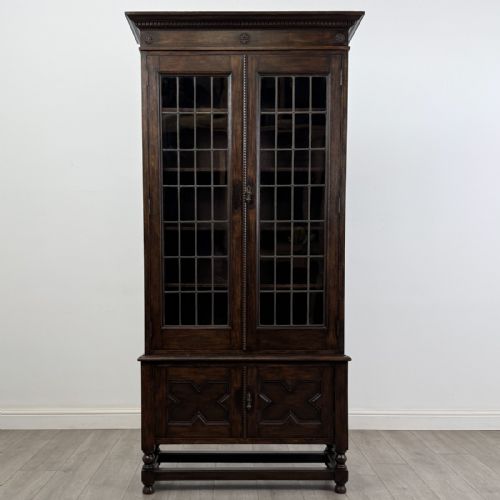
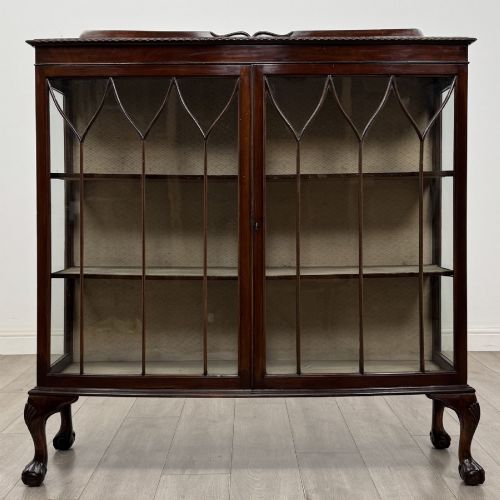
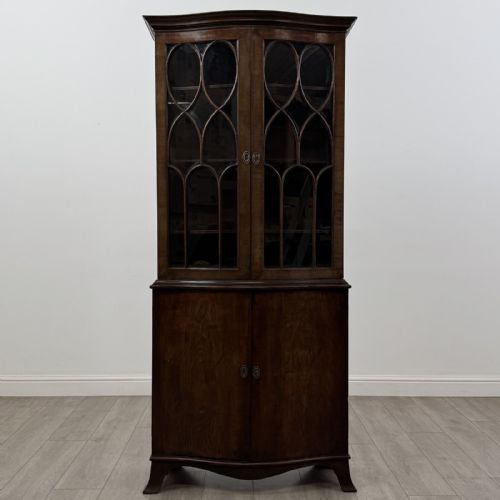
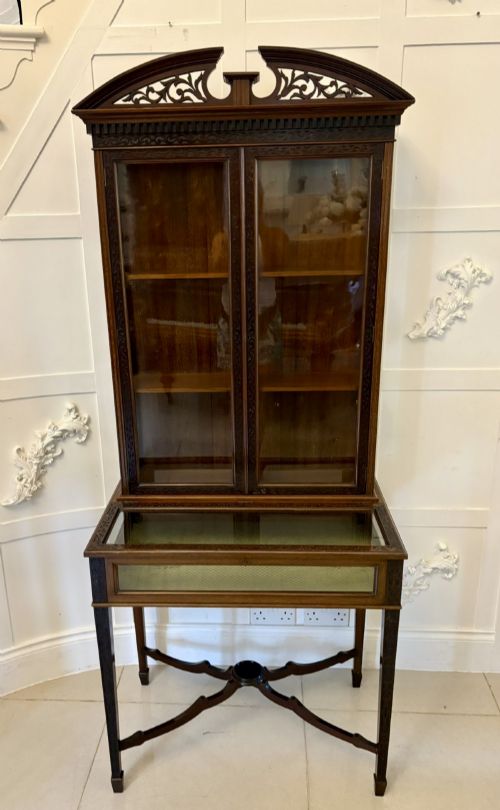
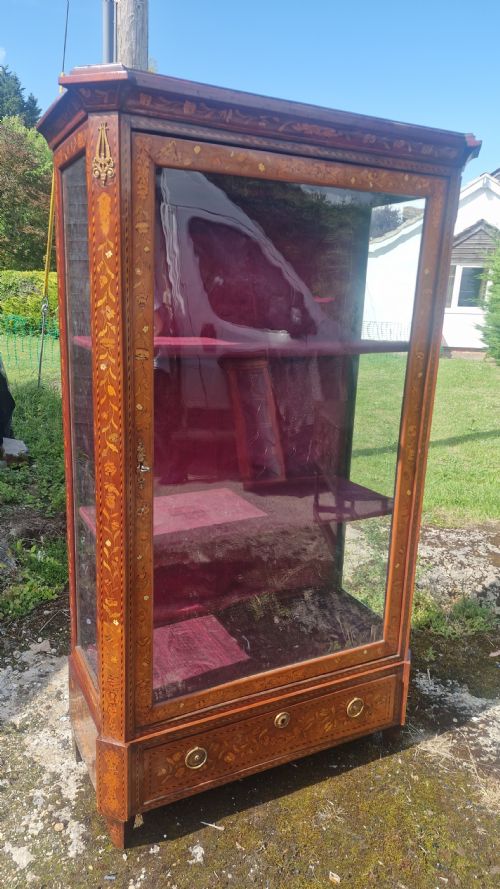


Traditional Wood Vitrine
These traditional wood vitrine cabinets protect and display prized possessions through glass panels, using centuries of cabinet-making skill to frame your collection.
Traditional Wood Vitrine
When you search for a traditional wood vitrine, you encounter timber display cabinets and glazed bookcases dating from the eighteenth century through to the twentieth century. These pieces serve to showcase china, books, and curiosities behind protective glass doors.
The versions you meet most frequently on this page include Georgian mahogany corner cabinets, Edwardian oak display cabinets, and nineteenth-century Dutch marquetry pieces. Makers adapted these forms to suit both formal drawing rooms and modest dining spaces.
Object types span display cabinets, bookcases, and corner cabinets, reflecting how varied domestic storage requirements were across different periods. Regional styles range from English bow fronts to Italian walnut and Dutch painted finishes.
How they were made
Workshops relied on primary cabinet timbers such as mahogany, oak, and walnut, often paired with secondary woods for internal construction. Skilled hands shaped veneers, carved panels, and applied decorative stringing or marquetry to plain surfaces.
Glazing required individual panes held together by timber or lead cames, whilst hardware utilised brass hinges, escutcheons, and locks. Interior shelving often sat on adjustable wooden ratchets or fixed wooden supports.
Traditional Wood Vitrine Retail Price Guide 2026
Typical asking prices for traditional wood vitrine among the pieces listed under this phrase on Sellingantiques today, from the lower quarter to the upper quarter. They describe what is for sale here now, not the wider market.
Listings feature four primary cabinet woods: mahogany, oak, walnut, and painted or veneered surfaces spanning the Georgian, Victorian, and Edwardian eras.
What varies in quality
The distinction between standard utility pieces and finer examples lies in the selection of timber grain, the precision of carved details, and the intricacy of inlay work. Finer cabinets display harmonious proportions and superior timber figuring, such as flame mahogany or detailed marquetry.
Construction methods also separate grades, seen in hand-dovetailed drawer boxes, well-fitted glazed doors, and original brass hardware rather than later replacements.
The Traditional Wood Vitrine Glossary
- Vitrine
- A glass-fronted cabinet designed for displaying fine objects or porcelain. These pieces usually feature glazed sides as well as doors to maximise light penetration.
- Marquetry
- The art of applying decorative veneer pieces in various woods to form geometric or floral patterns. This technique demands immense precision from the woodworker.
- Bow front
- A cabinet front that curves outward in a convex shape, softening the hard angles of a room. This design became popular in the Georgian period.
- Lead cames
- Slender strips of lead used to hold together smaller panes of glass in leaded windows and doors. They provide both structural support and decorative linear patterns.
- Serpentine front
- A cabinet front featuring a convex centre flanked by concave curves, creating an undulating silhouette. It represents advanced proficiency in cabinet-making.
Traditional Wood Vitrine: Frequently Asked Questions
What is a traditional wood vitrine used for?
These cabinets were historically built to display fine china, glassware, books, and valued curiosities while protecting them from household dust. The glass panels allowed owners to view their collections without opening the doors.
Today, they serve the exact same purpose in modern homes, acting as focal points for curated displays of porcelain, books, or personal collections.
How do I date a traditional wood vitrine?
Dating relies on observing the timber species, construction techniques, hardware, and prevailing stylistic influences. For instance, eighteenth-century pieces often feature solid mahogany and hand-cut dovetails, whilst Edwardian examples may show lighter oak veneers and machine-made fixings.
Looking closely at the backboards, interior linings, and glass manufacturing characteristics also helps establish the approximate decade of production.
Where should I place a corner cabinet?
Corner cabinets are specifically engineered to fit snugly into ninety-degree room angles, making them ideal for utilising dead space in dining rooms or drawing rooms. Their angled footprint draws the eye upward and turns an overlooked corner into a display area.
Ensure the room has adequate clearance for the door to swing open fully without hitting surrounding furniture.
How do I care for antique wood and glass?
Maintain timber surfaces by applying appropriate beeswax or natural polish sparingly, avoiding modern silicone-based sprays that can damage historic finishes. Keep the cabinet away from direct sunlight and strong heat sources to prevent timber warping or veneer shrinkage.
Clean the glass panels gently with a cloth and mild cleaner, taking care not to splash liquid onto the surrounding wood or lead cames.