
Traditional Turned Leg Chairs
Traditional turned leg chairs bring sturdy domestic utility and time-honoured craftsmanship straight into your daily seating.
Traditional Turned Leg Chairs
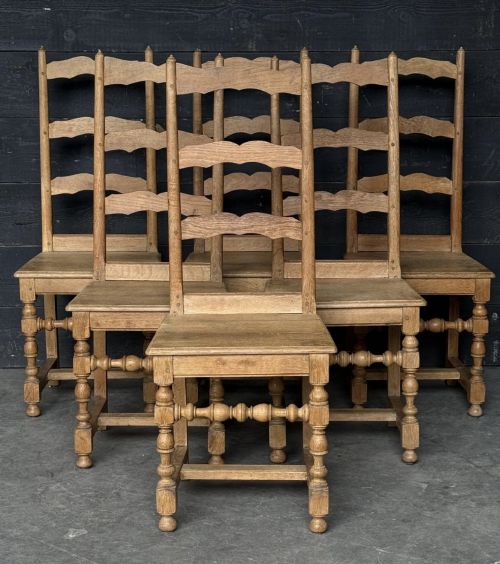
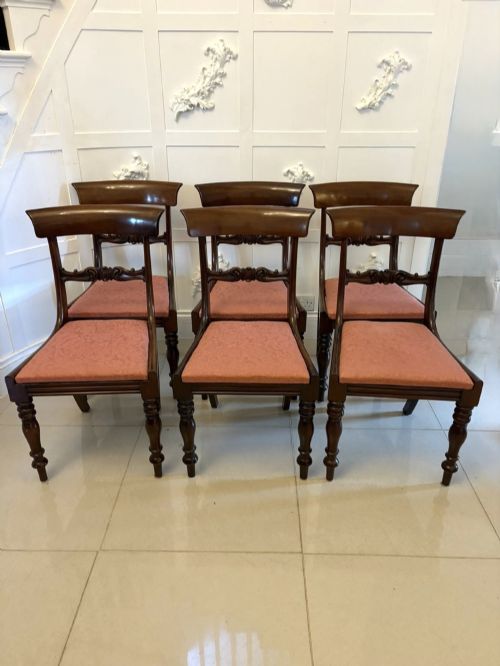
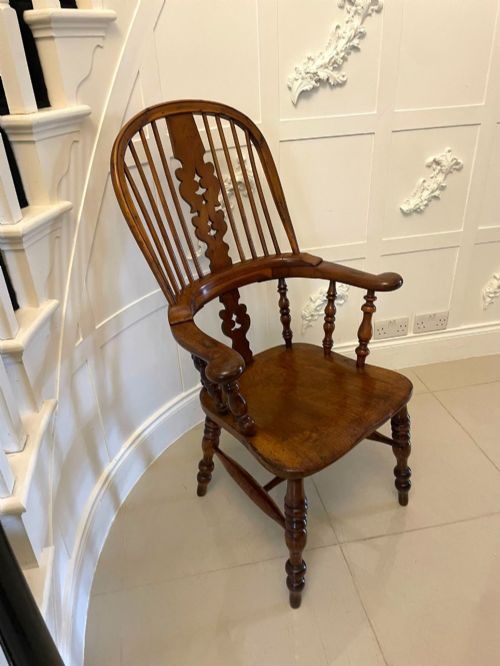
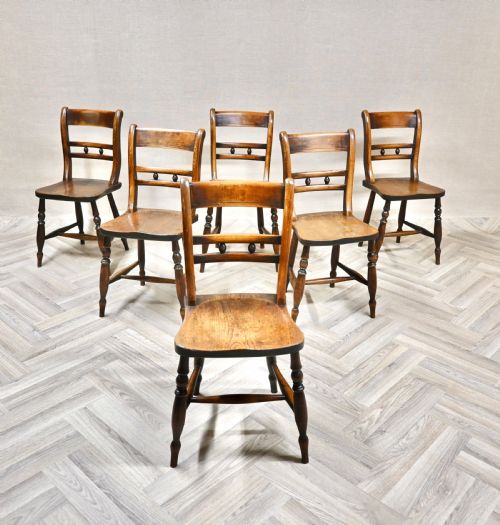
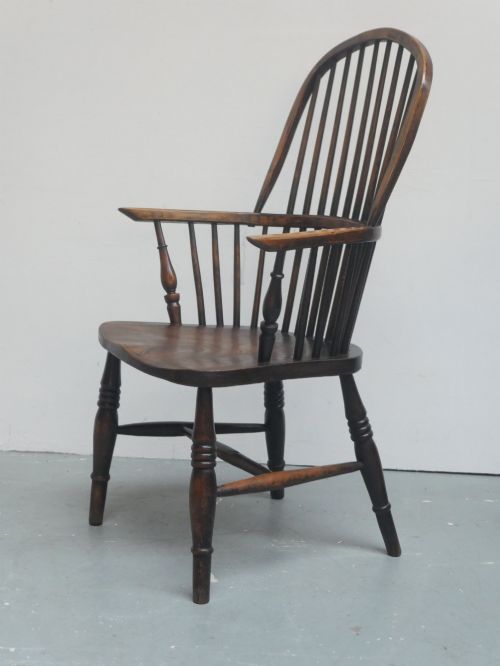
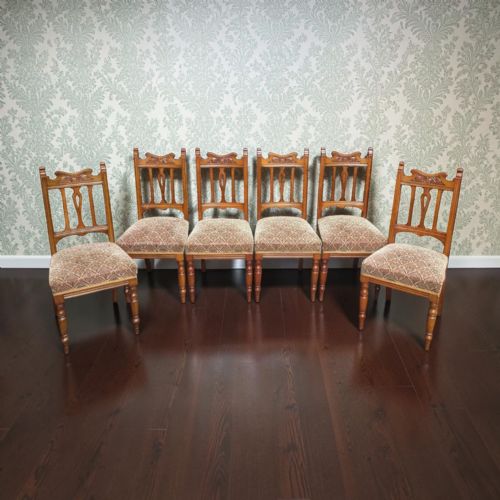
Traditional turned leg chairs encompass a wide variety of seating forms designed for daily utility, spanning periods from the eighteenth century through the Edwardian era. When searching for traditional turned leg chairs, buyers encounter diverse seating styles including Windsor armchairs, farmhouse kitchen chairs, and formal dining sets.
The evidence shows these domestic pieces emerging predominantly across the nineteenth century, including specific dates such as 1850, 1860, 1870, 1880, 1890, 1900, and 1920. Regional English country workshops and larger urban cabinet makers produced these chairs in forms ranging from low back and high back Windsors to library chairs and side chairs.
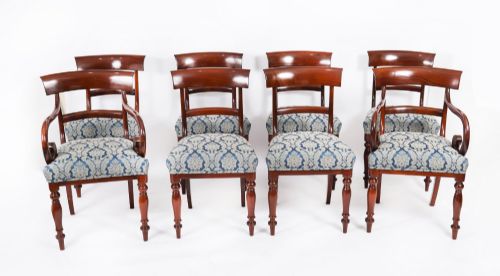
Makers utilised specific structural layouts suited to both humble country settings and formal rooms. Dining chairs, armchair pairs, and sets of six or ten frequently appear, constructed to withstand generations of domestic use.
How traditional turned leg chairs were made
Cabinet makers and bodgers relied heavily on a combination of native timbers, pairing durable hardwoods like oak, mahogany, walnut, and beech with resilient softwoods or flexible branch woods. Ash and elm appear frequently together, providing contrasting strength for seats and steam-bent spindles.
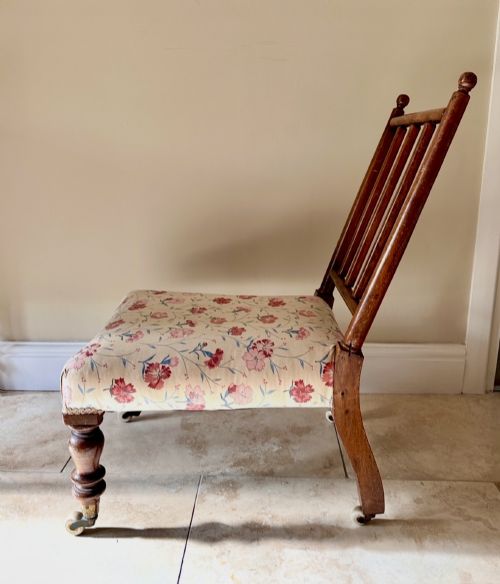
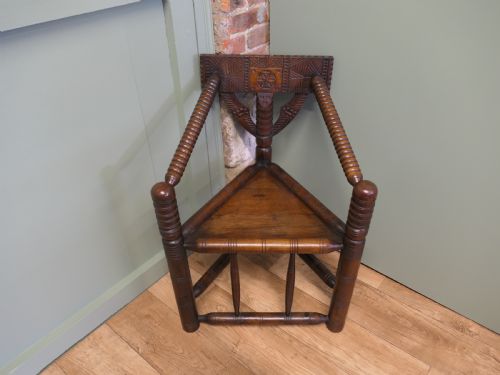
Turning lathes shaped the upright components, producing crisp bobbin, baluster, and spindle legs that supported plank or upholstered seats. Joinery techniques combined pegged mortise and tenon joints with wedged legs driven straight through thick wooden seat bottoms.
Certain nineteenth-century specimens bear the literal stamps of industrious bodgers who turned greenwood parts deep in the woods.
What varies in quality
The calibre of a traditional turned leg chair rests primarily on timber selection and the integrity of the original construction. Coarser regional variations utilise mixed secondary woods with simple stick backs, whereas finer examples display carefully matched grain patterns in solid mahogany or figured elm.
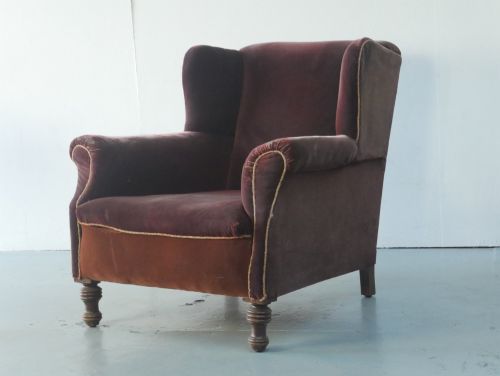
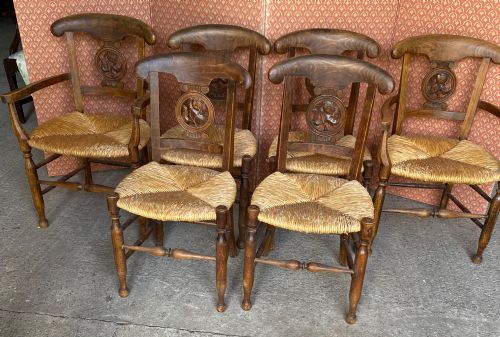
Makers who invested time in hand-carving shield backs, executing precise lathe turnings, or integrating high-grade leather and velvet upholstery achieved superior longevity and refinement. Subtle details such as crisp ropetwist carving or stamps from known cabinet makers distinguish standard utility seating from exceptional workshop production.
Gillows·J SPENCER
The Traditional Turned Leg Chairs Glossary
- Windsor
- A wooden chair featuring a saddle-moulded solid seat into which the legs and back spindles are directly joined. These vernacular forms developed deep regional variations across the English countryside.
- Turned leg
- A structural support shaped on a lathe by rotating the timber against cutting chisels. This process creates decorative cylindrical profiles such as bobbin or baluster shapes.
- Stick back
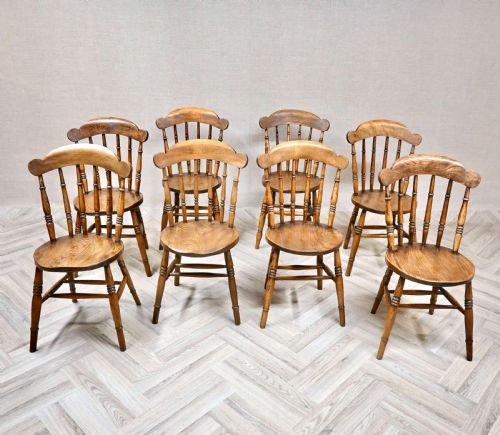
- A chair construction method utilising simple steam-bent or straight wooden spindles inserted into the seat. This lighter framework provides sturdy support without heavy upholstery.
- Smoker's bow
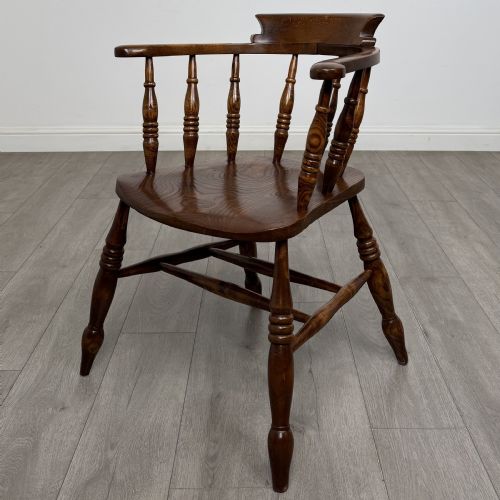
- A low wooden armchair with a continuous curved arm rail supported by turned spindles above a saddle seat. These robust seats became staples in nineteenth-century public houses and parlours.
- Patina
- The surface sheen and mellow colour developed by aged timber through decades of handling, polishing, and exposure to light. This gradual ageing process rewards careful preservation.
Traditional Turned Leg Chairs: Frequently Asked Questions
What is a traditional turned leg chair?
These are wooden chairs featuring legs shaped on a lathe, spanning styles from country Windsor armchairs to formal mahogany dining seats. They utilise native timbers like elm, ash, and oak.
Craftsmen produced them across the eighteenth, nineteenth, and early twentieth centuries for everyday domestic and institutional use.
How do I date an antique chair?
Dating relies on identifying structural characteristics, timber species, and prevailing design periods such as Victorian, Regency, or Edwardian. Regional country styles often retain earlier vernacular methods long after urban fashions shift.
Examination of the underside and joint construction reveals tool marks and assembly practices specific to certain decades.
Where were these chairs used?
They served multiple roles throughout the home, functioning as kitchen dining seats, library reading chairs, and bedroom side furniture. Sturdy construction made them suitable for both humble farmhouses and formal reception rooms.
Commercial spaces like inns and offices also utilised robust armchair variants such as smoker's bows and desk chairs.
How do I care for wooden antique chairs?
Preserving these pieces involves maintaining stable indoor humidity to prevent timber shrinkage and cracking in the dry joints. Regular gentle dusting protects the aged surface and underlying patina.
Harsh chemical cleaners should be avoided in favour of traditional beeswax polishes that nourish old hardwood.