

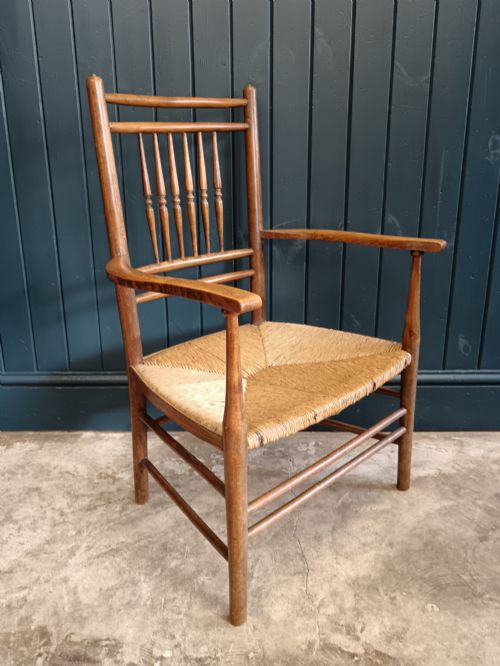


Traditional Sussex Chair
A traditional sussex chair brings honest Arts and Crafts simplicity to a room, offering lightweight rush seating and slender turned framing.
Traditional Sussex Chair
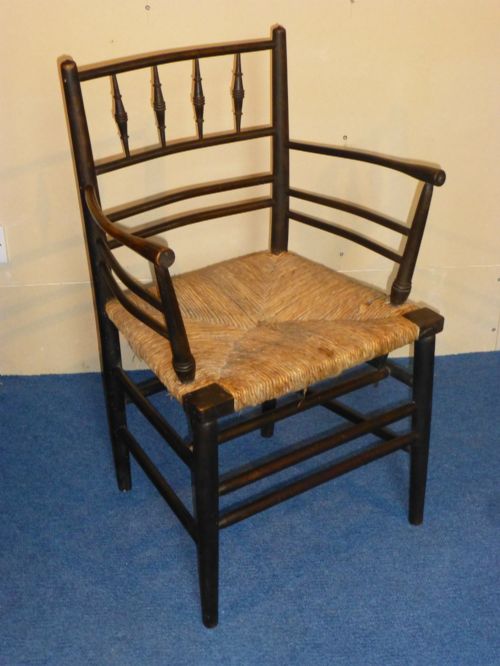
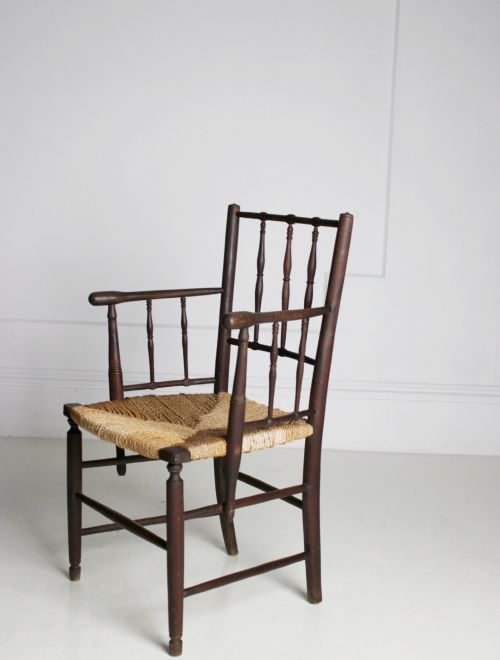
A traditional sussex chair is an enduring form originating in the nineteenth century, drawing heavily on vernacular country seating patterns. These pieces typically present a spindle back and a woven seat, embodying the utilitarian philosophy of the Arts and Crafts movement.
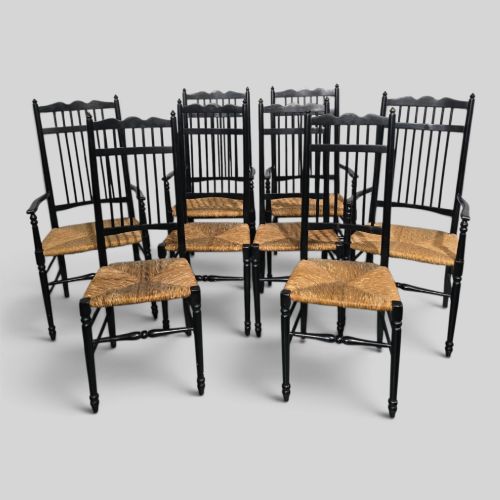
Most examples encountered here date from the nineteenth century, including specific designs associated with Morris and Co. Buyers frequently find armchairs, side chairs, and dining chairs within this grouping.
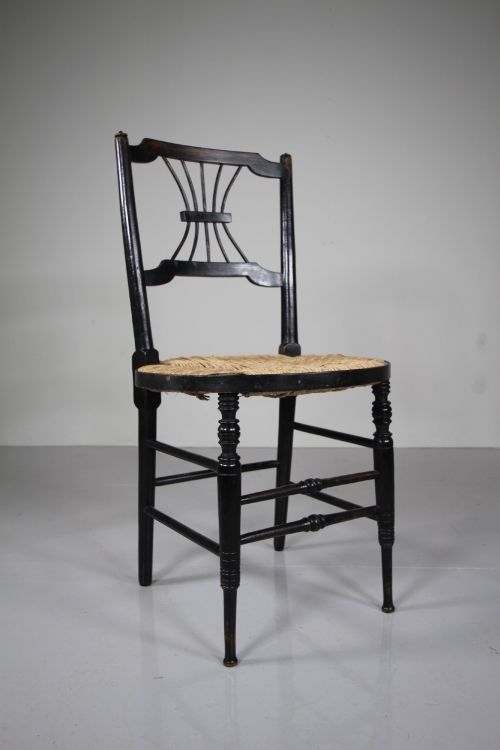
The aesthetic bridges Georgian country precedents and later Victorian production, occasionally appearing with ebonised finishes or later paint layers. Such seating suits both traditional interiors and modern spaces requiring architectural restraint.
How they were made
Construction relies upon native timbers such as beech, ash, and stained or ebonised wood, turned on a lathe to create slender structural members. Makers utilised steam bending and simple joinery to achieve strong, lightweight frames without superfluous ornamentation.
Seats are woven by hand using natural rush, threaded tightly around the seat rails to provide a resilient and supportive surface. Some versions received an ebonised surface coating or subsequent coats of paint to mimic more costly oriental imports of the period.
Traditional Sussex Chair Retail Price Guide 2026
Typical asking prices for traditional sussex chair among the pieces listed under this phrase on Sellingantiques today, from the lower quarter to the upper quarter. They describe what is for sale here now, not the wider market.
The listings span from the eighteenth century through the nineteenth century, featuring ash, beech, and ebonised wood alongside natural rush.
What varies in quality
Quality rests primarily upon the crispness of the turning and the integrity of the original timber framing. Finer examples maintain tight joinery and well-proportioned spindle backs that exhibit no excessive looseness.
The condition and tightness of the rush seating significantly influence the integrity of the piece. Original surface treatments, whether ebonised finishes or early paint layers, hold greater distinction than later stripped or heavily altered surfaces.
Morris and Co·Philip Webb·Rossetti·E W Godwin
The Traditional Sussex Chair Glossary
- Rush seat
- A seating surface woven from natural marsh grasses twisted into cords. This traditional method provides a flexible and durable platform.
- Spindle back
- A chair back constructed from a series of slender, turned vertical wooden rods. It lightens the visual weight of the frame.
- Ebonised
- Wood finished with a dark stain or polish to imitate ebony. This technique was widely favoured by Arts and Crafts designers.
- Armchair
- A seating form fitted with structural armrests integrated into the front posts. These offer greater comfort for fireside or desk use.
Traditional Sussex Chair: Frequently Asked Questions
How do I care for a rush seat?
Keep natural rush seating away from excessive moisture and direct heat sources to prevent the material from becoming brittle.
Occasional gentle dusting with a soft brush helps maintain the fibres without damaging the tight weave.
Are these chairs comfortable for daily use?
The lightweight construction and supportive rush seats make them well-suited for dining or occasional seating in living spaces.
Their upright posture encourages good posture rather than relaxed lounging.
What defines the Arts and Crafts style?
This design movement values visible craftsmanship, simple utility, and honest materials over ornate industrial decoration.
Such objects celebrate vernacular traditions and the work of individual designers and workshops.
How can I identify a nineteenth-century piece?
Look for characteristic turned beech or ash framing, often ebonised, paired with traditional hand-woven rush seating.
Construction details and historical attribution often align with the output of workshops like Morris and Co.