



Traditional Saddle Stand
A traditional saddle stand is a quintessential piece of equestrian equipment, built to support and preserve leather saddles with proper form.
Traditional Saddle Stand
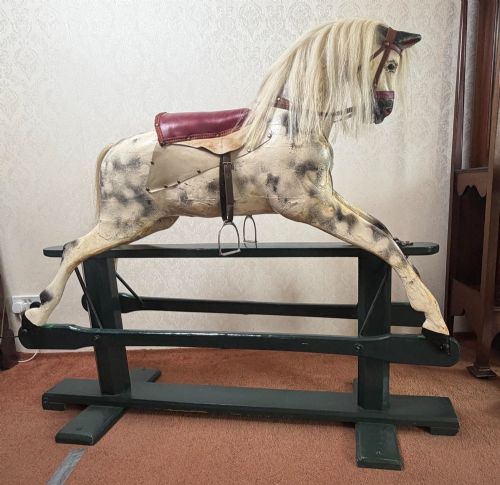
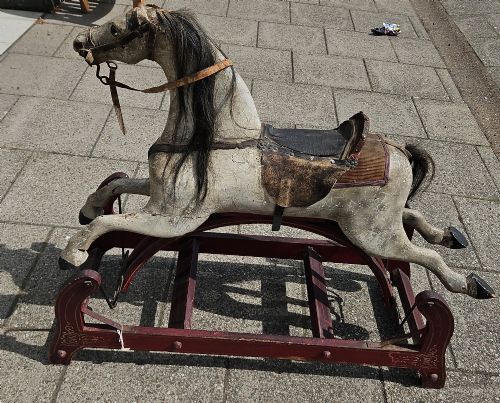
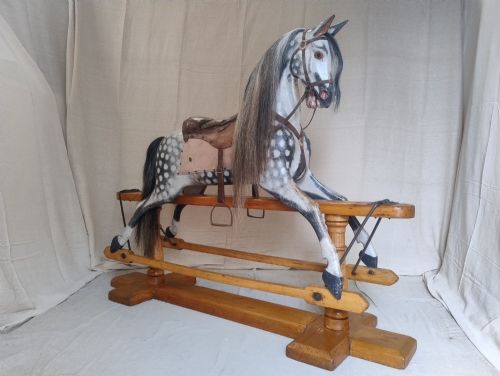
A traditional saddle stand provides the correct curved contour required to keep leather panels from warping or creasing while stored in tack rooms or stables. These practical pieces of equipment form part of everyday equestrian gear, though the search phrase connects to antique and vintage rocking horses listed here, which incorporate carved wooden bodies and integrated leather saddles.
The selections available range from late nineteenth century Victorian examples down to pieces from the nineteen-forties. Makers such as F.H. Ayres and Collinson appear among the listed items, showing the enduring British tradition of rocking horse manufacture alongside pine and carved wood constructions.
Materials and construction methods
Construction relies primarily on carved wood, pine, and iron, utilising traditional joinery and shaping techniques to support the weight of horsehair stuffing and leather upholstery. Artisans shaped blocks of timber to create the substantial bodies seen in Victorian and Edwardian examples.
Metal components such as iron and steel provide structural reinforcement for the rocking mechanisms and stands, while horsehair provides traditional internal stuffing for the padded saddles and bodies.
Traditional Saddle Stand Retail Price Guide 2026
Typical asking prices for traditional saddle stand among the pieces listed under this phrase on Sellingantiques today, from the lower quarter to the upper quarter. They describe what is for sale here now, not the wider market.
Every carved rocking horse patiently holds its ground, waiting for a rider who grew up decades ago.
Assessing quality and craftsmanship
Quality rests upon the sculptural depth of the carved wood and the finesse of the painted or dappled surface finish. Finer examples display meticulous attention to anatomical detail in the horse's head and body.
The integrity of the original wooden rockers and the retention of authentic leather and horsehair materials distinguish superior pieces from later or heavily restored alternatives.
F H Ayres·Collinson
The Traditional Saddle Stand Glossary
- Dappled
- Painted spot markings applied to the body of a rocking horse to simulate a grey coat colour. This finish is typical of traditional Victorian and Edwardian workshop styles.
- Carved wood
- Timber shaped by cutting and chiselling rather than moulding. It forms the solid core of antique rocking horses.
- Horsehair
- Natural hair used historically as traditional stuffing material for upholstery and animal figures. It provides resilient padding.
- Rocker
- The curved wooden members upon which the horse mounts and sways. Original rockers indicate untouched provenance.
Traditional Saddle Stand: Frequently Asked Questions
What is a traditional saddle stand?
A traditional saddle stand is a dedicated piece of equipment designed to hold a saddle securely without damaging its shape or panels.
In the context of these listings, the phrase points towards antique rocking horses that incorporate traditional saddles and leatherwork as part of their construction.
How old are these pieces?
The pieces span from the late nineteenth century through the Victorian and Edwardian eras up to the nineteen-forties.
Earlier examples from the eighteen-eighties and eighteen-nineties feature hand-carved wooden bodies and traditional painted finishes.
What materials were used?
Construction relies heavily on carved wood and pine for the main body and stand, often combined with iron and steel for mechanical stability.
Surface details incorporate traditional paint, while upholstery utilises genuine leather and horsehair stuffing.
Who made these items?
Notable makers represented in the field include established nineteenth and twentieth-century firms such as F.H. Ayres and Collinson.
These makers produced large wooden rocking horses that remain sought after by collectors of traditional British woodwork.