



Traditional Refectory Desk
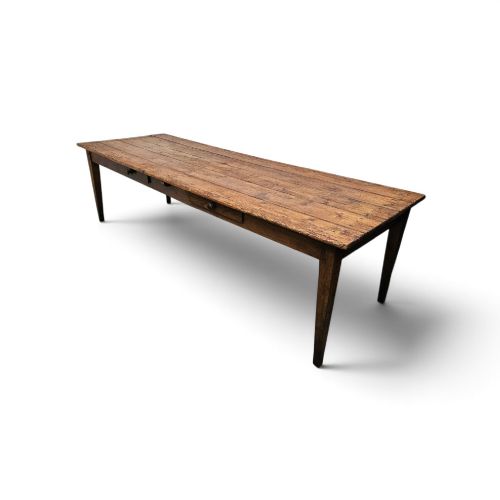
A traditional refectory desk brings solid timber construction and historic character directly into a working room or dining space.
Traditional Refectory Desk
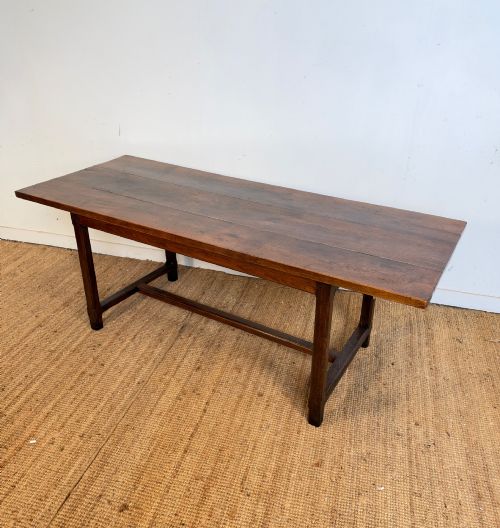
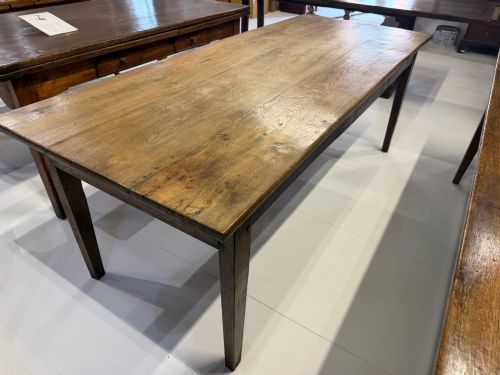
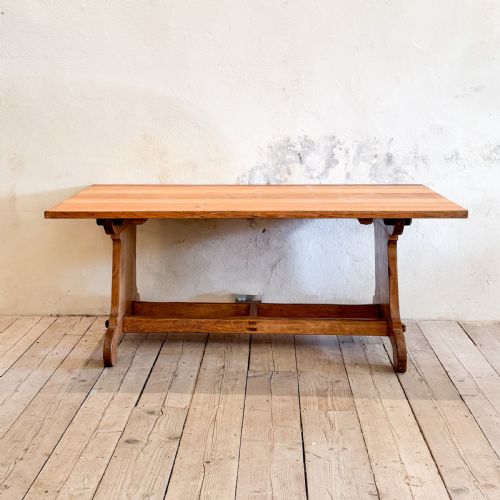
When you search for a traditional refectory desk, you are looking at sturdy wooden tables derived from long dining boards, adapted for writing, serving or communal work. The pieces available here span the eighteenth century, the nineteenth century, and early twentieth century revivals.
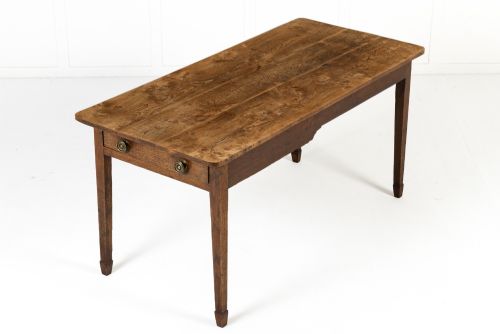
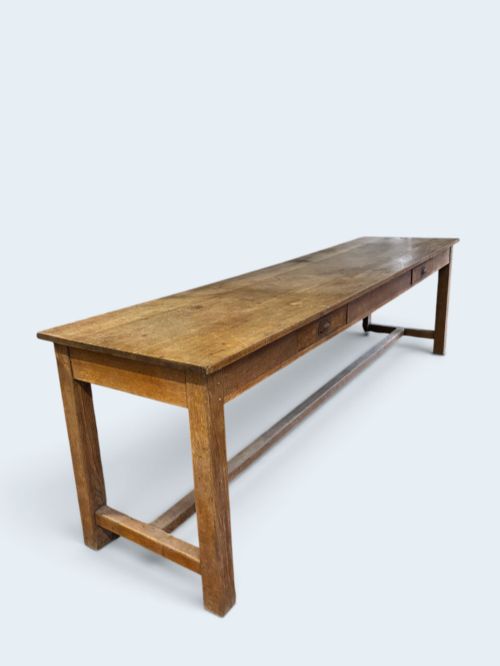
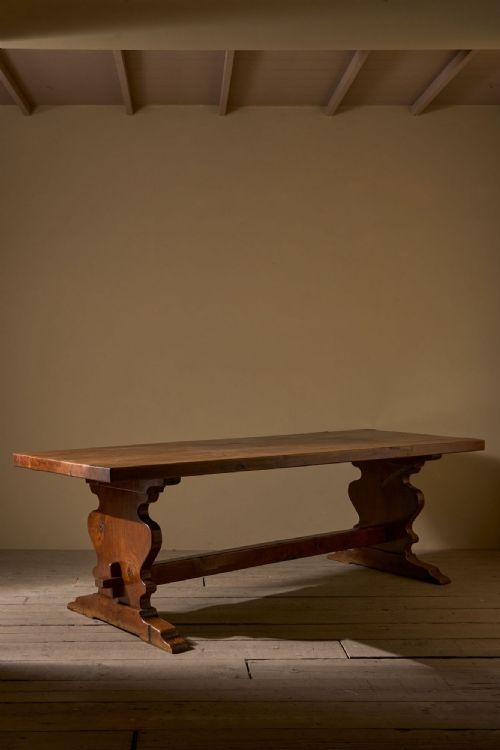
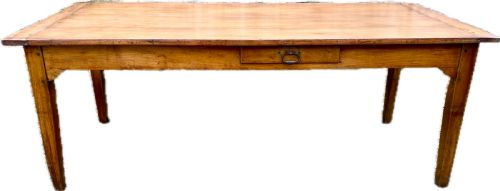
The forms you will most frequently meet on this page include farmhouse tables, serving tables, and trestle tables designed with substantial tops and supportive underframes. These examples frequently incorporate practical additions such as working drawers set into the frieze.
Makers drew on various regional vernaculars, producing items classified under styles ranging from rustic farmhouse and French country to Gothic revival and Renaissance revival. Oak dominates the selection, accompanied by secondary timbers including elm, beech, and cherry.
Materials and construction methods
Makers constructed these pieces using solid hardwoods like oak and elm, often pairing them with beech or cherry for structural components. Joinery relied on traditional timber framing methods to ensure long-term stability across heavy table tops.
Iron and brass hardware, including handles and structural braces, appear on selected examples to reinforce joints or operate drawers. Surface finishes range from natural bleached timber to waxed and polished patinas developed over centuries of use.
Traditional Refectory Desk Retail Price Guide 2026
Typical asking prices for traditional refectory desk among the pieces listed under this phrase on Sellingantiques today, from the lower quarter to the upper quarter. They describe what is for sale here now, not the wider market.
Listings on this site span the eighteenth and nineteenth centuries, with notable pieces dated across the nineteen-tens and nineteen-twenties.
Assessing quality in construction and material
The distinction between ordinary and superior pieces rests upon the selection of timber and the integrity of the original joinery. Solid oak examples with thick, stable top boards and minimal modern intervention sit at the higher end of the range.
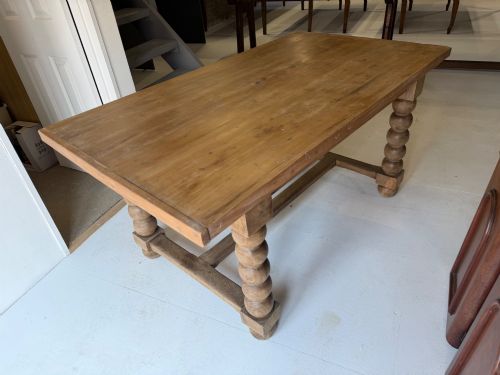
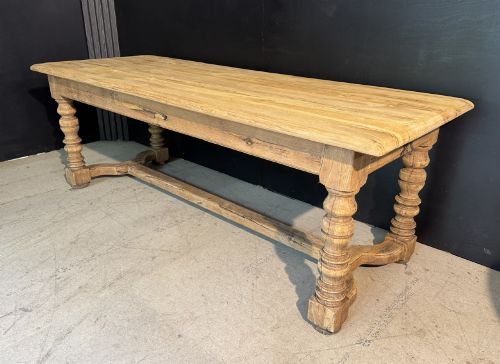
Proportion and decorative restraint also separate standard utility tables from finer architectural works featuring carved details or specialised leg turnings like bobbin supports. Original drawer configurations and untouched surface patinas elevate the integrity of a piece significantly.
The Traditional Refectory Desk Glossary
- Refectory table
- A long, narrow dining or work table traditionally used in communal dining halls and monastic refectories. These forms prioritize length and sturdy underframing.
- Trestle table
- A table structure composed of two or more support frames connected by a longitudinal beam or stretcher. This design maximises legroom along the length of the top.
- Frieze
- The horizontal band situated immediately beneath the top edge of a table. This section frequently houses one or more storage drawers.
- Bobbin leg
- A turned furniture leg shaped to resemble a series of wooden bobbins or spools strung together. This decorative turning method appears on nineteenth-century seating and tables.
- Patina
- The surface sheen and coloration developed on wood through age, handling, and repeated waxing. It serves as a visual indicator of authenticity and historical depth.
Traditional Refectory Desk: Frequently Asked Questions
How are traditional refectory desks used?
These versatile surfaces function effectively as large writing desks, library tables, or communal dining surfaces. Their generous proportions provide ample workspace for daily tasks.
Placing one in a study or kitchen allows the historic timber and substantial presence to anchor the room's layout.
What woods were used?
Oak is the predominant material across the selection, appearing in both solid and pale variations. Elm, beech, and cherry also feature regularly in tabletops and framing.
Iron and brass components occasionally supplement the timber structure for functional hardware and decorative braces.
How do I care for the surface?
Maintain the wood by applying appropriate natural waxes rather than modern silicone polishes. This preserves the historical patina and protects the dry timber from moisture.
Keep the piece away from direct heat sources and sudden temperature shifts to prevent the solid planks from splitting.
Can I date a piece by its style?
Stylistic indicators such as Gothic revival tracery or French provincial framing provide broad chronological markers. Eighteenth-century examples typically display different joint construction compared to nineteenth-century vernacular pieces.
Examining the underside, drawer construction, and tool marks helps confirm the period of manufacture.