

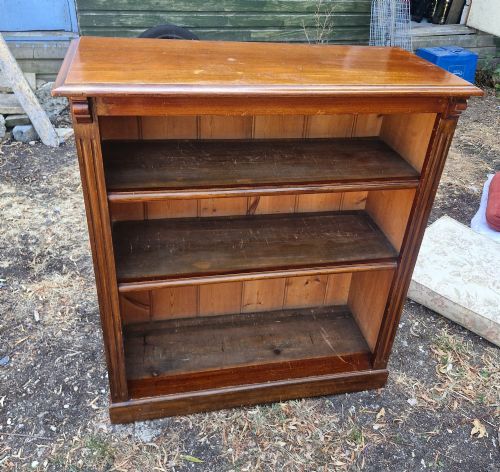
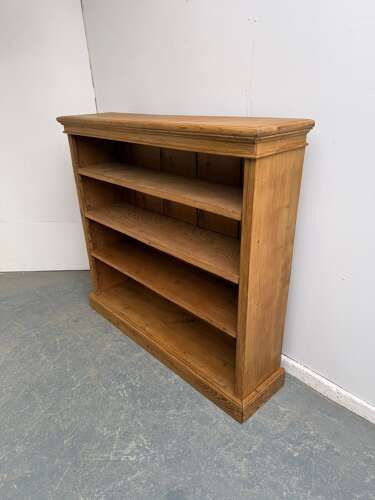
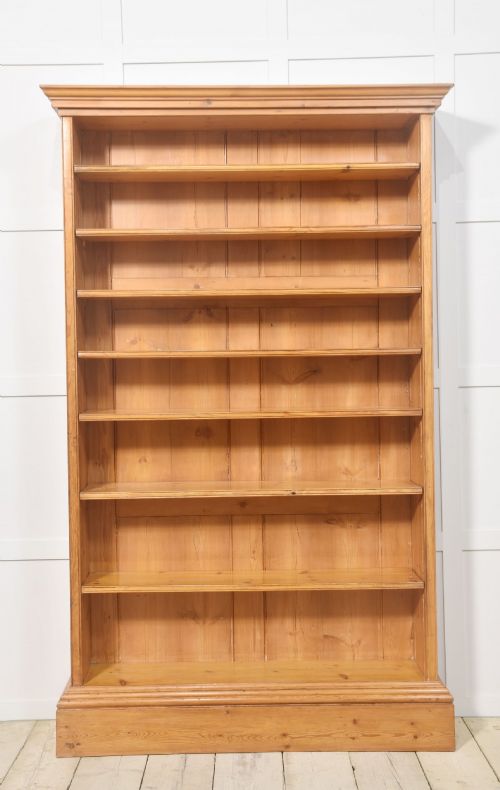


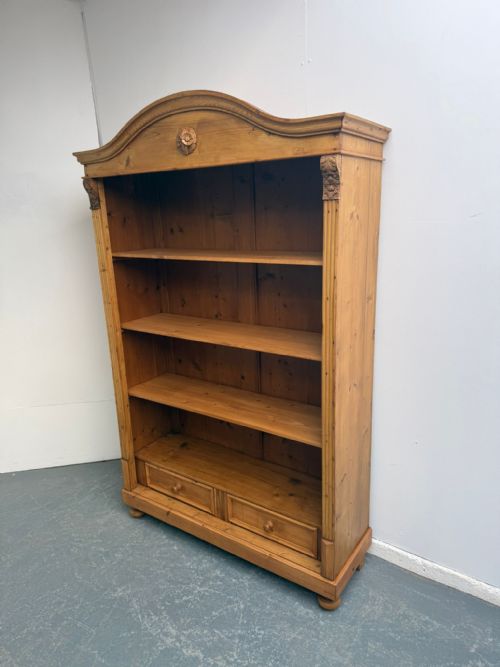

Traditional Pine Bookshelf
A traditional pine bookshelf brings warmth and honest utility to any room, offering straightforward storage for your volumes.
Traditional Pine Bookshelf
When you search for a traditional pine bookshelf, you encounter pieces designed to hold books without unnecessary fuss or ornamentation. The listings here consist entirely of bookcases, spanning the nineteenth century up through the nineteen-thirties.
You are most likely to meet open front bookcases from the Victorian period, along with examples from nineteen hundred, nineteen twenty, and nineteen thirty. These items range from small rustic open forms to larger deal wood variations.
The style leans heavily toward Victorian country and rustic country aesthetics, prioritizing open shelving for easy access. Many of these sturdy pieces feature adjustable shelves to accommodate different volumes.
Construction and materials
These items are constructed predominantly from pine, deal wood, pitch pine, and occasionally walnut. Wood selection determined the grain pattern and the overall weight of the shelving unit.
Makers finished many of these surfaces with wax to protect the timber while maintaining a natural appearance. Joinery focuses on straightforward, robust assembly suitable for holding heavy rows of books.
Traditional Pine Bookshelf Retail Price Guide 2026
Typical asking prices for traditional pine bookshelf among the pieces listed under this phrase on Sellingantiques today, from the lower quarter to the upper quarter. They describe what is for sale here now, not the wider market.
Listings draw exclusively from the nineteenth century, Victorian era, nineteen hundred, nineteen twenty, and nineteen thirty.
Judging quality in pine shelving
Quality separates simple utility pieces from finer country craftsmanship through the selection of timber and the execution of the finish. A well-applied wax finish enhances the natural grain of the deal wood or pine without masking its character.
The presence of functioning adjustable shelving mechanisms distinguishes the more versatile examples from fixed configurations. Heavier proportions and cleaner lines in late Victorian and nineteenth-century pieces elevate the presence of the bookcase in a room.
The Traditional Pine Bookshelf Glossary
- Deal wood
- A term historically used for fir or pine timber sourced from northern Europe. It provided a reliable, straight-grained material for everyday furniture.
- Pitch pine
- A resinous variety of pine known for its durability and strong grain pattern. It offered extra strength for load-bearing furniture such as bookcases.
- Open bookcase
- A shelving unit without doors, allowing direct access to the contents. This form dominates the traditional pine shelving available here.
- Adjustable shelf
- A shelf resting on movable supports rather than fixed ledges. This feature permits custom spacing between tiers for different book heights.
- Waxed finish
- A protective coating applied to bare wood and buffed to a soft sheen. It nourishes the timber while avoiding heavy modern gloss varnishes.
Traditional Pine Bookshelf: Frequently Asked Questions
What periods do these pine bookshelves come from?
The pieces span the nineteenth century, the Victorian era, and the early decades of the twentieth century, specifically covering nineteen hundred, nineteen twenty, and nineteen thirty.
This range encompasses late Victorian country styles as well as simpler rustic interpretations.
Are the shelves adjustable?
Several of the Victorian and nineteenth-century examples feature adjustable shelves to accommodate books of varying heights.
Descriptions note this capability explicitly when present on the original structure.
What woods are used besides pine?
While pine and deal wood form the vast majority of the inventory, occasional pieces utilise pitch pine or walnut.
Deal wood and pitch pine offer similar utilitarian strengths suited to heavy daily use.
How do I care for a waxed pine finish?
Maintain the surface by applying a quality beeswax periodically and buffing it with a soft cloth to preserve the natural lustre.
Avoid placing these wooden pieces near direct heat sources to prevent the timber from drying out.