



Traditional Patterned Settee
A traditional patterned settee brings deep historic character and layered textile interest into a room, offering generous seating rooted in classic forms.
Traditional Patterned Settee
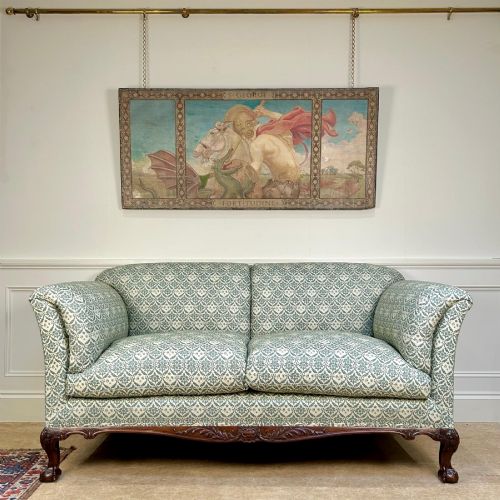
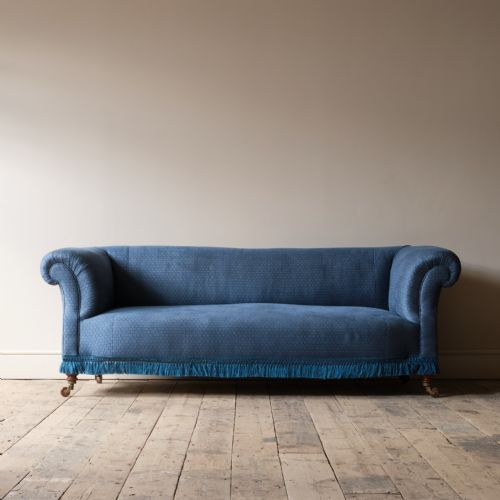
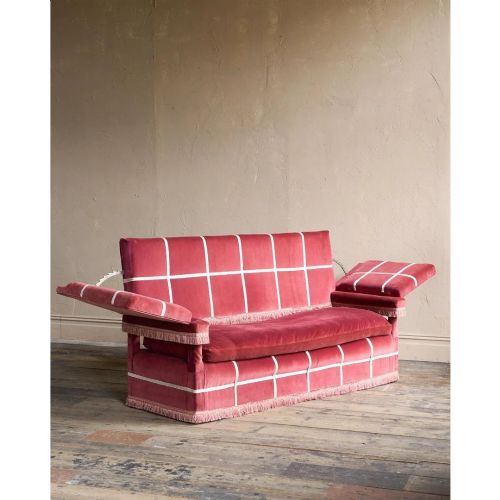
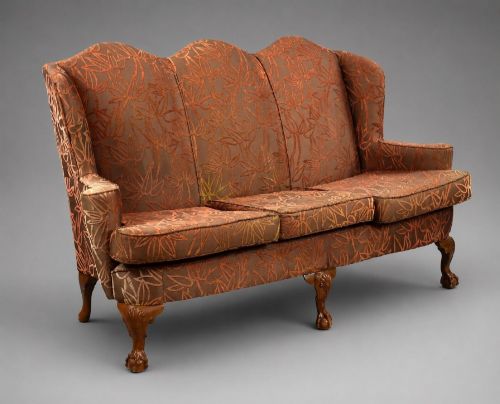
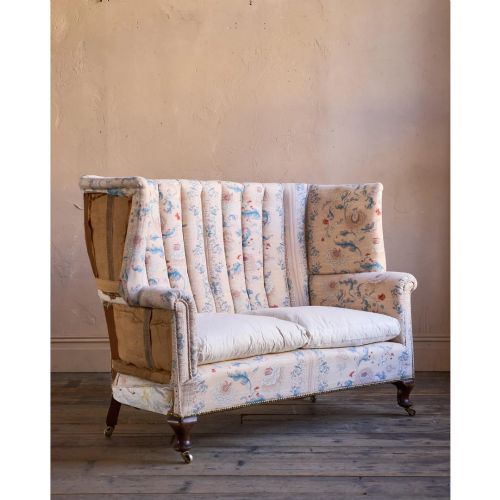
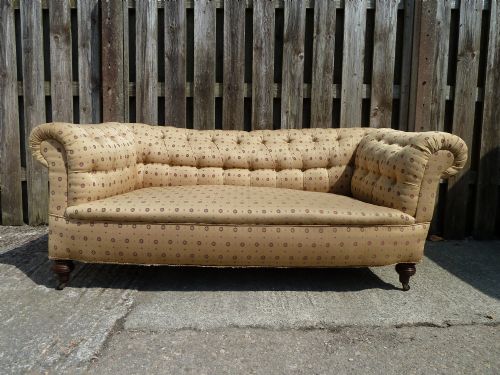
A traditional patterned settee encompasses upholstered seating forms spanning the nineteenth century through the early decades of the twentieth century, including distinct variations such as Chesterfield, Knole, and wingback sofas. These pieces emerge from periods like the Victorian, Edwardian, and Regency eras, reflecting diverse regional interpretations of English country house and traditional design.
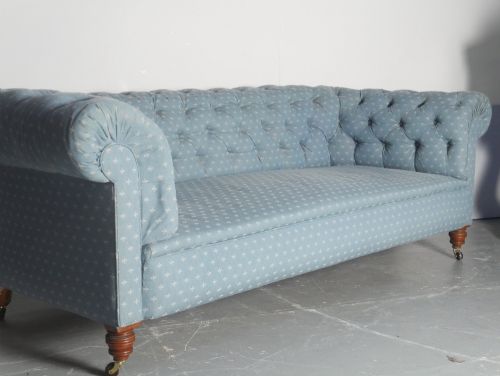
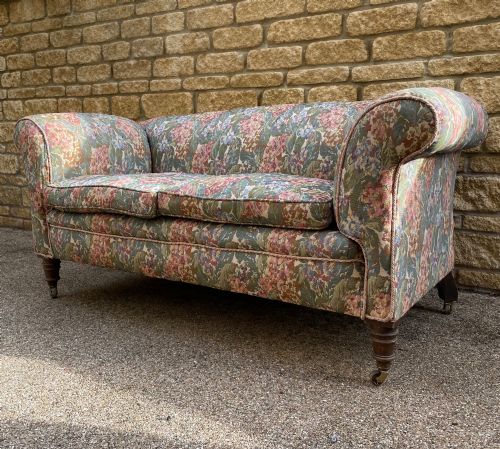
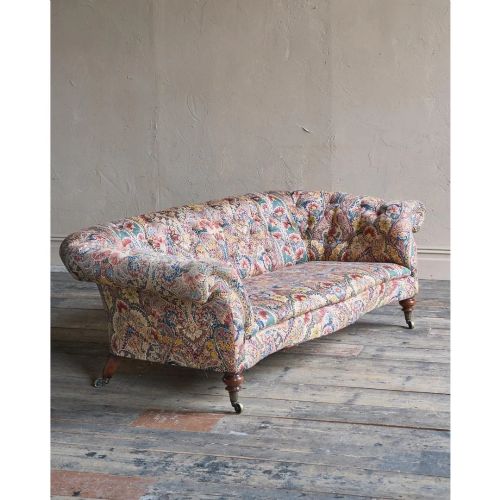
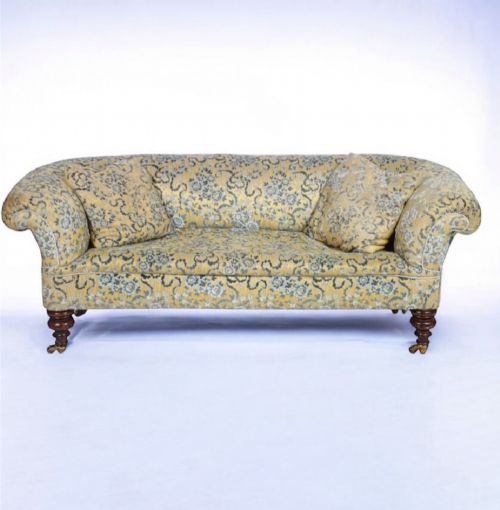
The most common formats met on this page include deep-buttoned Chesterfields and adjustable drop-arm or drop-end settees, frequently upholstered in floral prints, damask, or velvet. Alongside these individual sofas, buyers encounter larger salon and parlour suites that group matching seating together.
Makers and retailers from these periods, notably houses such as Hampton and Sons and Liberty, contributed distinctive frames and textiles to this tradition. The structural foundations range from mahogany and walnut frames to exposed hardwood supports fitted with brass castors.
Materials and construction
Frames rely on sturdy timbers including mahogany, walnut, and general hardwood, providing the structural integrity required for large upholstered seating. Turnings, carved details, and ebonised finishes shape the visible wooden legs and scroll ends.
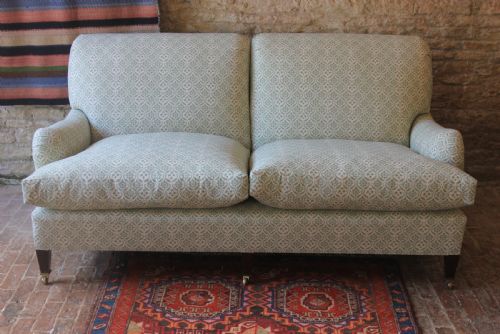
Upholstery relies on traditional textile choices such as damask, velvet, and patterned fabric, applied over sprung or stuffed interiors. Metal elements like brass appear on castors and decorative details.
Traditional Patterned Settee Retail Price Guide 2026
Typical asking prices for traditional patterned settee among the pieces listed under this phrase on Sellingantiques today, from the lower quarter to the upper quarter. They describe what is for sale here now, not the wider market.
Listings feature hardwood, mahogany, and walnut frames paired with textiles including damask, velvet, and patterned fabric across the nineteenth and twentieth centuries.
Assessing quality and finish
The sophistication of the timber framing and the precision of the joinery set higher examples apart from standard production. Carved mahogany or walnut elements, alongside refined turning on legs and scroll ends, indicate greater workshop attention.
The integrity of the upholstery choice and the execution of textiles like damask or velvet dictate the visual presence of the settee. Original ticking or carefully selected traditional patterned fabric contributes significantly to the overall coherence of the piece.
Hampton and Sons·Howard and Sons
The Traditional Patterned Settee Glossary
- Chesterfield
- A deep-buttoned upholstered sofa featuring arms and back of the same height. This form provides a formal yet comfortable silhouette originating in the nineteenth century.
- Knole Sofa
- A historic sofa style featuring hinged or adjustable side arms that can be lowered or raised. They are traditionally upholstered in rich textiles and secured with elaborate braids and tie-backs.
- Damask
- A reversible figured fabric woven on a loom, featuring patterns created through contrasting warp and weft threads. It is frequently utilised in traditional upholstery for its textured, light-reflecting surface.
- Drop Arm
- A movable or hinged sofa arm mechanism that allows one or both sides to be lowered into a horizontal position. This design adds versatility to nineteenth and early twentieth-century seating forms.
- Parlour Suite
- A matched set of upholstered seating comprising a settee and associated armchairs designed for formal reception rooms. These suites display uniform wood framing and fabric covering.
Traditional Patterned Settee: Frequently Asked Questions
What defines a traditional patterned settee?
These settees are historic upholstered seating forms originating mainly in the nineteenth and early twentieth centuries, featuring patterned textiles like damask and floral fabrics. They encompass varied regional and stylistic forms such as the Chesterfield, Knole sofa, and wingback designs.
Built on hardwood frames of mahogany or walnut, they often incorporate traditional details like buttoning, carved wooden legs, and drop-end mechanisms.
How do I identify a Victorian versus an Edwardian settee?
Victorian settees generally display heavier mahogany frames, deeper buttoning, and more ornate carved or turned woodwork. Edwardian examples often lean towards lighter proportions, refined walnut or mahogany legs, and different upholstery treatments.
Examining the underlying timber, framing style, and textile choice helps place the piece within its specific nineteenth or early twentieth-century context.
Where were these settees originally used?
These settees served primarily as reception and drawing room seating in large townhouses and English country houses. They were designed for formal entertaining as well as daily domestic comfort.
Larger matching sets, such as parlour and salon suites, were arranged to accommodate multiple guests in formal entertaining spaces.
How should I care for antique upholstery?
Protect delicate textiles such as damask and velvet from direct sunlight to prevent fading and fibre degradation. Regular, gentle vacuuming with a soft brush attachment removes surface dust without stressing the fabric.
Consult a professional restorer experienced in period furniture when addressing structural repairs or internal padding maintenance.