
Traditional Oak Storage
Traditional oak storage brings heavy timber solidity to halls and bedrooms through centuries of chests, cupboards and wardrobes.
Traditional Oak Storage
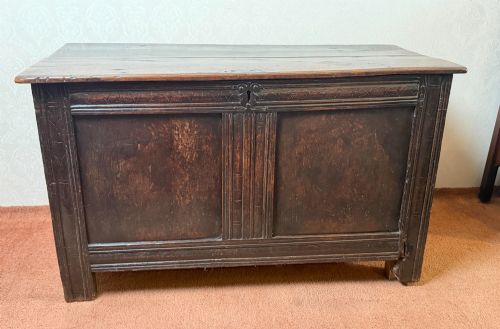
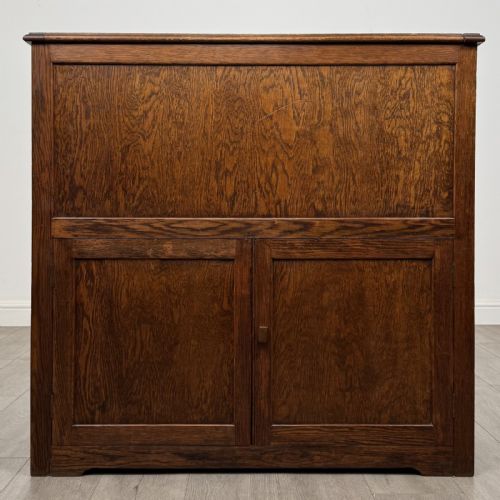
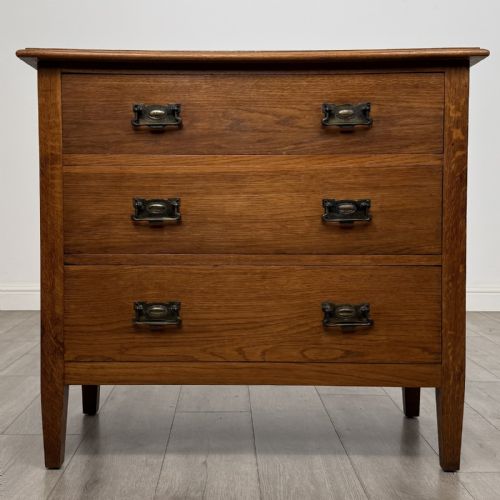
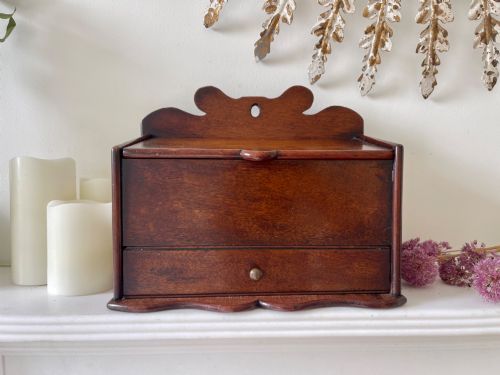
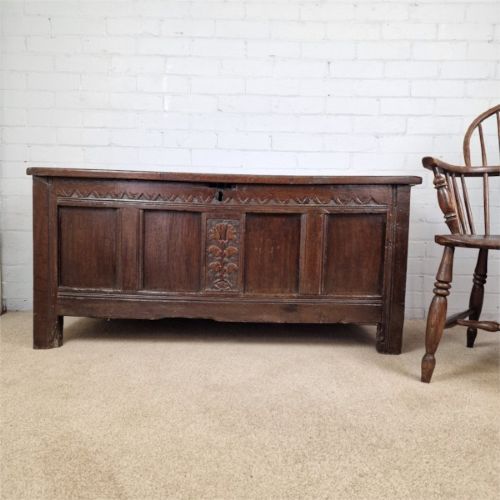
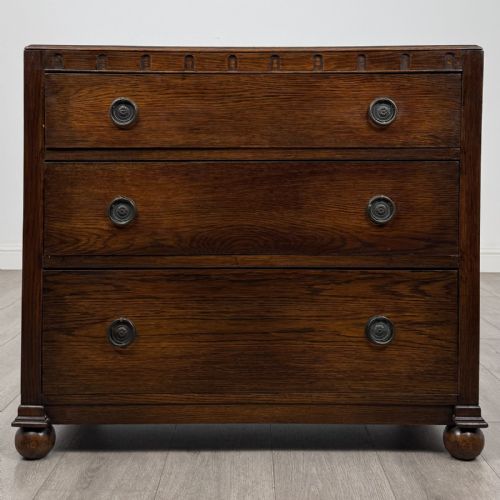
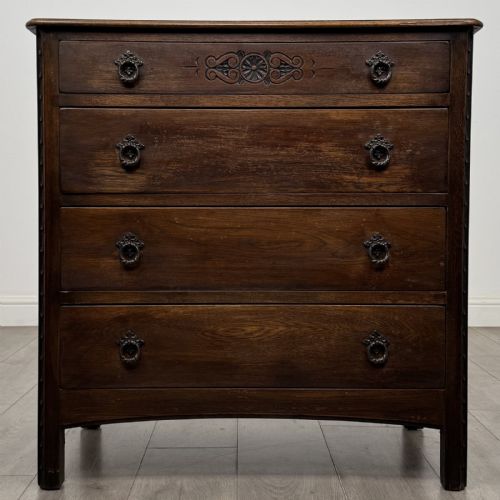
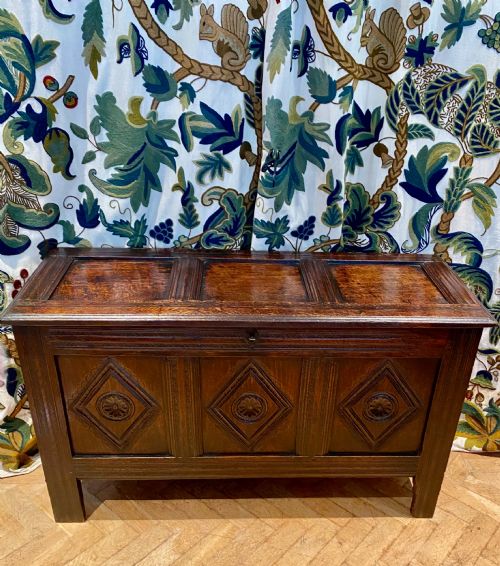
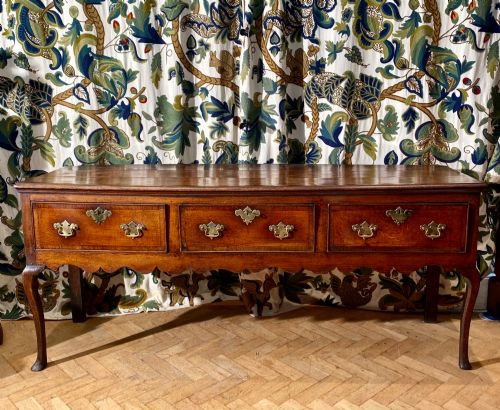
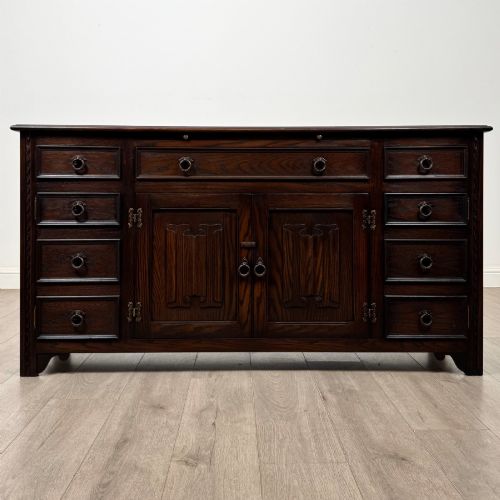
Traditional oak storage covers a heavy domestic vocabulary spanning coffers, chests of drawers, cupboards and wardrobes. Pieces emerge across the eighteenth, nineteenth and twentieth centuries, taking distinct regional and domestic forms.
Edwardian and Georgian examples sit alongside earlier seventeenth and eighteenth-century survivals. Buyers encounter everything from carved blanket chests to tall triple wardrobes and open bookcases.
Construction and timber
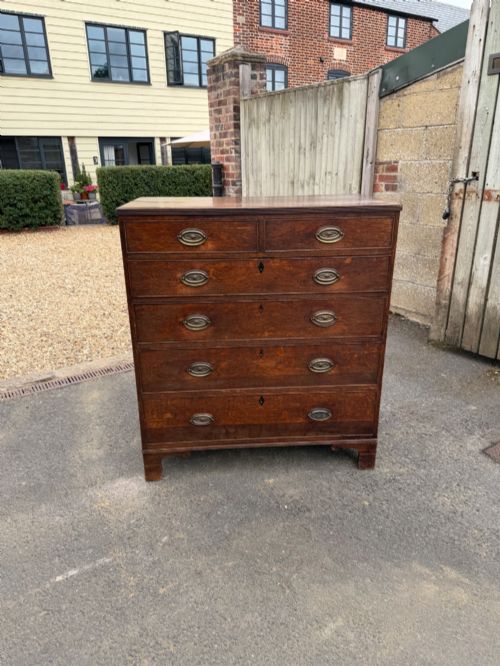
Makers relied primarily on solid oak, often selected for figuring such as golden tones or honey hues. Surfaces frequently display rich patination developed over centuries of handling and polishing.
Hardware incorporates functional metal elements including brass handles, iron hinges and wrought iron brackets. Glass panels appear in later display cabinets and bookcases from the Edwardian era onwards.
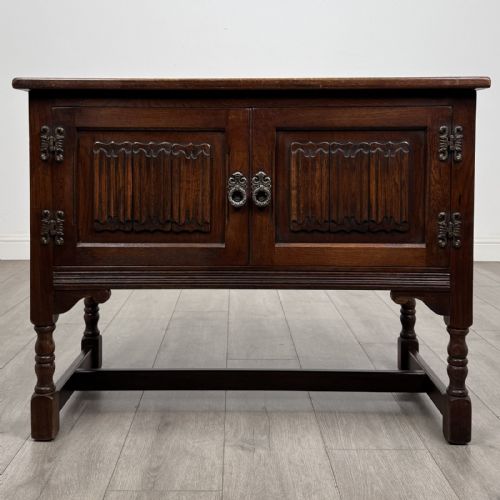
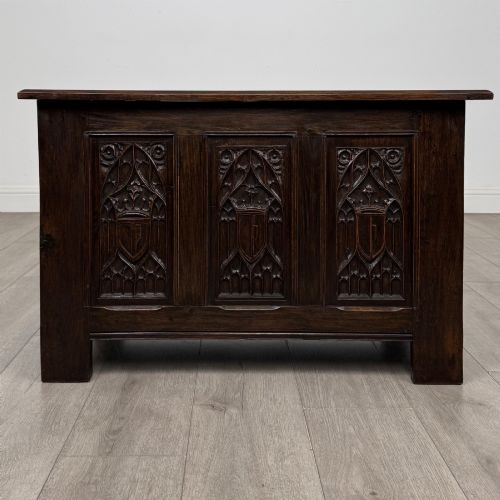
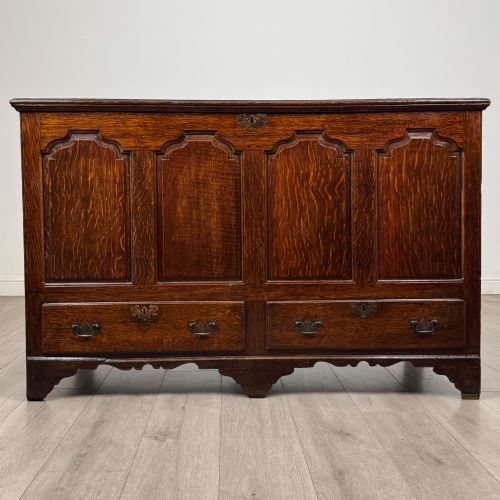
Joinery methods depend on the period, ranging from early pegged frame and panel construction to later dovetailed drawer boxes. Carved ornamentation, linenfold panels and applied beadings decorate many surfaces.
The inventory spans eight distinct styles, ranging from early Jacobean and Tudor Revival to French Provincial and Arts and Crafts.
Defining characteristics of quality
Construction depth separates standard domestic furniture from finer workshop output, particularly in the weight of the timber and the crispness of hand-carved panels. Early seventeenth and eighteenth-century pieces rely heavily on the proportion of the mouldings and the integrity of the board construction.
Surface preservation dictates distinction across every period. Pieces retaining untouched timber surfaces, original brass or iron hardware, and honest patination command greater admiration than heavily stripped or over-restored examples.
The Traditional Oak Storage Glossary
- Coffer
- A large wooden chest used historically for storing valuables and household goods. These heavy storage boxes frequently feature hinged lids and carved front panels.
- Court cupboard
- An elaborate early storage piece comprising shelved enclosures for displaying plate and storing textiles. These substantial case pieces often display architectural carvings.
- Linenfold
- A style of wood carving that imitates folded parchment or linen cloth. This decorative motif appears frequently on panels of cupboards and chests.
- Housekeeper cupboard
- A large multi-door storage piece designed for domestic linen and provisions. These tall cupboards provide deep internal capacity through shelves and drawers.
- Settle
- A wooden bench featuring a high solid back and enclosed storage beneath the seat. Welsh examples often combine seating with a lift-up lid or fold-over top.
Traditional Oak Storage: Frequently Asked Questions
How do I date an oak coffer?
Examine the construction joints, timber preparation marks and the style of any carving. Early pieces from the seventeenth century often show hand- split boards and pegged mortise and tenon joints.
Later Victorian and Edwardian revival pieces display more uniform machine-sawn timber and simpler internal bracing. Hardware type and regional design traits also provide chronological clues.
What is a coffer bach?
A coffer bach is a small Welsh miniature chest, translating literally as little coffer. These diminutive pieces were traditionally made as wedding gifts or presentation items.
Despite their reduced scale, they follow the exact construction methods of full-size household chests.
How should I care for antique oak furniture?
Maintain stable indoor humidity levels and keep wooden storage away from direct heat sources and strong sunlight. Regular dusting with a dry lint-free cloth protects the timber surface.
Apply traditional beeswax occasionally to nourish the grain and preserve the historic patination without sealing the wood.
Are these pieces made of solid oak?
Listings feature solid oak construction alongside golden oak and dark oak variations. Earlier centuries relied entirely on heavy native timber boards.
Later Edwardian pieces also utilise solid oak across wardrobes, bookcases and chests of drawers.