


Traditional Oak Sideboard Cabinet
A traditional oak sideboard cabinet brings sturdy utility and rich timber grain to a room, offering ample storage through drawers and panelled doors.
Traditional Oak Sideboard Cabinet
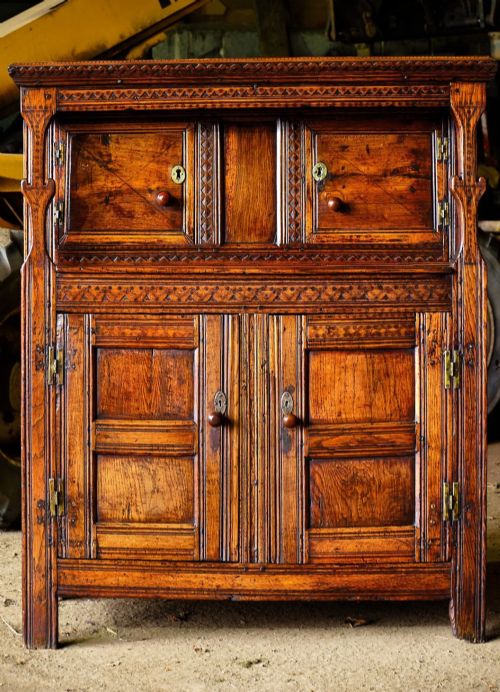
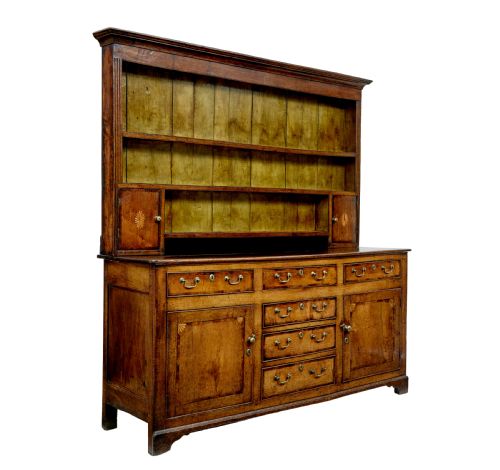
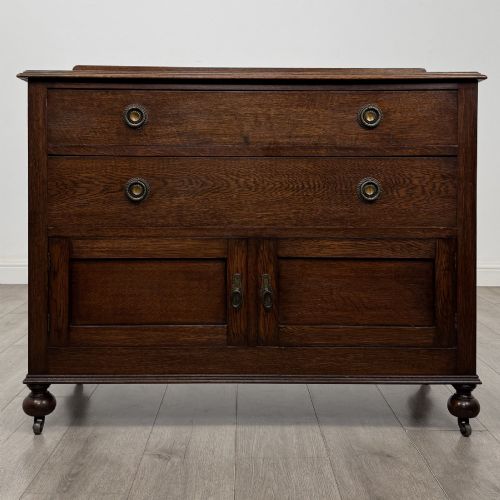
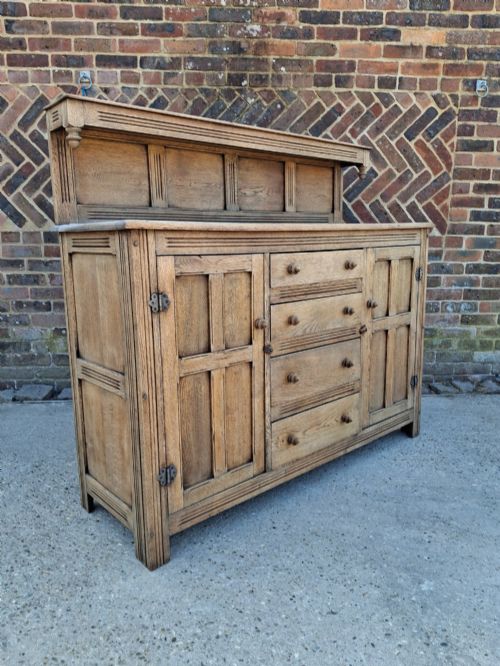
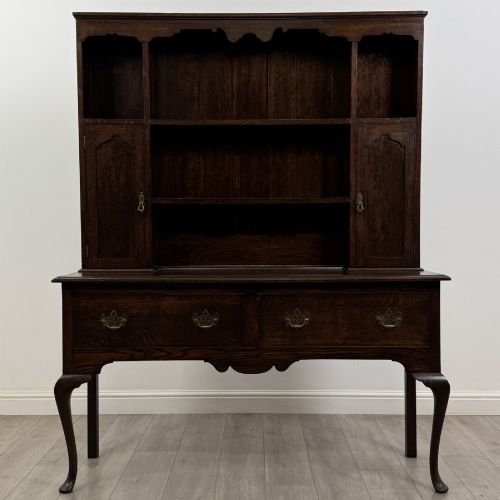
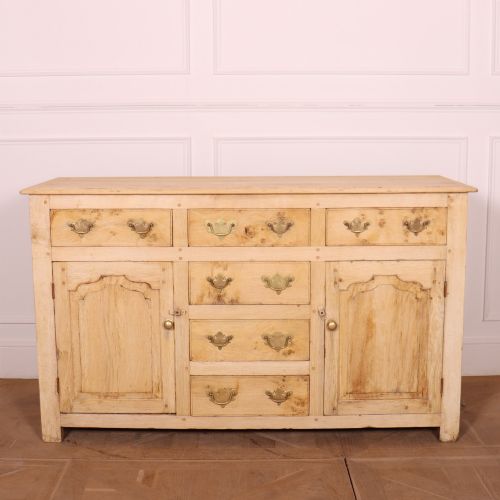
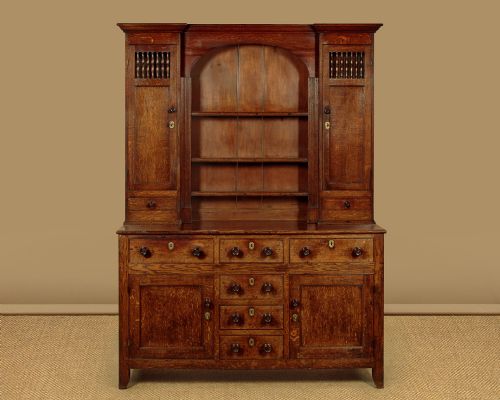
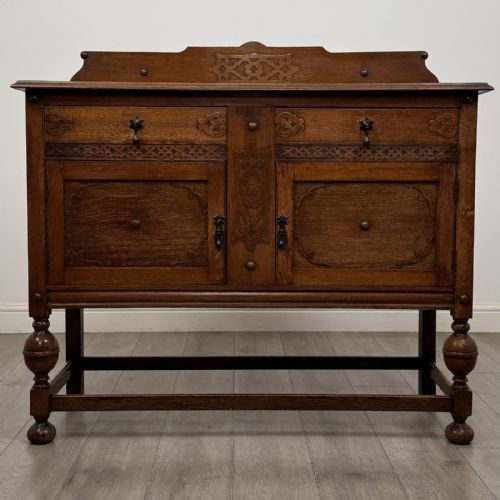
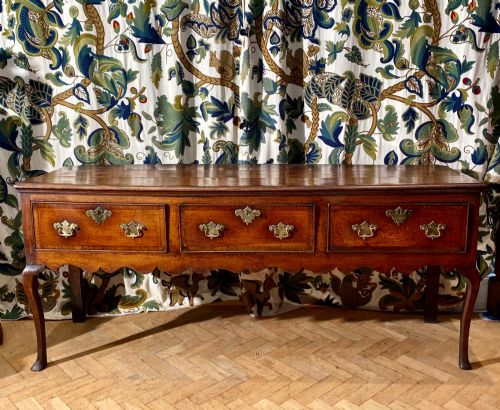
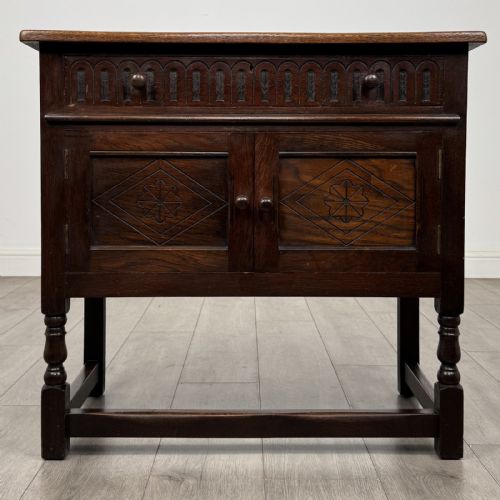
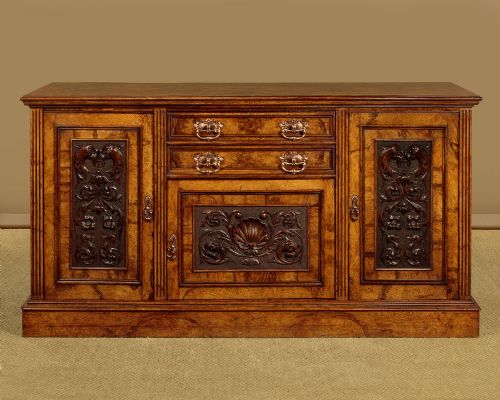
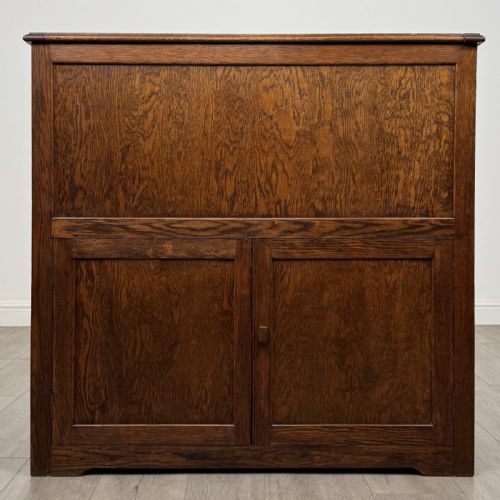
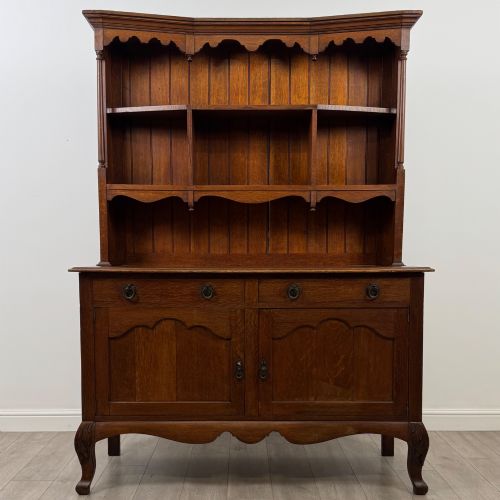
A traditional oak sideboard cabinet encompasses a wide array of sturdy storage furniture designed for domestic use across centuries. The pieces on this page range from low sideboard bases and court cupboards to tall Welsh dressers with plate racks.
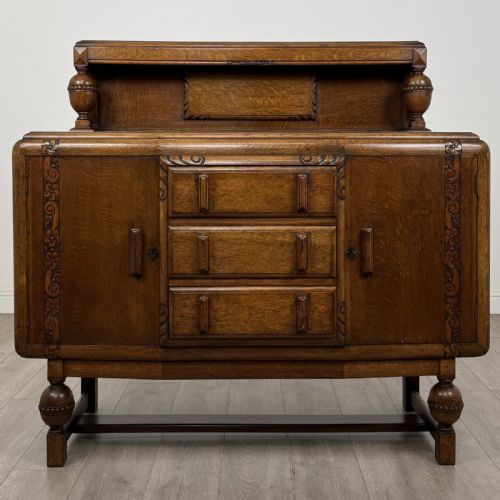
Most examples hail from the eighteenth and nineteenth centuries, alongside Edwardian revivals and early twentieth-century interpretations. Oak dominates the selection, occasionally paired with elm, mahogany, or pine in regional vernacular pieces.
Buyers will encounter formal Georgian sideboard formats as well as rustic country dressers and linen press cupboards. Each form serves the fundamental purpose of housing household linen, tableware, and provisions.
How they were made
Cabinet makers built these pieces using solid oak, often complemented by secondary timbers like pine or elm for drawer linings and internal shelving. Brass and iron hardware, from drop handles to key escutcheons, secured the doors and drawers.
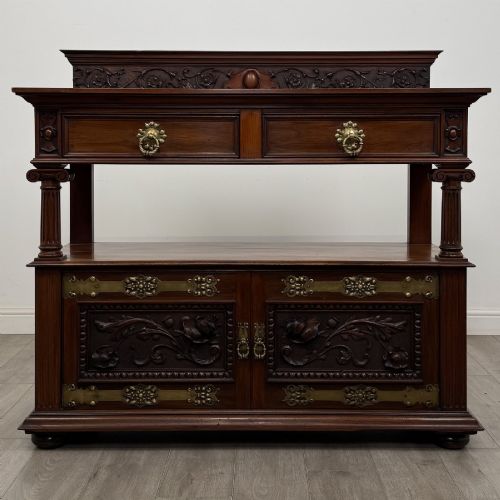
Construction techniques rely on traditional joinery, including mortise and tenon frames, hand-cut dovetails for drawers, and pegged joints. Surfaces frequently display hand-carving in styles ranging from Jacobean revival motifs to linenfold panelling.
Traditional Oak Sideboard Cabinet Retail Price Guide 2026
Typical asking prices for traditional oak sideboard cabinet among the pieces listed under this phrase on Sellingantiques today, from the lower quarter to the upper quarter. They describe what is for sale here now, not the wider market.
Listings feature oak alongside brass, iron, glass, pine, mahogany, and burr walnut across various centuries.
What varies in quality
Quality rests in the selection of the timber and the crispness of the hand-carved detailing on panels and stiles. Dense golden oak with pronounced medullary rays indicates a superior selection of wood compared to plain utility boards.
The integrity of the original construction, including unaltered drawer bottoms, sturdy potboards, and working brass or iron locks, separates finer artisan pieces from simpler provincial work.
The Traditional Oak Sideboard Cabinet Glossary
- Dresser base
- The lower section of a Welsh dresser, comprising cupboards and drawers without the upper plate rack. These often function independently as sideboards.
- Court cupboard
- A heavy, compact enclosed cupboard originating in the Tudor and Jacobean periods, featuring recessed upper sections supported by carved columns. Later revivals replicate this sturdy architectural form.
- Potboard
- An open slatted lower shelf built into the base of a traditional country dresser, originally intended for storing heavy earthenware pots.
- Linenfold
- A style of wood carving that imitates folded parchment or linen, commonly seen on Tudor and revival cabinet doors.
- Enfilade
- A suite of rooms or, in cabinet making, a long sideboard or cabinet with a continuous line of three or more doors.
Traditional Oak Sideboard Cabinet: Frequently Asked Questions
What is the difference between a dresser and a sideboard?
A sideboard typically consists of a low cabinet with cupboards and drawers designed for dining rooms. A dresser often includes an upper rack for displaying plates alongside the lower storage base.
Traditional oak versions of both pieces served similar utilitarian roles in domestic kitchens and dining spaces over the centuries.
How do I date a traditional oak cabinet?
Dating relies on observing construction methods, joinery, timber selection, and stylistic details. Hand-cut dovetails, pegged mortise and tenon joints, and carved motifs like linenfold or geometric panels provide clues to the period.
Revival pieces from the Edwardian era often mimic earlier seventeenth or eighteenth-century styles while retaining machine-finished elements.
Can I use an antique sideboard in a modern kitchen?
These robust cabinets provide practical surface space and deep storage drawers well-suited to contemporary kitchen and dining environments. Their durable timber construction withstands daily household use.
Placing a low dresser base or sideboard against a wall adds functional character and warmth to modern interiors.