
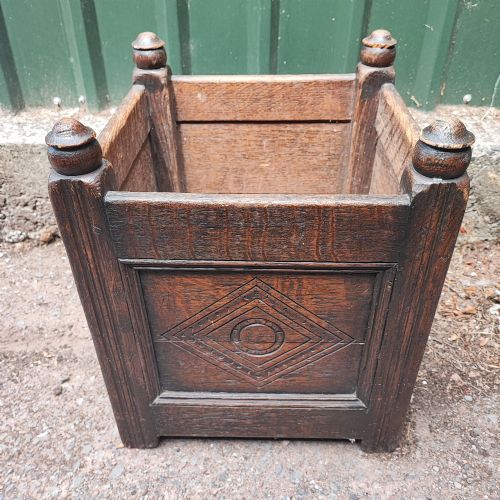



Traditional Oak Log Store
These traditional oak log store pieces are practical fireside furniture items in solid wood that keep hearth fuel dry and tidy.
Traditional Oak Log Store
A traditional oak log store serves as a robust container for holding firewood beside a hearth, drawing on historical forms designed for domestic fuel management. Buyers searching for a traditional oak log store encounter sturdy receptacles intended to sit beside an open fire or wood-burning stove.
The selections available here span several centuries and stylistic origins, ranging from Georgian and Victorian examples to pieces dated around nineteen-twenty and eighteen-ninety. The most common forms on this page include coopered fire buckets, well buckets, coal bins, and lidded chests or coffers.
Makers and craftsmen utilised heavy timbers to withstand the rough handling of logs and coal in daily use. Many items double in description as garden planters or waste bins, reflecting the adaptable utility of sturdy wooden vessels over generations.
How they were made
Makers constructed these storage pieces primarily from solid oak, frequently supplemented with secondary woods such as elm and fruitwood in country workshops. Cooperage techniques appear regularly, binding curved staves together with metal bands to create watertight or structurally tight circular vessels.
Metal reinforcement using brass or iron hardware provides both functional strength and decorative contrast against the dark grain of aged timber. Blacksmiths forged wrought iron handles and hinges, while brass bands were secured carefully around the circumference of finer buckets.
Listings feature oak alongside brass, iron, and fruitwood across Georgian and Victorian periods.
What varies in quality
The distinction between ordinary utility items and superior examples lies in the integrity of the timber selection and the precision of the cooper's jointing. Superior pieces display tight, well-fitted staves and substantial metalwork that remains original to the construction.
Wear and surface character accumulate naturally through decades of fireside use, altering the visual weight and patina of the wood. Finer items retain their structural rigidity without excessive timber shrinkage or crude later repairs to the handles and bases.
The Traditional Oak Log Store Glossary
- Coopered
- Assembled from curved wooden staves bound together by encircling metal hoops, similar to barrel construction. This technique allowed wooden buckets and bins to hold heavy loads of fuel without splitting.
- Stave
- One of the narrow vertical strips of oak fitted together to form the sides of a cylindrical bucket or log bin. The shaping of each stave determines the overall taper and stability of the vessel.
- Coffer
- A heavy wooden chest traditionally used for storage, featuring a solid lid and robust box construction. These pieces often doubled as seating or secure storage in historic interiors.
- Patina
- The deep surface sheen and coloration developed by aged oak through years of handling, polishing, and exposure to hearth environments. A rich patina indicates undisturbed historical ageing.
Traditional Oak Log Store: Frequently Asked Questions
What is a traditional oak log store used for?
These pieces serve as functional containers for holding firewood and coal close to an open hearth. They keep living areas tidy while storing dry fuel ready for burning.
Historically, variations of these wooden bins and buckets were adapted for various household tasks, including garden use and waste disposal. Today, they remain practical accessories for modern wood-burning stoves and fireplaces.
How do I date a traditional oak log store?
Dating relies on observing construction methods, timber characteristics, and hardware styles such as wrought iron or brass banding. Georgian and Victorian examples often display distinct patination and specific joinery traits characteristic of those periods.
Comparing the type of metal fastenings and secondary woods helps place a piece within its approximate era. Surviving labels, stamps, or specific design motifs can also narrow down the manufacturing window.
Are these log stores suitable for modern homes?
Solid oak containers blend easily into both traditional and contemporary interiors alongside wood burners or open fires. Their durable construction handles the physical weight of logs without difficulty.
Maintenance involves simple dusting and occasional treatment with suitable wood waxes to preserve the dry finish. They provide a practical way to conceal rough firewood while adding historical texture to a room.
What is the difference between a log box and a fire bucket?
Log boxes are typically square or rectangular lidded chests designed to hold larger quantities of split firewood. Fire buckets are round, coopered vessels that often feature metal carrying handles for transporting smaller amounts of fuel.
Both forms utilise robust timber construction to withstand heavy daily use beside the hearth. The choice between them depends on the available floor space and the volume of fuel required.