
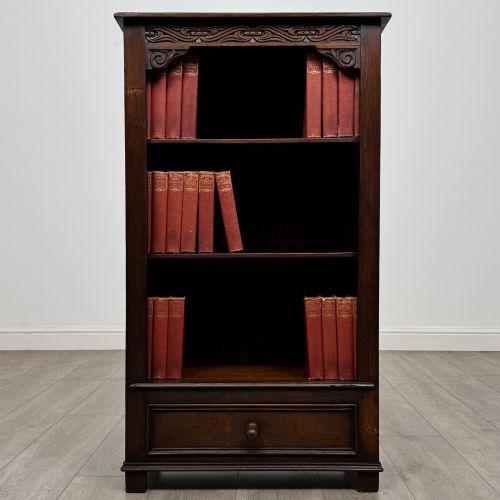


Traditional Oak Book Stand
These traditional oak book stand pieces offer sturdy timber housing for everyday volumes, spanning styles from Edwardian simplicity to Georgian country utility.
Traditional Oak Book Stand
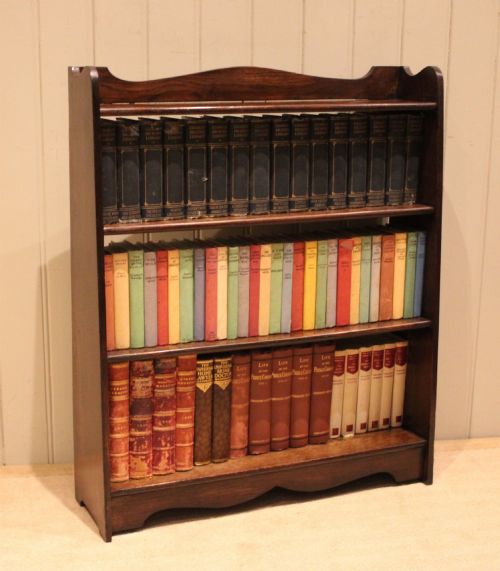
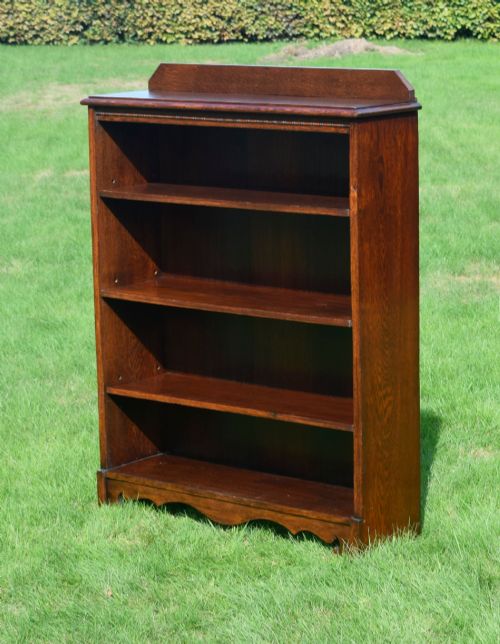
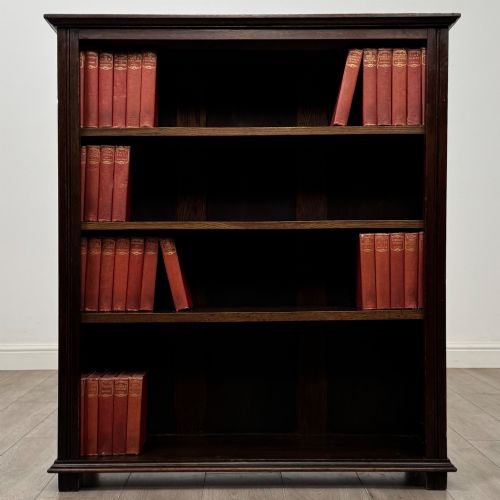
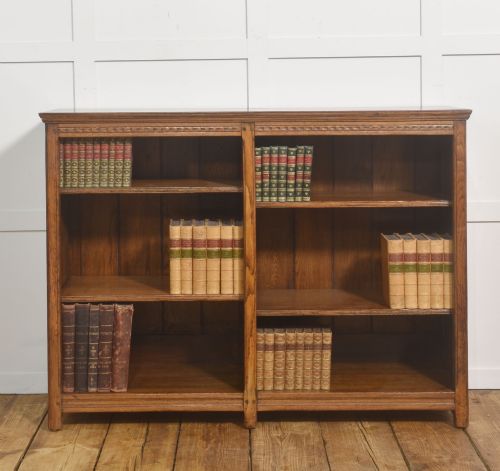
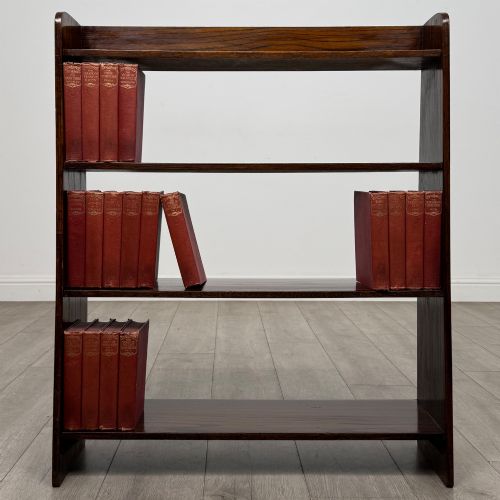
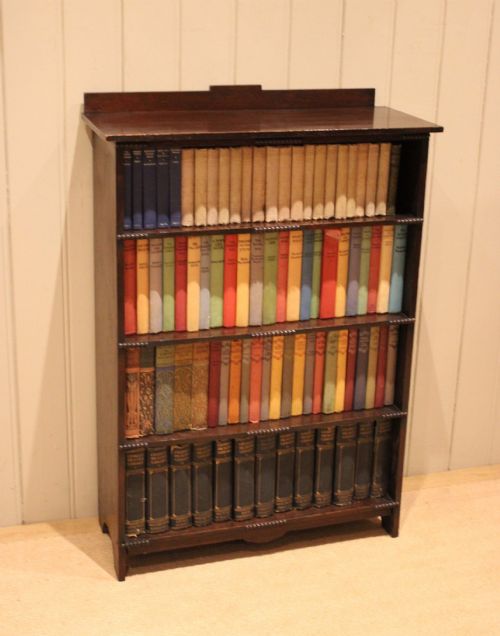
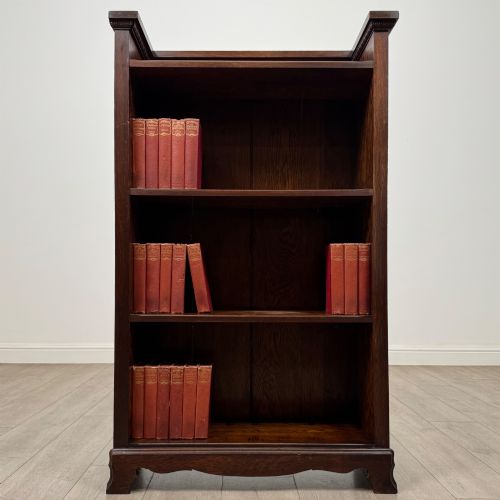
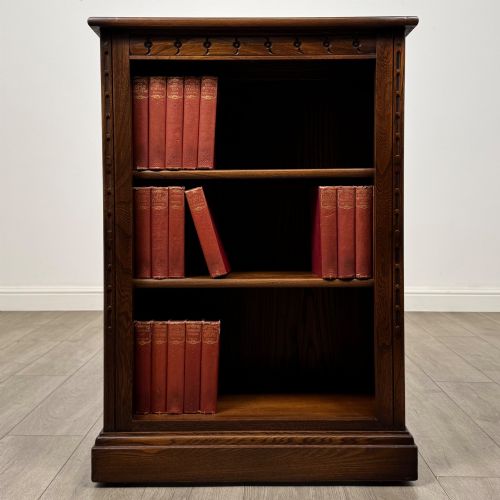
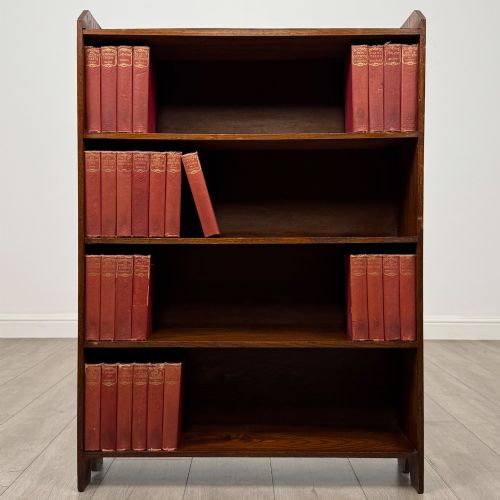
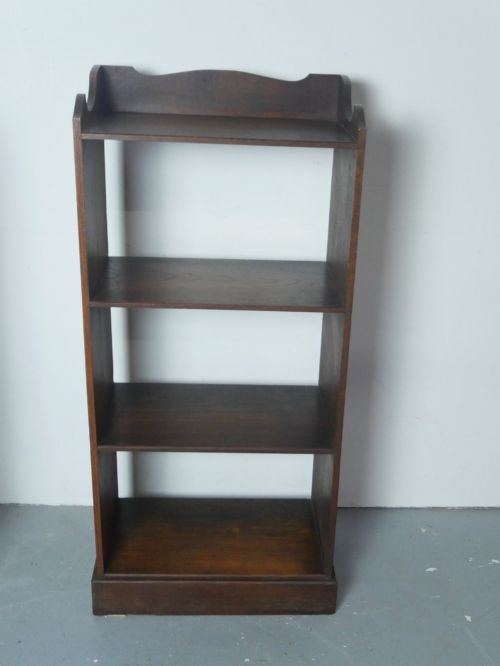
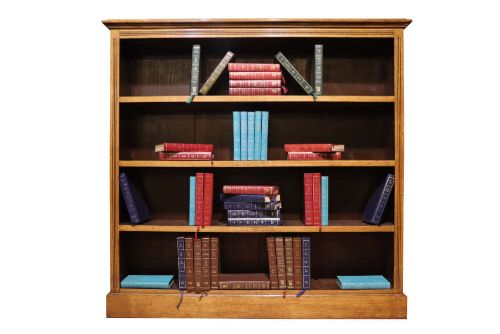
When you search for a traditional oak book stand, you encounter open bookcases, library steps, magazine racks, and book presses spanning the Victorian, Edwardian, and 1920s periods. Open bookcases dominate the selection, frequently featuring adjustable shelves or beaded edges in dark or golden oak timber.
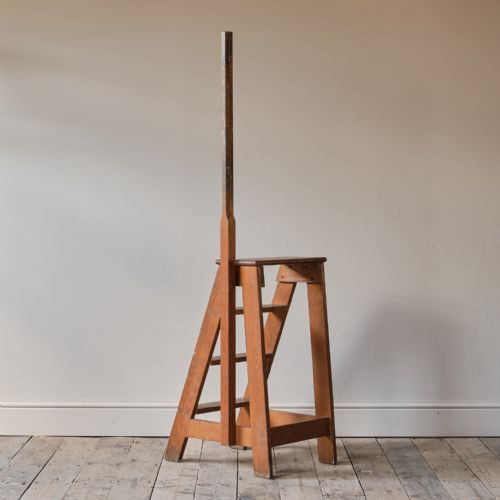
The selection also reaches back to Georgian country origins through functional items like elm and oak book press tables alongside nineteenth century library steps. These pieces range from small proportions suited for compact spaces to larger standing flight arrangements.
How they were made
Cabinet makers utilised solid oak and elm timbers, sometimes applying dark or golden finishes to enhance the natural grain. Structural support often incorporated brass fittings, particularly on mechanical elements like book presses and library steps.
Joinery techniques focus on straightforward utility, with beaded edges, carved details, and adjustable shelf mechanisms appearing across various pieces from the nineteenth and twentieth centuries.
Several pieces include heavy metal screws originally designed to press damp paper flat before the typewriter era.
What varies in quality
The standard of timber selection and proportion distinguishes different examples within this group. Finer pieces demonstrate careful attention to scale, particularly in smaller proportions or large library steps.
Craftsmanship in secondary details, such as beaded edge profiling, carved ornamentation, and the smooth operation of adjustable shelving, marks the distinction between standard utilitarian items and superior examples.
Waring and Gillows
The Traditional Oak Book Stand Glossary
- Beaded edge
- A narrow rounded moulding carved along the border of a shelf or frame. This detail adds subtle texture to the otherwise plain timber lines.
- Book press
- A heavy mechanical device utilised for flattening paper or binding volumes. These typically combine solid timber frames with metal screw mechanisms.
- Golden oak
- A bright yellowish-brown timber finish popular during the Edwardian period. It highlights the natural medullary rays within the wood.
- Library steps
- A set of portable stairs designed for reaching high shelves in private or institutional collections. They appear in timber constructions of varying proportions.
- Jacobean Revival
- A nineteenth and twentieth century style mimicking seventeenth century ornamentation. It frequently incorporates heavy carving and dark oak surfaces.
Traditional Oak Book Stand: Frequently Asked Questions
What periods do these pieces come from?
The selection spans from Georgian country items through Victorian and Edwardian examples up to pieces made in the 1920s and 1930s. Twentieth century traditional styles appear alongside earlier nineteenth century designs.
Most items date from the Edwardian era and the 1920s, reflecting a strong period for domestic oak furniture production.
Are the shelves adjustable?
Many of the open bookcases include adjustable shelving systems to accommodate books of different heights. This practical feature appears frequently across twentieth century examples.
Fixed shelves also occur, particularly in smaller or more vernacular pieces from earlier periods.
What materials are used besides oak?
Oak forms the primary timber across the selection, occasionally supplemented by elm in pieces like Georgian book press tables. Metal and brass appear as functional hardware components on presses and steps.
Finishes range from light golden oak tones to darker stained surfaces.
How do library steps differ from bookcases?
Library steps provide vertical access to high shelves and feature tiered platform structures rather than storage compartments. They are built for climbing stability using heavy timber.
Bookcases focus entirely on horizontal surface storage for volumes, utilising open fronts or standing frames.