




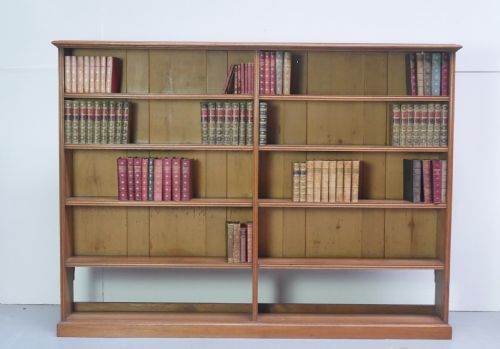
Traditional Oak Book Shelf
A traditional oak book shelf offers sturdy open storage for a collection, bringing solid wood character and accessible daily utility to any room.
Traditional Oak Book Shelf
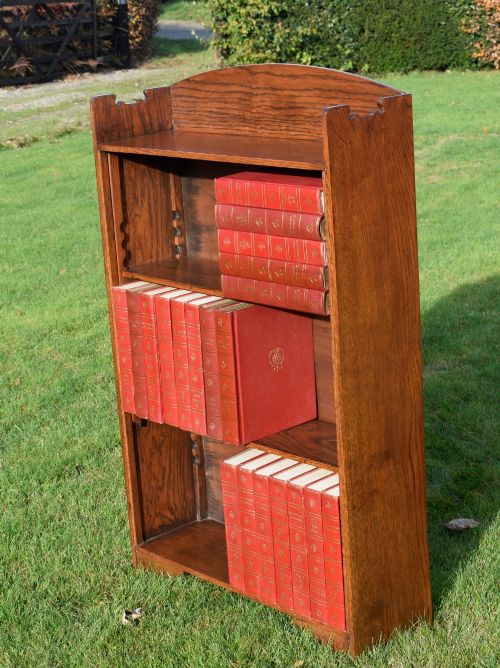
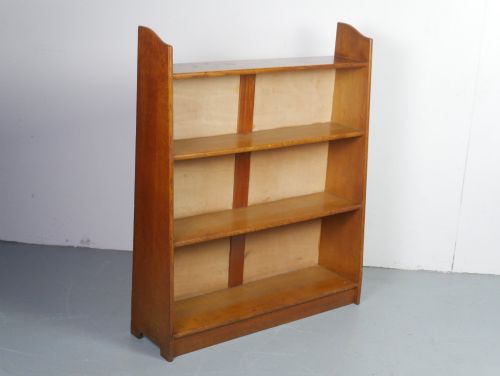
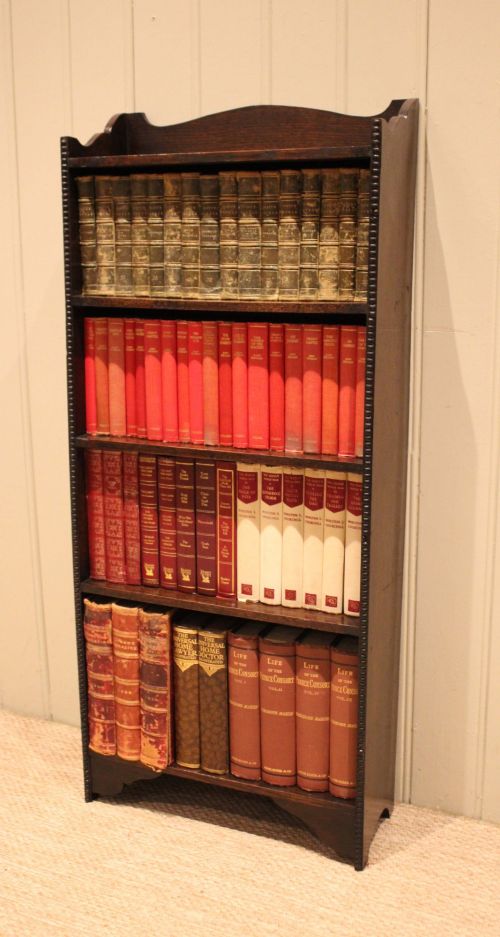
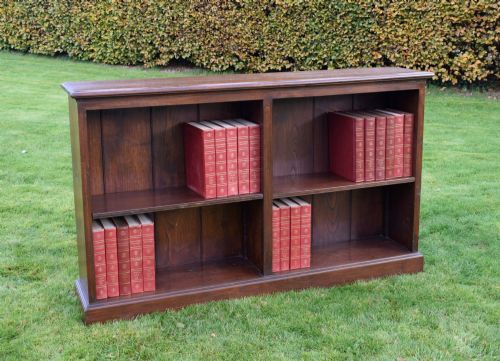
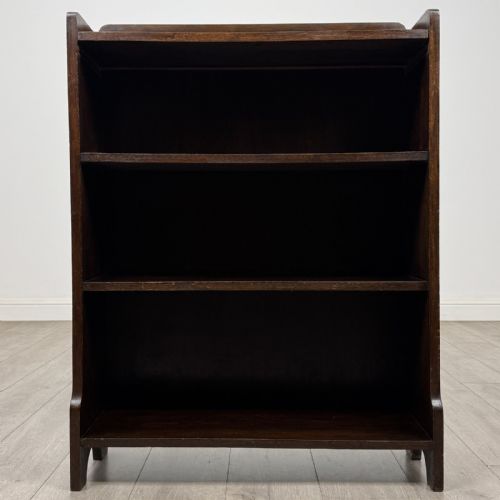
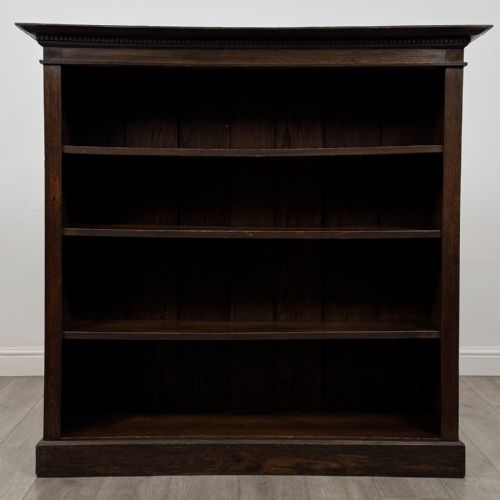
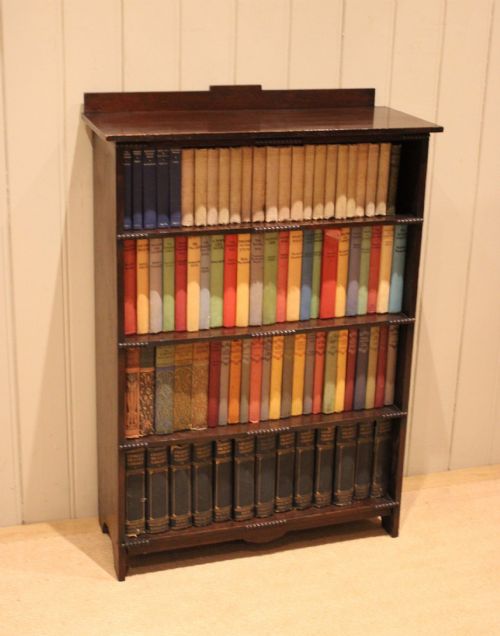
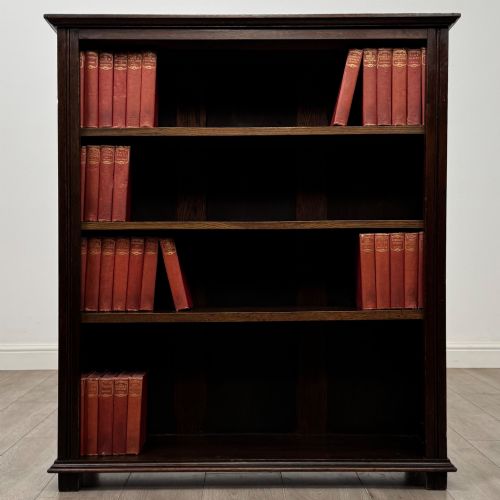
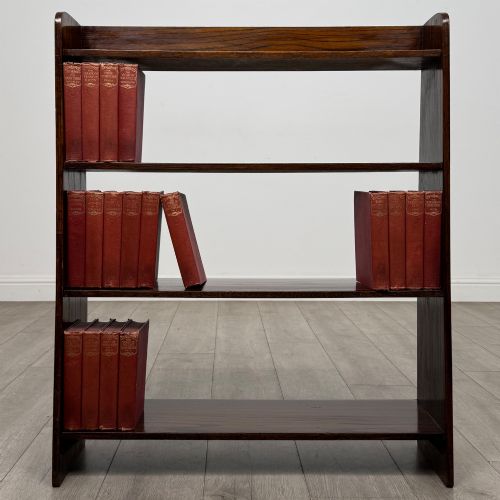
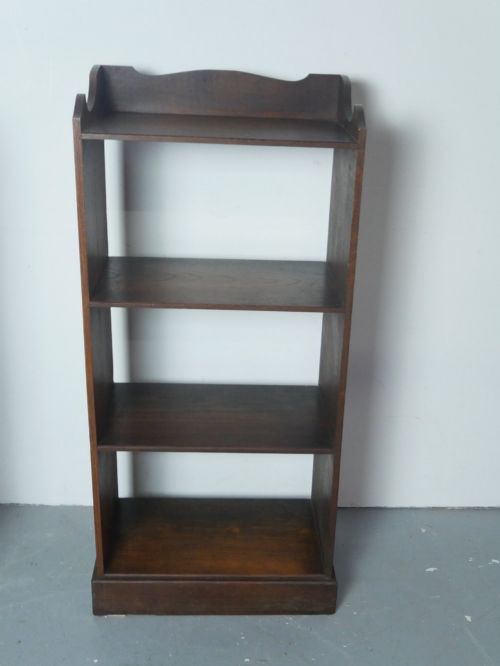
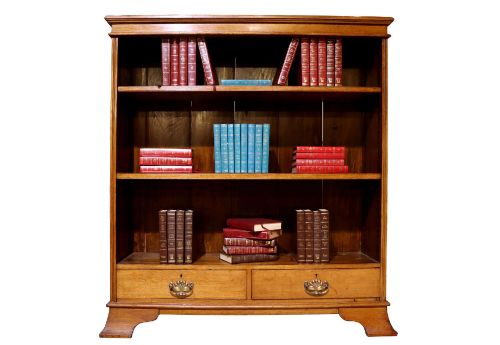
A traditional oak book shelf takes the form of an open bookcase, standing upright in narrow, small, double width, or tall proportions. These pieces primarily date from the Victorian and Edwardian eras, extending into the 1920s and 1930s.
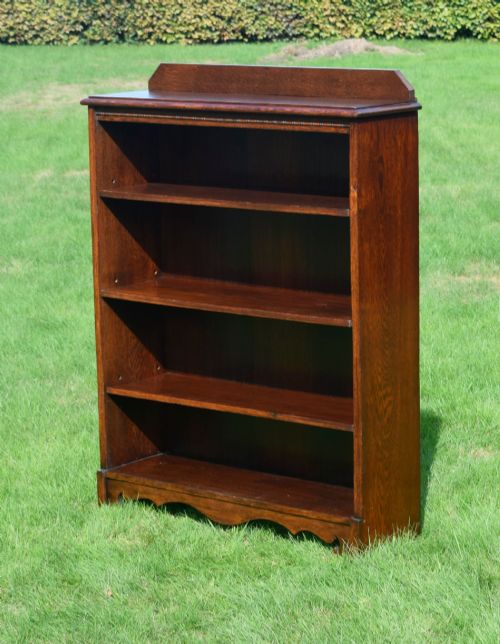
Buyers will encounter various formats on this page, ranging from low standing bookshelves with raised galleries to large double units and tall designs featuring adjustable shelves. Many examples incorporate open fronts for immediate access to volumes.
The aesthetic draws on traditional, Arts and Crafts, and Jacobean Revival styles, displaying regional British cabinetmaking traditions from the late nineteenth and early twentieth centuries.
Craftsmanship and Proportion
Quality varies in the selection of the timber and the depth of the carving, with finer pieces displaying thoughtful grain matching and well-executed decorative details like dentil cornices or raised galleries. The integration of functional elements such as smoothly operating adjustable shelving mechanisms also separates standard production from superior cabinetwork.
Proportion and scale distinguish individual pieces, as smaller standing shelves and narrow bookcases require precise carpentry to maintain stability without bulk. The presence of maker attribution and well-preserved original surfaces further elevates the standing of an individual bookcase.
Traditional Oak Book Shelf Retail Price Guide 2026
Typical asking prices for traditional oak book shelf among the pieces listed under this phrase on Sellingantiques today, from the lower quarter to the upper quarter. They describe what is for sale here now, not the wider market.
Listings feature oak and dark oak bookcases spanning the Victorian period through the 1930s, incorporating adjustable shelves.
Ercol·Waring and Gillows
The Traditional Oak Book Shelf Glossary
- Open Bookcase
- A freestanding piece of furniture with shelves and no front doors, designed for holding and displaying books.
- Adjustable Shelves
- Shelves that can be moved to different heights within the bookcase using slots, pegs, or rackwork strips.
- Raised Gallery
- A low decorative railing or rim around the top surface of a piece of furniture, preventing items from sliding off.
- Dentil Cornice
- A classical architectural moulding featuring a series of small, rectangular blocks resembling teeth beneath the top edge.
- Jacobean Revival
- A nineteenth and twentieth-century style imitating the heavy, carved oak furniture typical of the early seventeenth century.
Traditional Oak Book Shelf: Frequently Asked Questions
How do I adjust the shelves?
Many traditional oak book shelf designs utilise adjustable shelves supported by internal wooden tracks or metal pins. You simply lift the shelf and reposition it into the desired slot.
Older mechanisms may require careful alignment of wooden pegs to ensure the board sits level across all four supports.
Are these bookcases entirely solid oak?
Most examples are built using solid oak or dark oak for the primary frame, shelves, and exterior surfaces. Some pieces may incorporate secondary timbers in concealed areas like the back panels.
Examining the grain patterns on the sides and shelves helps confirm the use of genuine hardwood throughout the structure.
What is a raised gallery top?
A raised gallery is a low decorative border fitted to the top surface of a bookcase. It serves both an aesthetic purpose and a practical one by keeping small items secure.
This feature is commonly found on smaller Edwardian and Arts and Crafts pieces intended for domestic studies or living rooms.
How do I date an oak bookcase?
Dating relies on stylistic clues such as the presence of an Arts and Crafts carved motif, a Victorian dentil cornice, or Edwardian proportions. The construction methods of the joints also provide guidance.
Pieces from the 1920s often combine traditional open formats with simpler, unadorned surfaces compared to earlier nineteenth-century examples.