


Traditional Library Shelf
A traditional library shelf provides sturdy, accessible storage for heavy volumes, bringing warmth and scholarly character to domestic spaces.
Traditional Library Shelf
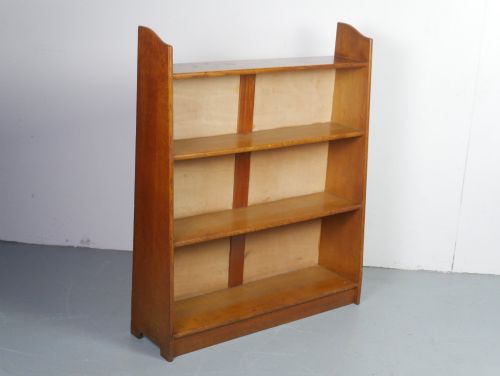
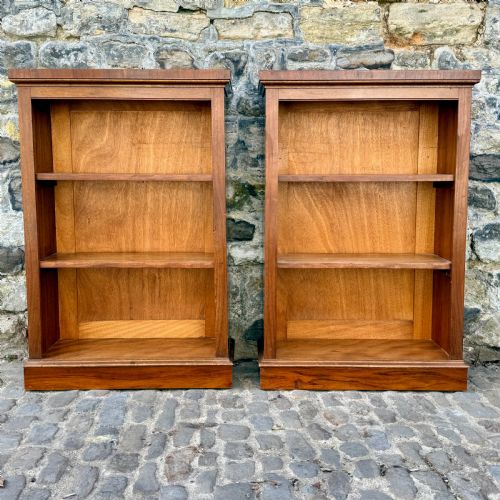
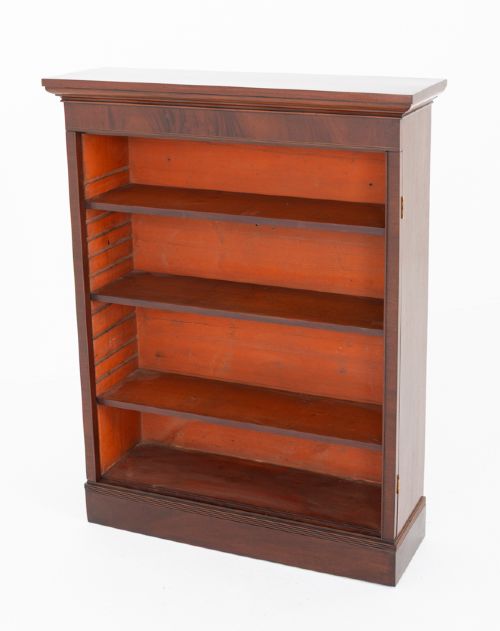
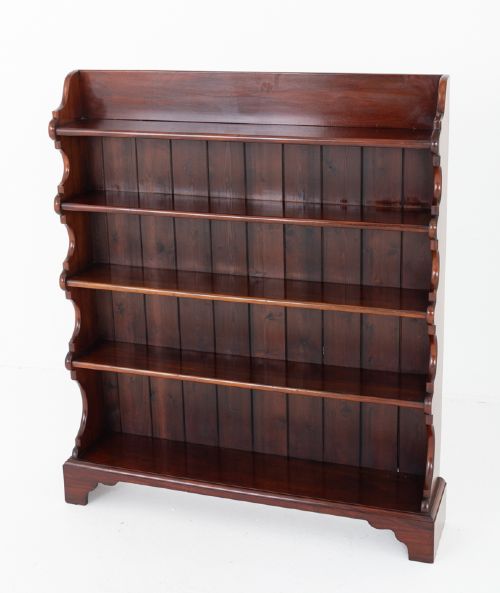
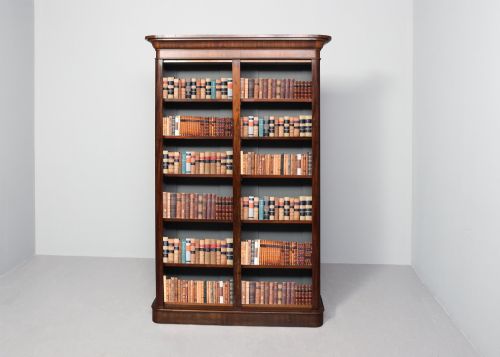
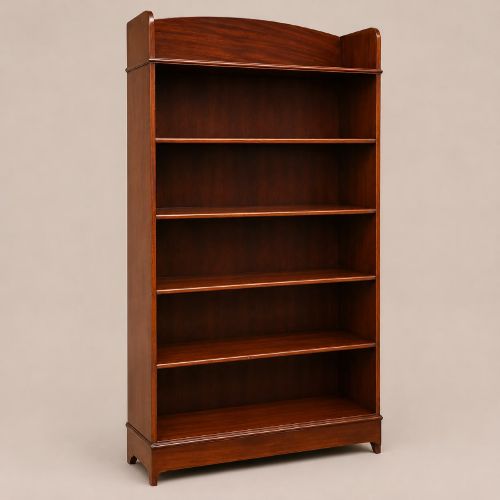
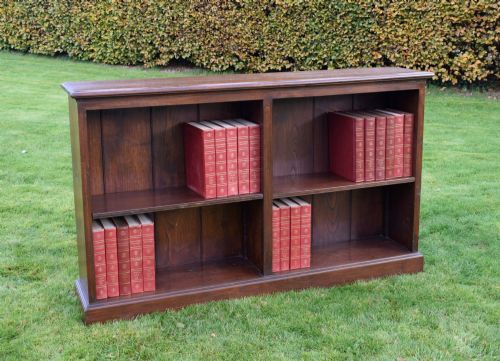
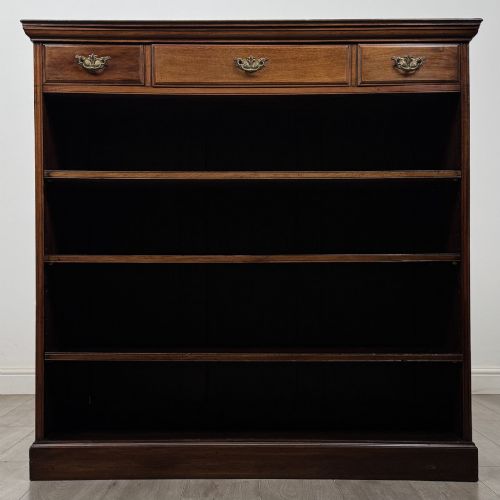
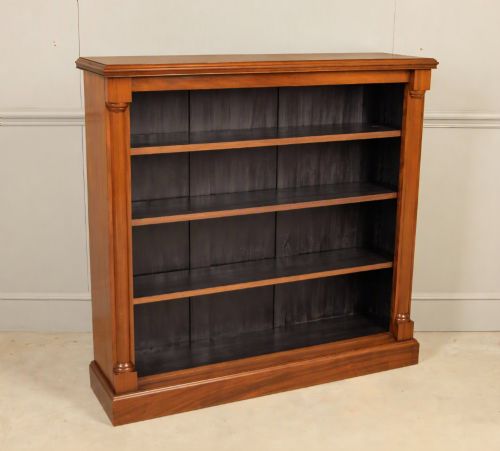
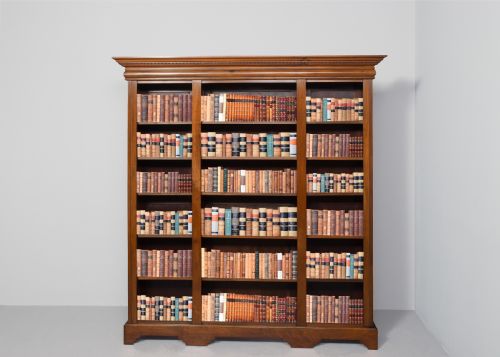
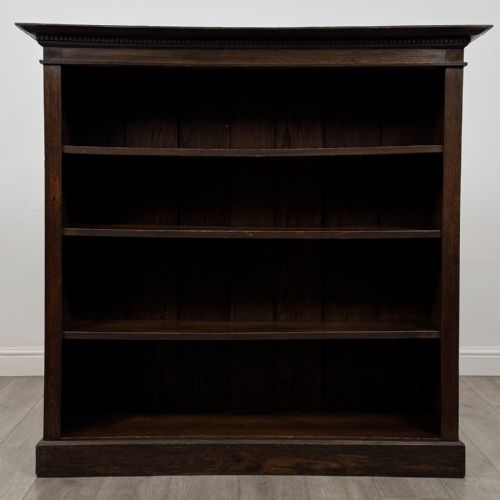
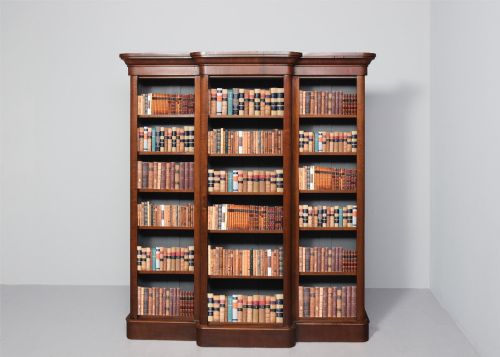
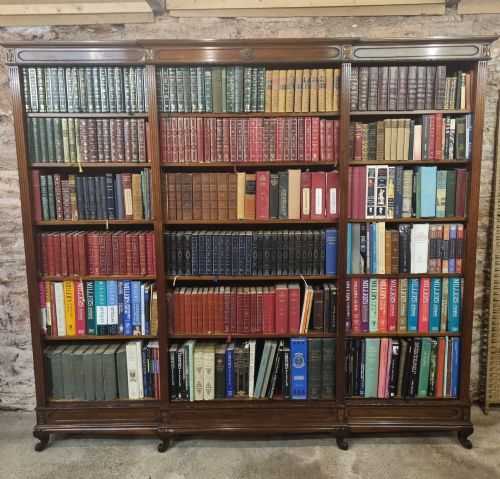
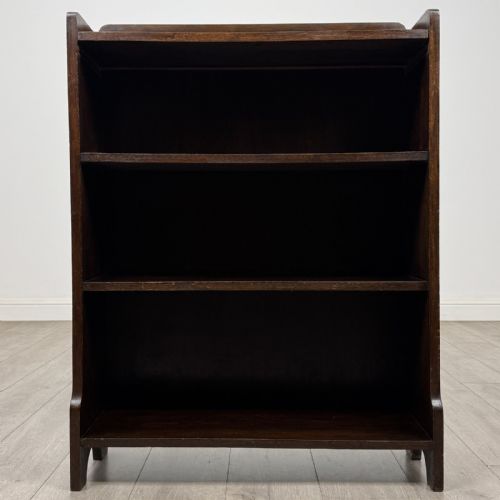
A traditional library shelf takes the form of an open bookcase, designed for housing books within domestic or institutional rooms. These pieces appear primarily as freestanding open bookcases, offering straightforward access to shelves.
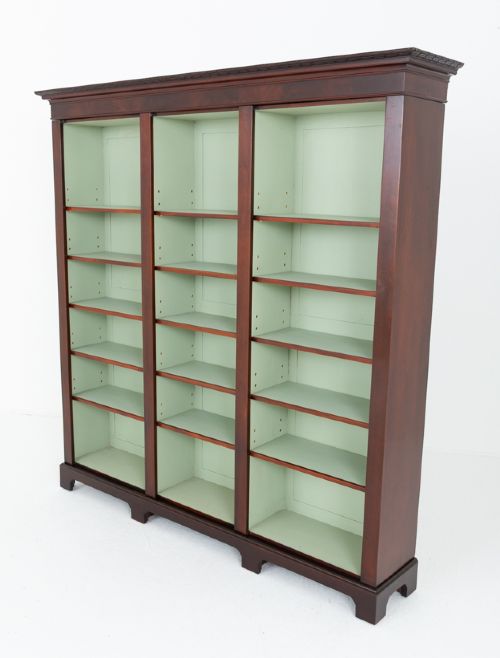
The selections found here span the Victorian, Edwardian, and interwar eras, alongside Georgian revival designs. Buyers frequently encounter open bookcases in mahogany and oak, often featuring adjustable shelving or dentil cornices.
How They Were Made
Cabinet makers constructed these library pieces predominantly using solid timbers like oak, mahogany, and walnut, alongside pine for internal or secondary structures. Selected pieces incorporate flame mahogany veneer or burr walnut to provide decorative grain patterns on prominent surfaces.
Joinery techniques included the integration of adjustable shelf mechanisms, solid plinth bases, and raised galleries. Brass fittings sometimes appear as functional hardware or decorative accents, while ebonised finishes alter the appearance of specific shelving units.
Traditional Library Shelf Retail Price Guide 2026
Typical asking prices for traditional library shelf among the pieces listed under this phrase on Sellingantiques today, from the lower quarter to the upper quarter. They describe what is for sale here now, not the wider market.
Some nineteenth-century readers clearly enjoyed peering through glass tops while browsing their open lower shelves.
What Varies in Quality
Differences in quality depend on the selection of timber and the precision of architectural details such as dentil cornices, breakfront proportions, and inlaid decoration. Pieces built with solid mahogany or figured burr walnut sit at a higher standard than simpler pine iterations.
Construction methods also distinguish standard examples from finer commissions, particularly the inclusion of sophisticated adjustable shelf mechanisms, robust plinth bases, and balanced multi-section layouts.
Waring and Gillows
The Traditional Library Shelf Glossary
- Dentil cornice
- A decorative moulding featuring a series of small, rectangular blocks projecting like teeth beneath the upper edge of a bookcase.
- Breakfront
- A large cabinet design where the central section projects forward from the flanking outer sections.
- Plinth base
- A heavy, solid horizontal block forming the sturdy foundation at the bottom of a piece of furniture.
- Raised gallery
- A low decorative railing or raised border fitted along the top surface of a bookcase to secure objects.
- Barristers stacking bookcase
- A modular shelving unit comprising multiple glazed or open sections that stack vertically with lifting glass doors or open fronts.
Traditional Library Shelf: Frequently Asked Questions
How do I adjust the shelves?
Many traditional library shelves use wooden rack-and-pinion systems, brass studs, or vertical slots cut into the interior sides to support the movable shelves at different heights.
Users simply lift each shelf slightly, reposition the supporting brackets or pegs into the desired slots, and lower the board back into place.
Are these bookcases entirely solid wood?
Construction varies between solid timbers and veneered surfaces depending on the specific period and style of the piece. Oak and mahogany are frequently utilised as solid woods for the main frame and uprights.
Finer decorative examples incorporate flame mahogany or burr walnut veneers applied over secondary woods to display striking grain patterns on the front sections.
How do I care for antique library shelves?
Maintain the wood by applying quality beeswax periodically to nourish the timber and preserve the natural finish. Keep the bookcases away from direct sunlight and steady heat sources to prevent the wood from drying out.
Avoid placing excessive weight on individual shelves to protect antique adjustable supports from strain.