


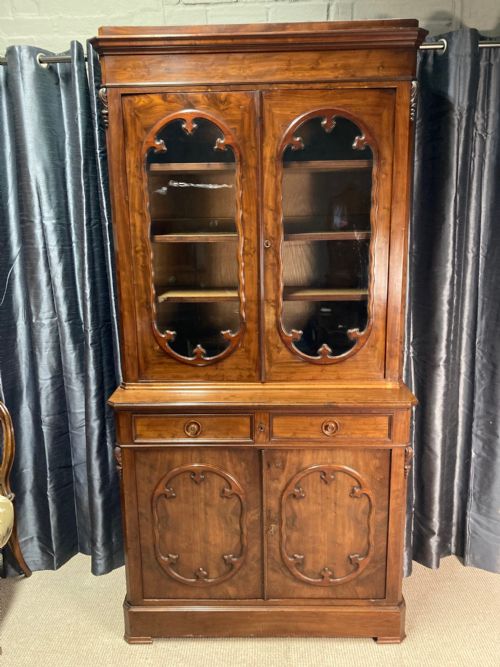


Traditional Library Case
A traditional library case organises volumes behind timber frames and glass panels, bringing architectural order and rich grain into a room.
Traditional Library Case
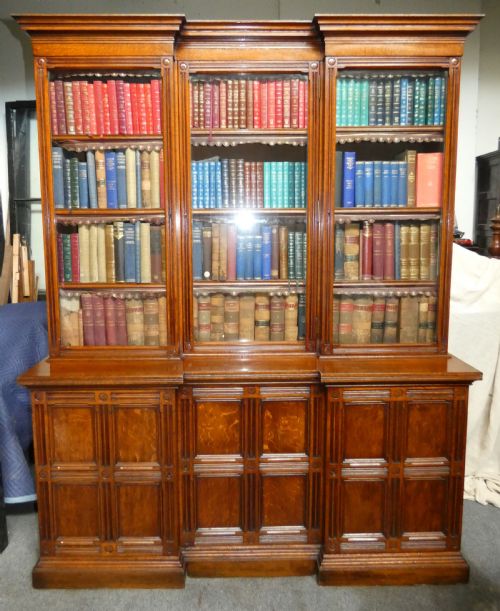
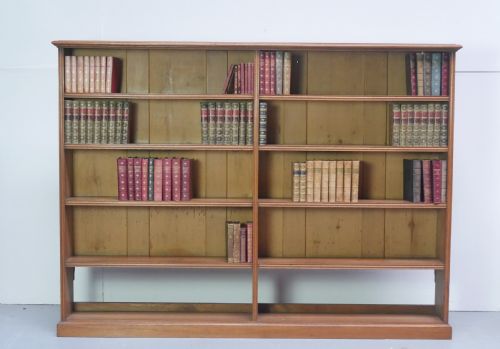
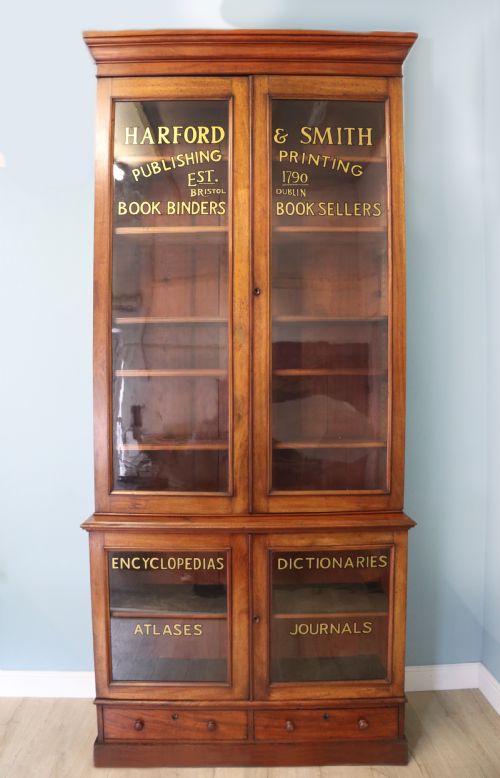
A traditional library case combines shelving and display cabinets to hold collections of books and papers. The pieces here span the Georgian, Victorian, Edwardian, and later periods, capturing the evolving tastes in home study storage.
The forms range from tall breakfront bookcase cabinets and stacking sections to smaller mantel clocks housed in rosewood cases. Oak and mahogany dominate the selection, often paired with glass doors to protect volumes from dust.
Buyers encounter styles running from straightforward oak constructions to ornate Chippendale Revival models and Victorian Gothic Revival details. These items serve to anchor a room's decor while providing practical storage for private libraries.
How they were made
Cabinet makers utilised dense hardwoods like mahogany, oak, and rosewood for the main structures and frames. These timbers provide the necessary strength to support heavy rows of bound books over decades of use.
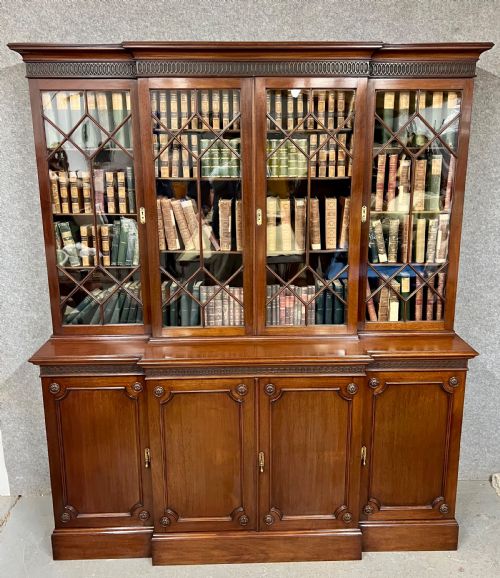
Glazing is set into doors using wood framing such as astral bars, while brass hardware secures doors and internal fittings. Certain items incorporate mechanical stacking designs or platform escapements for clockwork mechanisms housed within wood housings.
Listings feature items built from oak, mahogany, and rosewood, incorporating glass and brass across Georgian, Victorian, and Edwardian periods.
What varies in quality
The refinement of the timber selection and grain pattern dictates the visual impact of the piece. Superior examples employ carefully matched veneers and solid hardwoods that show deep, natural figures.
Construction methods also distinguish finer pieces, visible in the precision of the joinery and the delicacy of revival carvings like Chippendale motifs. The clarity of the glass and the stability of large breakfront frames further separate standard utilitarian storage from distinguished examples.
The Traditional Library Case Glossary
- Breakfront
- A cabinet design where the central section projects forward from the flanking wings. This configuration adds architectural depth and presence to large library furniture.
- Astral Glazed
- A door design featuring a network of slender wooden bars dividing the glass panes into smaller geometric sections. It allows clear visibility while keeping large sheets of glass secure.
- Chippendale Revival
- A decorative style popular in the later nineteenth and early twentieth centuries that reinterprets eighteenth-century cabinet designs. It incorporates carved motifs such as ribbons, scrolls, and fretwork.
- Platform Escapement
- A self-contained escapement mechanism used in clocks that allows accurate timekeeping regardless of the clock's orientation. It appears in portable or desk timepieces encased in wood.
- Rosewood
- A heavy, oily timber prized for its dark purple-brown hue and dramatic grain patterns. It lends a luxurious finish to smaller decorative items and clock cases.
Traditional Library Case: Frequently Asked Questions
What is a traditional library case?
A traditional library case is a piece of furniture designed to house and display books, typically featuring wood shelving enclosed by glass-paned doors. These pieces protect volumes from dust while allowing titles to be viewed.
They range from large breakfront cabinets to modular stacking units and smaller specialised clock enclosures, reflecting the period styles of their makers.
How do I date a library case?
Dating relies on observing the timber species, construction techniques, and stylistic revival cues visible in the piece. Georgian and Victorian examples often feature heavy mahogany or oak frames with hand-cut joinery, while Edwardian pieces may show lighter proportions.
Secondary clues include the type of glass, brass hardware styles, and whether the case is built as a single carcass or in modular stacking sections.
Where should I place a library case?
These pieces suit studies, libraries, drawing rooms, or large living spaces where books and decorative objects require structured storage. Their substantial wooden frames and glass doors command visual attention in a room.
Positioning them away from direct sunlight and dampness protects the timber finishes and the paper bindings of the books inside.
How do I care for wooden library furniture?
Routine care involves dusting the timber surfaces with a soft, dry cloth and occasionally applying appropriate furniture wax to nourish the wood. Maintaining stable room humidity prevents the timber and veneers from splitting or warping.
Glass panels benefit from standard glass cleaner applied sparingly to avoid contact with surrounding wood or brass fittings.