
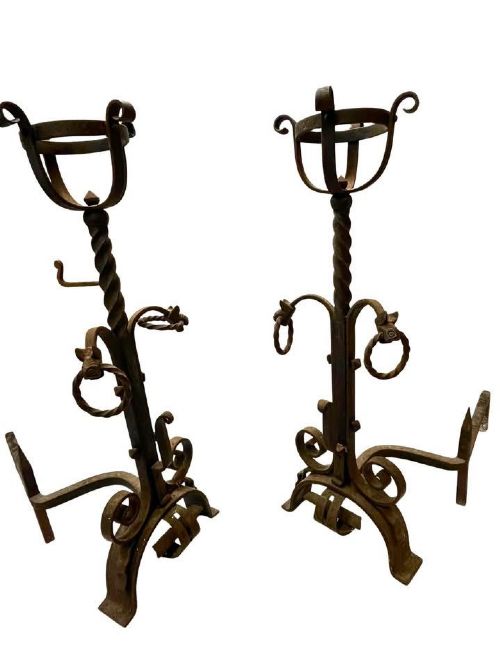


Traditional Iron Fire Dogs
Traditional iron fire dogs hold logs steady in an open hearth, bringing heavy metalwork and practical history directly to the fireplace.
Traditional Iron Fire Dogs
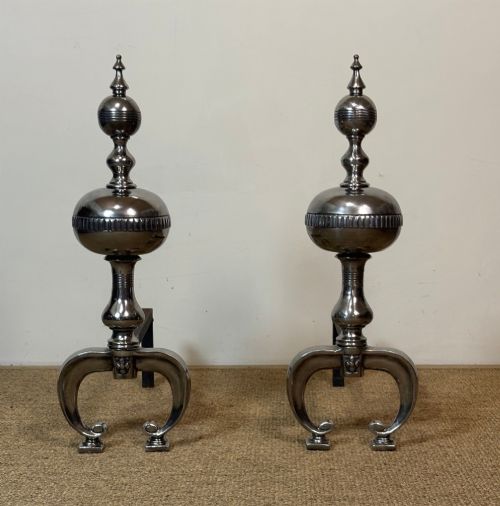
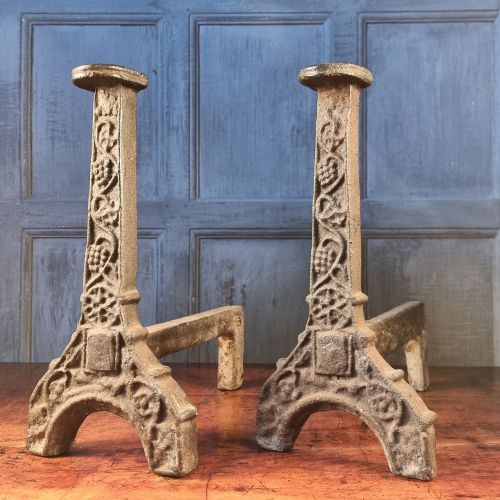
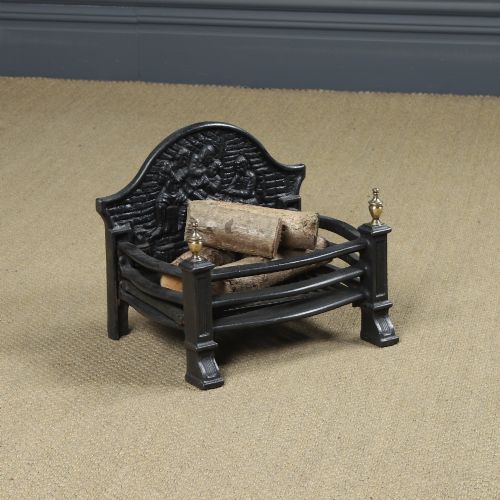
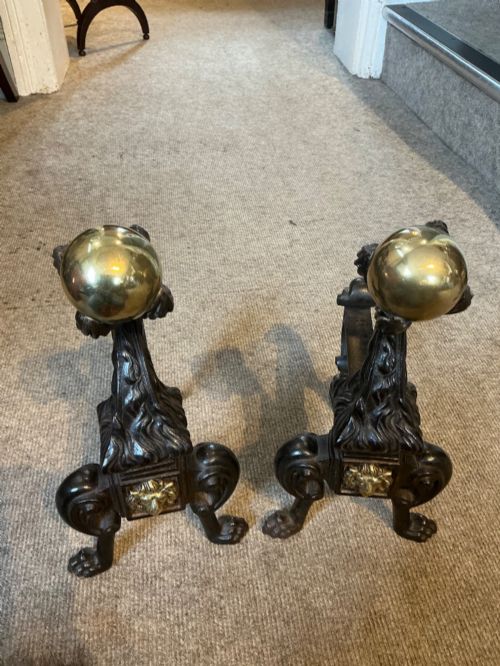
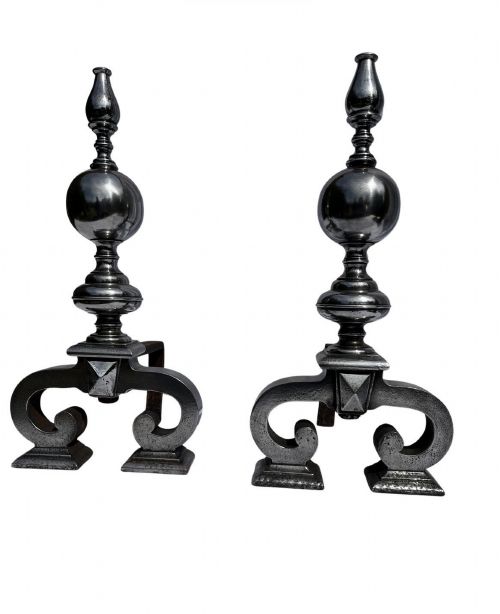
Traditional iron fire dogs, also known as andirons, support wood fuel inside an open hearth to allow proper airflow beneath the burning logs. Buyers encounter these hearth accessories in various historical iterations, ranging from heavy nineteenth century examples to earlier sixteenth century Gothic designs.
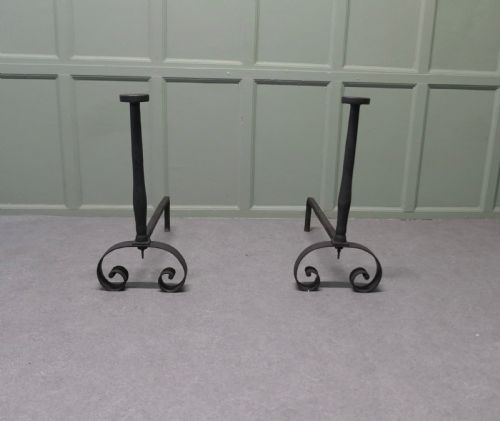
The forms span simple utilitarian supports to large French and English designs featuring decorative motifs. They serve both functional heating roles and decorative hearth focal points within period interiors.
How they were made
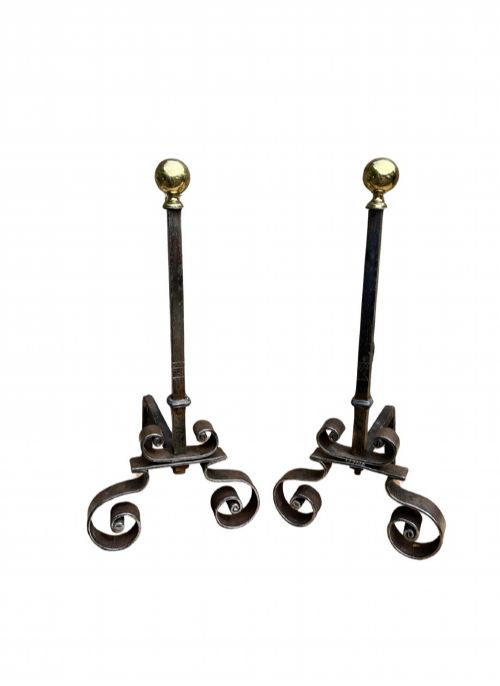
Makers shaped traditional iron fire dogs through casting and hand-forging techniques using metals such as cast iron, wrought iron, and steel. Blacksmiths hammered and bent wrought iron while hot to form sturdy structural bars and decorative scrolls.
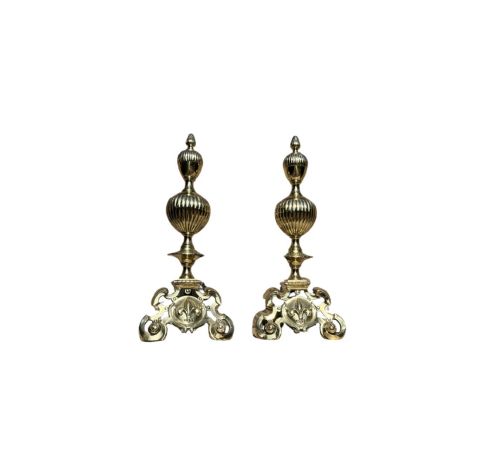
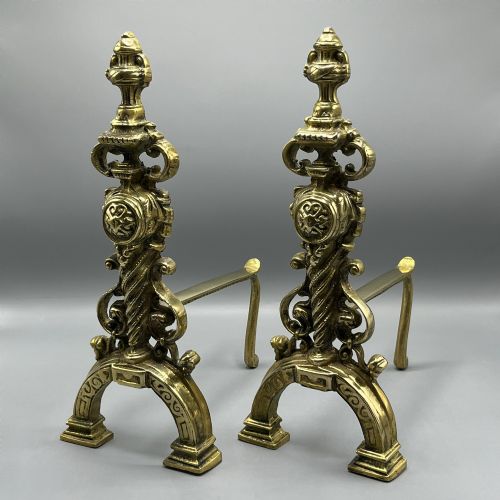
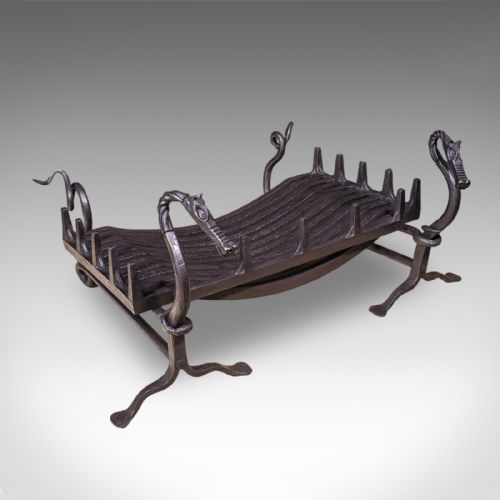
Foundries poured molten iron into moulds to produce solid cast components with ornamental details like dragon motifs or architectural styling. Craftsmen often combined these iron structures with cast or solid brass components to create contrasting metallic finishes.
Current listings feature pieces spanning the 16th century through the Edwardian period, utilising cast iron, wrought iron, brass, and steel.
What varies in quality
Quality in traditional iron fire dogs rests upon the weight of the metal and the integrity of the construction. Heavier cast and wrought iron examples demonstrate substantial substance designed to withstand intense hearth heat over centuries.
Refinement in surface finish and detailing separates standard utility irons from superior items. Hand-forged work exhibits careful shaping at joints and terminals, while lesser pieces display simpler, coarser production methods.
The Traditional Iron Fire Dogs Glossary
- Andiron
- A horizontal support iron raised on legs, used in pairs to hold logs in a fireplace. They often feature decorative vertical fronts.
- Fire grate
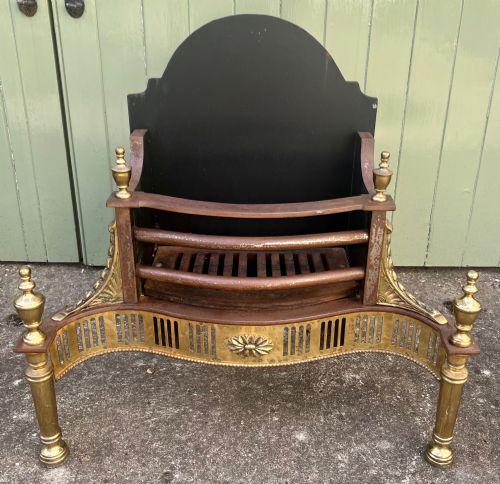
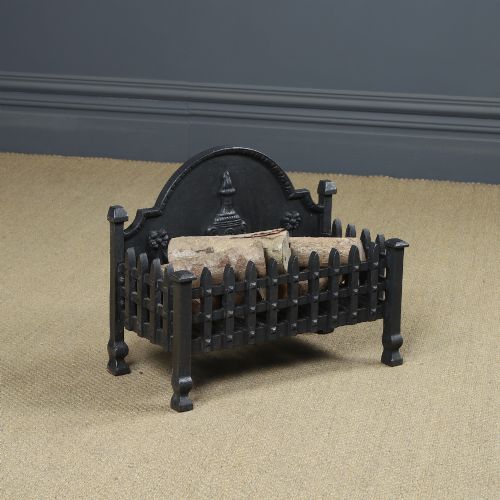
- A basket or metal framework that holds coal or wood above the hearth floor. This allows ash to fall through to the hearth below.
- Wrought iron
- Iron that has been heated and hammered by hand into shape. It displays fibrous grain patterns and high resilience against bending.
- Cast iron
- Iron poured into a mould in a molten state to form rigid shapes. It provides crisp decorative details for hearth furniture.
- Gothic Revival
- A nineteenth century design style drawing inspiration from medieval architecture. Pieces feature pointed arches, quatrefoils, and heavy vertical lines.
Traditional Iron Fire Dogs: Frequently Asked Questions
How do I use traditional iron fire dogs?
Place a pair of fire dogs on either side of the hearth floor to support logs above the base. This arrangement elevates the firewood, allowing air to circulate underneath for a cleaner burn.
They also prevent logs from rolling forward out of the fireplace opening into the room. Pair them with a matching fire basket or grate if your hearth requires a container for smaller fuel.
What is the difference between fire dogs and andirons?
The terms fire dogs and andirons describe the exact same hearth furniture used to hold logs. Regional preferences and historical periods dictated which term manufacturers and buyers utilised.
Both names refer to the heavy metal supports with upright fronts that guard the open fireplace. Listings use both words interchangeably to describe these items.
How do I date a pair of fire dogs?
Dating relies upon stylistic clues, material choices, and manufacturing techniques evident in the metalwork. Victorian and Edwardian examples often feature machine-assisted casting combined with polished brass details, while earlier pieces show hand-forged wrought iron construction.
Consult the specific design motifs, such as Gothic Revival arches or Neo-Classical lines, to place the pieces within their historical era.
Can I use antique fire dogs in a working fireplace?
Most traditional iron fire dogs are structurally robust enough for regular use in an open fire. Solid cast iron and heavy wrought iron withstand high temperatures effectively.
Ensure the metal shows no deep structural cracks from past heat exposure before lighting a fire. Regular cleaning of ash prevents corrosive buildup on the iron surface.