



Traditional Hearth Fender Seat
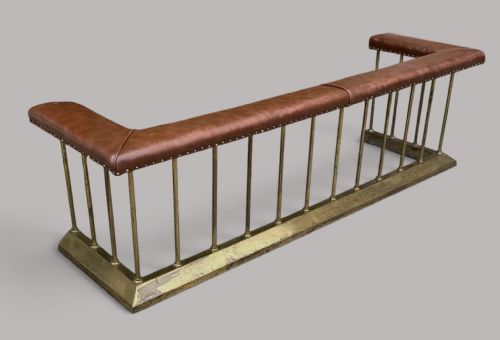
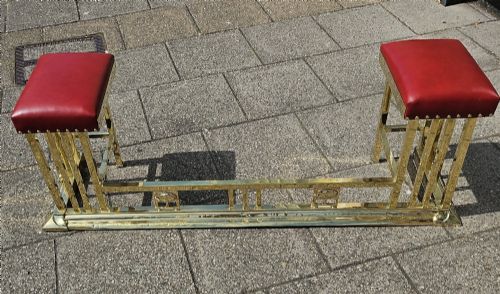
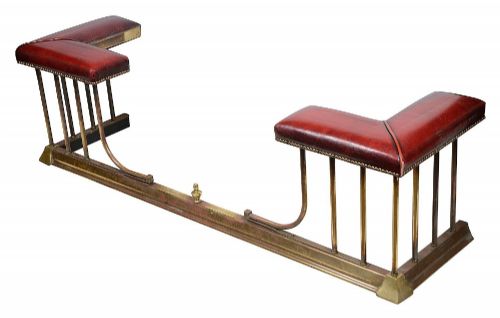
These traditional hearth fender seat pieces combine fireside seating and hearth protection, offering a sturdy brass or steel frame topped with leather.
Traditional Hearth Fender Seat
A traditional hearth fender seat provides a low, padded perch directly around the fireplace opening. These fixtures appear primarily across the nineteenth century and the Edwardian era, taking the form of club fenders built to fit standard domestic hearths.
The most common examples on this page utilise a robust metal base constructed from brass, steel, or iron. This framework supports a perimeter bench upholstered in mature tan or green leather.
Alternative variations incorporate oak, mahogany, or wrought iron alongside copper and chrome details. English country house and Art Deco stylistic touches also emerge among these fireplace accessories.
How traditional hearth fender seat pieces were constructed
Makers formed the structural frames of a traditional hearth fender seat using cast or tubular metal, selecting brass, steel, iron, or copper. These metals were polished, silvered, or left in a dark wrought finish to withstand daily use near the fire.
The seating portion relies on heavy timber foundations, such as oak or mahogany, covered with durable leather upholstery. Craftsmen secured these padded tops with buttoning or stud work, often styling them in the manner of Chesterfield seating.
Some nineteenth-century gentlemen's clubs utilised heavy steel fenders so sturdy that members could rest their muddy boots right on the metal corners.
What distinguishes the quality of a traditional hearth fender seat
The standard of a traditional hearth fender seat depends heavily upon the substance of its metal framework and the integrity of its internal construction. Substantial gauge brass and heavy cast steel provide a sturdier foundation than lighter alternatives.
Upholstery choice and corner joinery also determine the standard of the piece. Thick, mature leather hides paired with solid timber subframes demonstrate careful workshop production rather than lighter decorative assembly.
The Traditional Hearth Fender Seat Glossary
- Club fender
- A low fireside seat built around a hearth, featuring a padded top supported by a metal frame. This form allowed people to sit close to the fire while containing ash and embers.
- Chesterfield seat
- A heavily buttoned and padded upholstery style frequently utilised on the top of these fenders. It provides a cushioned surface for sitting.
- Wrought iron
- Iron shaped by hammering or bending while hot, often used to create decorative and sturdy frames. This material offers distinct textural variation compared to smooth cast brass.
- Silvered
- A metallic finish applied to steel or brass components to give a bright, reflective surface. It appears on select twentieth-century examples.
Traditional Hearth Fender Seat: Frequently Asked Questions
How do I choose the right size?
Measure your fireplace hearth width and depth carefully before selecting a fender. The metal base must clear your hearth stone while leaving enough space for fire tending.
Take into account the height of the padded seat, as traditional versions sit lower than standard dining chairs.
Were these seats used originally?
These fenders served as practical seating within country houses and gentlemen's clubs. They kept occupants close to the warmth of the hearth while protecting the room from stray embers.
The padded top offered a comfortable vantage point during cold winter evenings.
How do I care for the leather?
Clean the leather top periodically with a dry cloth and condition it to prevent drying out from fireplace heat. Avoid placing the fender too close to open flames to protect the hide.
Polish the brass or steel framework separately using appropriate metal cleaners to maintain the finish.
What periods do these date from?
The examples listed span from the nineteenth century through the Edwardian period and into the nineteen-thirties and forties. Victorian and Edwardian pieces make up the majority of the selection.
Art Deco and country house variants represent later stylistic developments within the traditional form.