







Traditional Garden Scene
These traditional garden scene works capture quiet pastoral moments, offering a window into domestic rural life through oil and watercolour.
Traditional Garden Scene
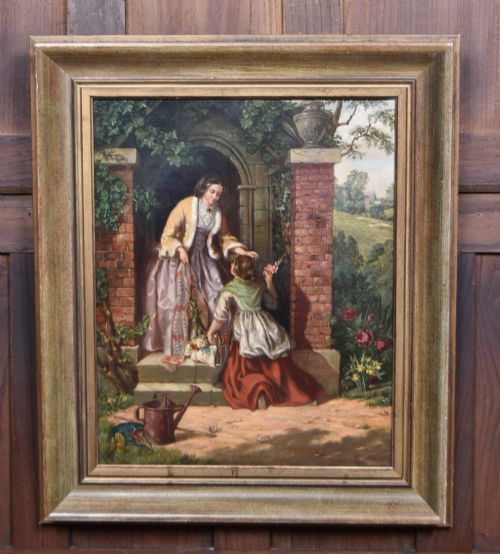
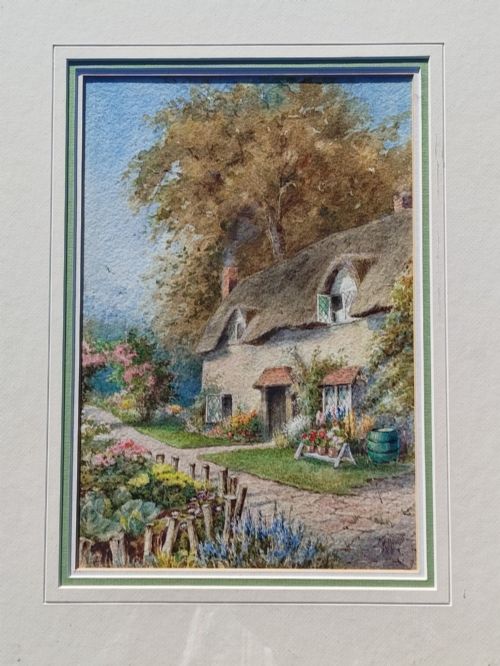
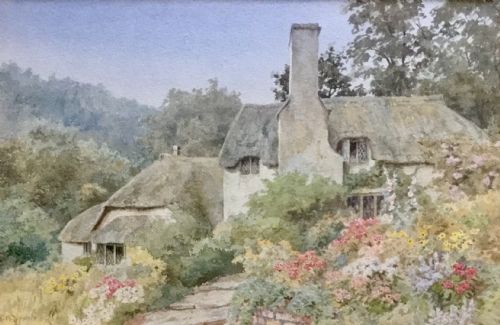
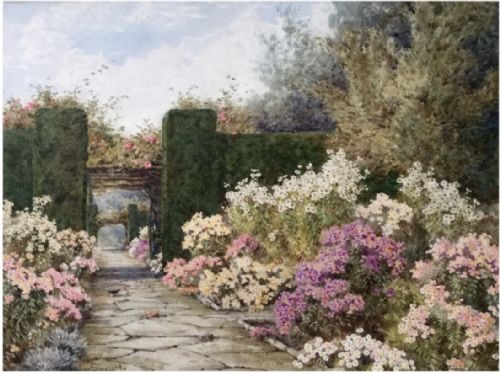
A traditional garden scene typically depicts pastoral views, cottage exteriors, and sunlit floral spaces rendered during the late nineteenth and early twentieth centuries. These works range from detailed watercolours of Somerset villages to impressionistic oil paintings of domestic plots and rural workers.
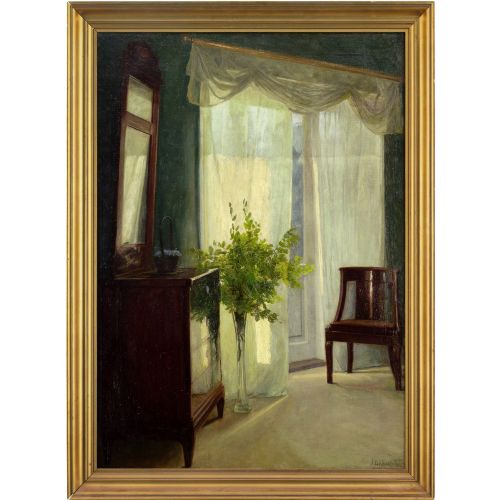
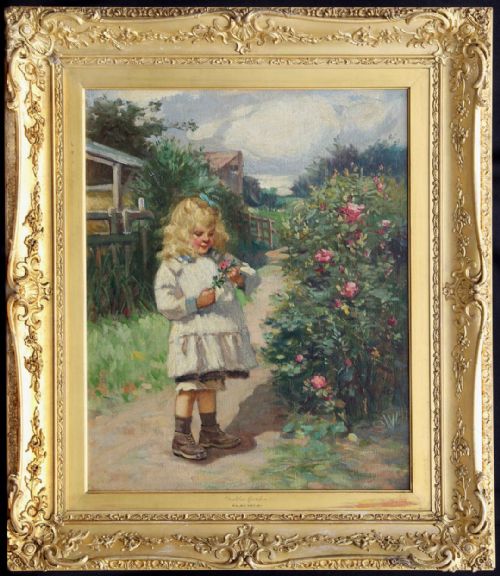
The pieces available here lean heavily into British Impressionism, Edwardian pastoral subjects, and Victorian rural genre painting. Collectors encounter framed watercolours on paper alongside substantial oil paintings on canvas set within gilded wood frames.
How they were made
Artists employed oil paint on canvas or watercolour on paper, capturing light and atmosphere using brushwork characteristic of early twentieth-century realism and Impressionism. Pigments were applied to build texture, particularly in depictions of herbaceous borders and sunlit doorways.
Framing forms an integral part of these pieces, utilising wood frames embellished with gold leaf and gilded mouldings that complement the palette of the paintings within.
Traditional Garden Scene Retail Price Guide 2026
Typical asking prices for traditional garden scene among the pieces listed under this phrase on Sellingantiques today, from the lower quarter to the upper quarter. They describe what is for sale here now, not the wider market.
Materials in this collection include oil paint, watercolour, canvas, paper, wood, gilded wood, and gold leaf.
What varies in quality
Quality rests in the precision of the brushwork and the artist's ability to render natural light, distance, and atmospheric depth across the canvas or paper. Finer examples display confident handling of shadow and foliage, whereas simpler works rely on conventional composition.
The integrity of the original support materials and the condition of the gilded wood frames further distinguish the finer pieces from standard decorative works.
John Lübschitz·Herbert Royle·Arthur Claude Strachan·Thomas Nicholson Tyndale·Jane Utley·Edgar Bundy·Ralph Hedley·Lilian Stannard·John F Pasmore·Frank Moss Bennett
The Traditional Garden Scene Glossary
- Watercolour
- A painting method in which the paints are made of pigments suspended in a water-based solution. This technique is frequently applied to paper surfaces to achieve luminous washes of colour.
- Canvas
- A heavy woven fabric used as a surface for oil painting. It is typically stretched over a wooden frame before pigment is applied.
- Gilded wood
- Wood that has been treated with a thin layer of gold leaf or metallic powder. This finish is commonly found on traditional picture frames.
- Genre painting
- A style of art that depicts aspects of everyday life by portraying ordinary people engaged in common activities. These works often feature domestic gardens and rural settings.
Traditional Garden Scene: Frequently Asked Questions
What periods do these paintings come from?
The works span the nineteenth and early twentieth centuries, with a strong representation from the Edwardian era and the 1910s.
Collectors will also encounter pieces dated from around 1900 to 1920, reflecting Victorian rural genre traditions and early British Impressionism.
Are these works painted on canvas or paper?
The selection includes both oil paintings executed on canvas and delicate watercolours created on paper supports.
Some pieces also incorporate mixed media or textiles, such as framed tapestries from the turn of the twentieth century.
How should I display a gilded frame?
Gilded wood frames require placement away from direct sunlight and excessive moisture to protect the gold leaf and wooden substrate.
Hanging them on stable interior walls ensures the canvas or paper remains undisturbed by environmental fluctuations.
How do I distinguish between an oil painting and a watercolour?
Oil paintings feature textured, opaque layers of pigment applied to stretched canvas, often displaying visible brushstrokes and a heavier weight.
Watercolours are executed on paper under glass, showing transparent washes of colour where the texture of the paper remains visible beneath the pigment.