

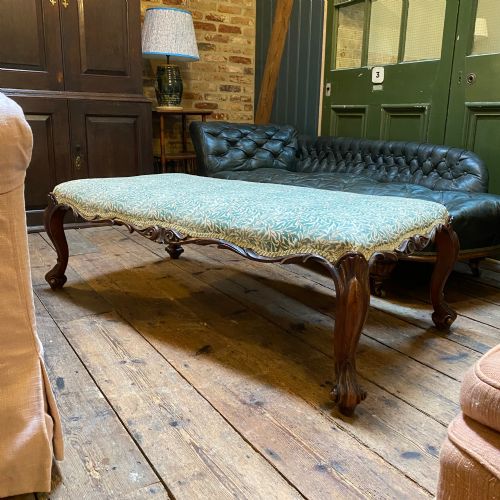
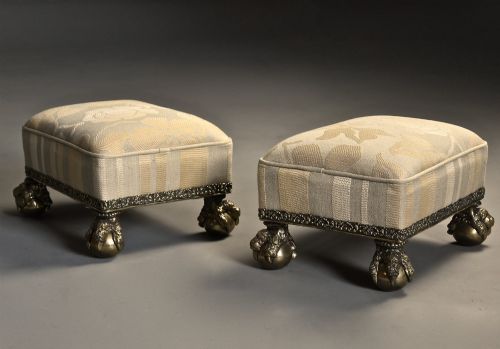

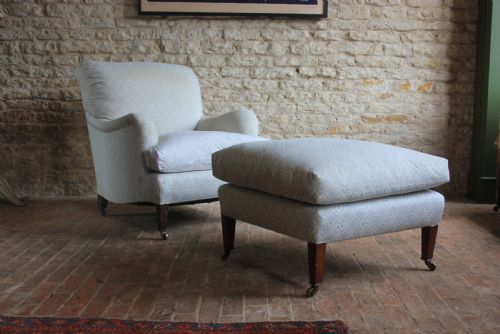


Traditional Foot Stool
A traditional foot stool brings the comfort of past centuries to a room, offering low timber frames and period upholstery.
Traditional Foot Stool
A traditional foot stool provides a low platform for resting feet, appearing in forms ranging from simple country pieces to elaborate revival designs. These items frequently take the shape of small square or long frames, alongside specialised dressing stools and matching armchair sets.
The pieces on this page span the Victorian and Edwardian eras, stretching back through the nineteenth century to Georgian examples. Walnut and mahogany woods dominate the timber frames, paired with various textiles including tapestry and traditional upholstery fabric.
Makers drew on established design vocabularies, producing works that reflect Queen Anne and Chippendale styles as well as Victorian country aesthetics and Baroque Revival motifs. Buyers encounter everything from compact embroidery stools to long footstools and ottomans.
How they were made
Cabinet makers constructed the foundational frames using solid timbers such as mahogany and walnut, shaping supports with ball feet or cabriole legs. Joinery methods matched the period, ensuring sturdy structures capable of daily weight.
Upholstery techniques combined internal stuffing with durable textile coverings, securing fabric across square or shaped platforms. Many examples incorporate decorative elements like brass details or intricate tapestry needlework.
Traditional Foot Stool Retail Price Guide 2026
Typical asking prices for traditional foot stool among the pieces listed under this phrase on Sellingantiques today, from the lower quarter to the upper quarter. They describe what is for sale here now, not the wider market.
Listings feature timber frames in mahogany and walnut, paired with fabric, tapestry and brass details across Victorian, Edwardian and Georgian periods.
What varies in quality
The refinement of the timber carving distinguishes simpler country items from high-status period pieces, particularly in the shaping of cabriole legs and feet. Finer examples display meticulous joinery and proportioned frames that complement period seating.
The integrity and texture of the original or period upholstery materials create a clear distinction across the range. Superior pieces feature carefully preserved tapestry or fabric that harmonises with the character of the wood frame.
Howard and Sons
The Traditional Foot Stool Glossary
- Cabriole leg
- A furniture leg that curves outward at the knee and tapers inward to an ankle, often ending in a ball foot. This design appears frequently on walnut and mahogany seating from earlier centuries.
- Ottoman
- A low, upholstered seat or footstool without a back or arms, designed for extended resting. Larger versions accommodate multiple feet or serve as dual-purpose furnishings.
- Tapestry
- A heavy textile featuring woven pictorial or geometric designs, commonly used for historical upholstery. Needlework versions bring coloured patterns to the top of foot stools.
- Upholstery
- The materials, including padding, springs, webbing and fabric, that make up the soft covering of a seat. Period pieces utilise traditional stuffing methods suited to their manufacturing era.
- Chippendale style
- A furniture design vocabulary drawing on mid eighteenth century aesthetics, characterised by carved mahogany frames and classical motifs. Pieces in this style exhibit formal proportions.
Traditional Foot Stool: Frequently Asked Questions
What is a traditional foot stool?
A traditional foot stool is a low timber frame raised on legs and topped with fabric or tapestry, designed to support seated feet.
These pieces reflect historical periods such as the Victorian and Georgian eras, utilising woods like mahogany and walnut alongside period textiles.
How were foot stools used historically?
Foot stools provided warmth and comfort in period drawing rooms and dressing areas by keeping feet raised above cold floors. They also served alongside armchairs and dressing tables as matching seating accessories.
Smaller embroidery stools held specific utility for needlework tasks, while longer ottomans accommodated extended seating arrangements.
How do I care for antique upholstery?
Care for antique textiles involves gentle cleaning methods that preserve fragile fibres and original tapestry work. Keeping wooden frames polished maintains the timber finish without harming adjacent fabric.
Placing stools away from direct sunlight protects coloured threads from fading over time.
How do I identify the period of a foot stool?
Dating relies on observing timber choices, leg shapes such as cabriole designs, and decorative styles like Chippendale or Victorian revival. Construction techniques within the frame offer further clues to the manufacturing decade.
Comparing textile types and framing details against known historical periods helps confirm the age of each piece.