



Traditional Farm Art
Traditional farm art captures rural life through oil paintings, watercolours, and carved wooden models spanning the nineteenth and early twentieth centuries.
Traditional Farm Art
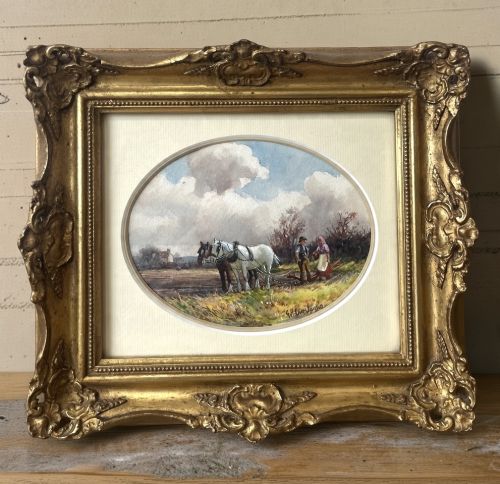
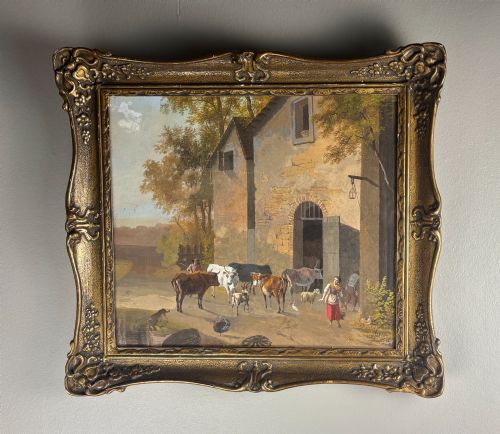
When searching for traditional farm art, a buyer encounters oil paintings and watercolours depicting rural scenes, livestock, and agricultural workers. These works record pastoral life, farmyards, and working animals across British landscapes from the nineteenth and early twentieth centuries.
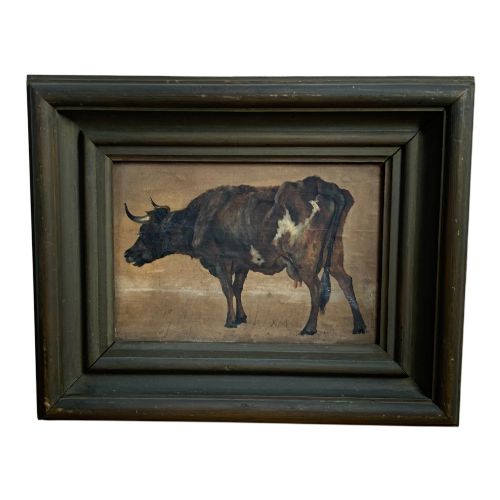
The pieces most frequently met on this page include oil on canvas paintings by recognised British school artists, alongside folk art sculptures and scale models of rural equipment. Scenes range from detailed studies of prize bulls and poultry to expansive farming landscapes with plough teams and harvest workers.
Materials and methods
Artists painted primarily with oil on canvas or applied watercolour to paper, capturing natural light across rural fields and farm interiors. Canvas supports often carry heavy layers of oil paint that preserve the texture of brushwork and the rich tones of rustic subjects.
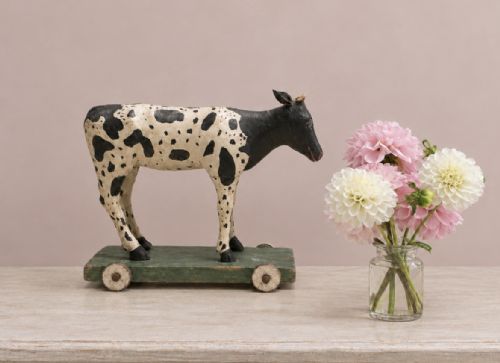
Wooden items utilise traditional joinery and carving techniques, seen in handmade scale models of farm carts and carved animal figures mounted on wheels. Giltwood frames frequently house the paintings, adding period definition to the canvas works.
Traditional Farm Art Retail Price Guide 2026
Typical asking prices for traditional farm art among the pieces listed under this phrase on Sellingantiques today, from the lower quarter to the upper quarter. They describe what is for sale here now, not the wider market.
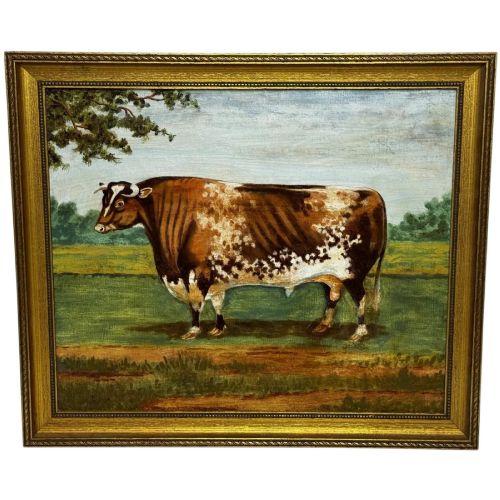
A wooden cow on wheels shares space with grand Victorian oil paintings of prize shorthorn bulls.
Judging quality
Quality rests upon the artist's ability to render anatomy and natural light convincingly within the landscape. Works by listed painters demonstrate superior control over animal forms, perspective, and the atmospheric conditions of the British countryside compared to unsigned school pieces.
Material preservation dictates distinction among physical objects and canvases alike. Stable paint layers free from excessive craquelure and original wooden surfaces with honest wear represent the upper tier of surviving examples.
Claude Cardon·John Frederick Herring Jnr·Herbert Royle·Owen Bowen·Ernest Higgins Rigg
The Traditional Farm Art Glossary
- British Impressionism
- A style of painting that emerged in the late nineteenth century focusing on loose brushwork and natural light. Artists working in this manner sought to capture transient atmospheric effects in rural settings.
- Folk art
- Objects created by self-taught or untrained makers, often serving a practical or decorative function. In a rural context, this includes carved wooden animals and handmade farm models.
- Oil on canvas
- Pigments bound in a drying oil medium applied to a stretched fabric support. This combination allowed artists to build rich layers of colour and texture.
- Provenance
- The documented history of ownership or origin for an artwork. Clear provenance links a painting to specific exhibitions, collections, or the artist's estate.
Traditional Farm Art: Frequently Asked Questions
What is traditional farm art?
Traditional farm art encompasses nineteenth and early twentieth century oil paintings, watercolours, and wooden objects depicting rural scenes, livestock, and agricultural labour.
These works reflect the importance of farming in British visual culture during the Victorian and Edwardian periods.
How were these paintings displayed?
Period artworks were typically housed in heavy giltwood frames designed to complement the domestic interiors of country houses and town residences alike.
Frames often bear the marks of original makers or retailers active during the nineteenth century.
How do I identify a Victorian oil painting?
Victorian oil paintings often feature specific subject matter such as prize livestock, detailed farmyard scenes, and realistic depictions of rural workers. Examining the canvas, stretcher frames, and framing style helps confirm the period.
Signatures or attribution to known British school painters provide further context for dating.
Where were these rural scenes painted?
Artists worked across various British regions, capturing specific locations in Yorkshire, Wharfedale, and other pastoral settings. Inscriptions on the reverse of canvases or within titles often name the exact farm or village.
Painters travelled directly to rural communities to observe agricultural life firsthand.