


Traditional Elm Refectory Table
A traditional elm refectory table brings historic warmth and honest grain to a room, offering the sturdy simplicity of centuries past.
Traditional Elm Refectory Table
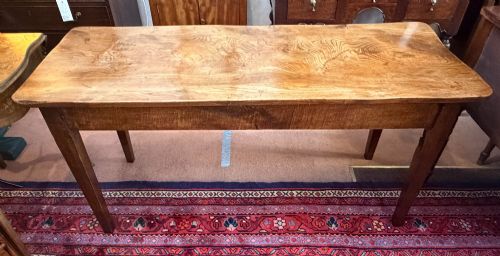
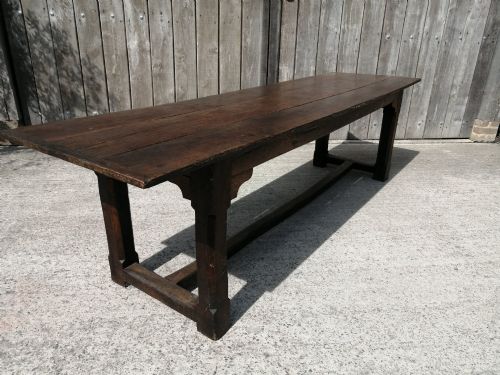
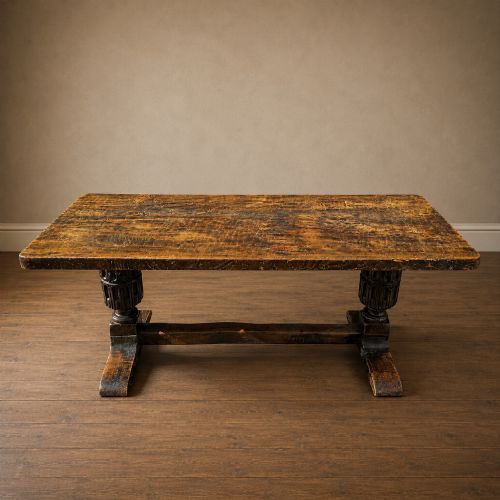
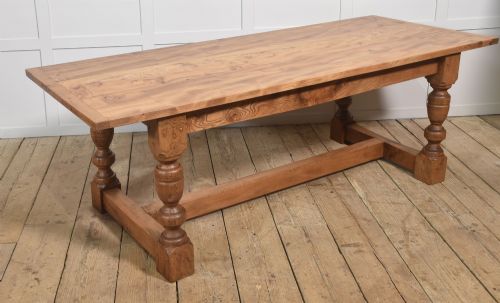
A traditional elm refectory table is a substantial dining or tavern piece built for communal dining and domestic use. These surfaces carry the presence of centuries past, originating across the seventeenth, eighteenth, and nineteenth centuries in farmhouse and tavern settings.
The versions met on this page range from rustic nineteenth century farmhouse designs to earlier George I and seventeenth century examples. They appear in forms such as dining tables and tavern tables, often combining elm with oak timber.
Buyers seek these pieces for their generous proportions and deep historic character. The surface grain of elm provides a distinct visual texture that distinguishes these tables from standard oak furniture.
How they were made
These tables rely on a combination of elm and oak timber, utilising the contrasting properties of each wood for tops and structural frames. Seventeenth century examples feature single plank elm tops supported by sturdy joinery.
Construction methods span rustic farmhouse carpentry and formal Georgian cabinet making. Turned legs and side drawers appear on nineteenth century items, while earlier periods employ robust rectangular frames designed for heavy daily use.
Materials recorded across current items include solid elm, oak, and general timber constructions.
What varies in quality
The upper tier of these tables is defined by timber selection, particularly the presence of wide single plank elm tops that display strong natural grain. Age adds depth to the material, distinguishing seventeenth and eighteenth century examples through the natural softening of edges and joints.
Patina and surface depth separate standard domestic furniture from exceptional pieces. Examples that retain undisturbed historic colour and smooth tactile surfaces demonstrate superior survival through generations of use.
The Traditional Elm Refectory Table Glossary
- Refectory table
- A long dining table historically used in monasteries and large houses for communal meals. These pieces are characterised by their elongated rectangular proportions and sturdy undercarriages.
- Elm
- A dense, interlocking hardwood known for its resistance to splitting and its rich, winding grain pattern. It has traditionally been utilised for table tops and Windsor chair seats.
- Patina
- The surface sheen and mellowing developed by wood over centuries of handling, cleaning, and exposure to light. This quality signals genuine age and honest use.
- Single plank top
- A table surface constructed from one board cut across the full width of a mature tree. This feature marks superior timber availability and skilled carpentry.
- Tavern table
- A small or medium scale heavy wooden table used in public houses and domestic kitchens. They often feature simple turned legs and occasional drawers for storage.
Traditional Elm Refectory Table: Frequently Asked Questions
How do I date a refectory table?
Dating relies on observing construction techniques, joinery methods, and the wear patterns present in the timber. Earlier seventeenth and eighteenth century pieces display hand-cut joints and distinct tool marks.
Stylistic markers such as turned legs and the presence of side drawers help differentiate nineteenth century farmhouse variations from earlier formal periods like George I.
How do I care for an elm table?
Elm furniture responds best to gentle cleaning with a slightly damp cloth followed by dry buffing. Avoid harsh chemical polishes that can build up on the historic surface.
Maintaining a stable room temperature prevents the timber from drying out or splitting. Natural beeswax applied sparingly helps nourish the grain and preserve the existing patina.
Where were these tables used originally?
These tables served primarily in large farmhouse kitchens, monastery dining halls, and public taverns. Their substantial length accommodated multiple diners for daily meals.
In domestic settings, they acted as the workhorse of the home for food preparation, dining, and daily household business.