







Traditional Country House Dresser
A traditional country house dresser brings honest utility and vernacular warmth to a room, offering generous storage for daily provisions or prized pottery.
Traditional Country House Dresser
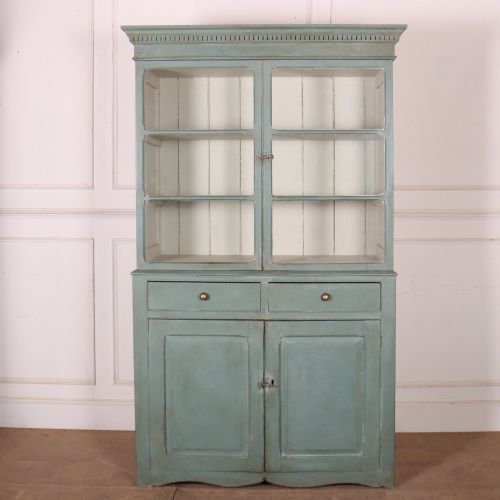
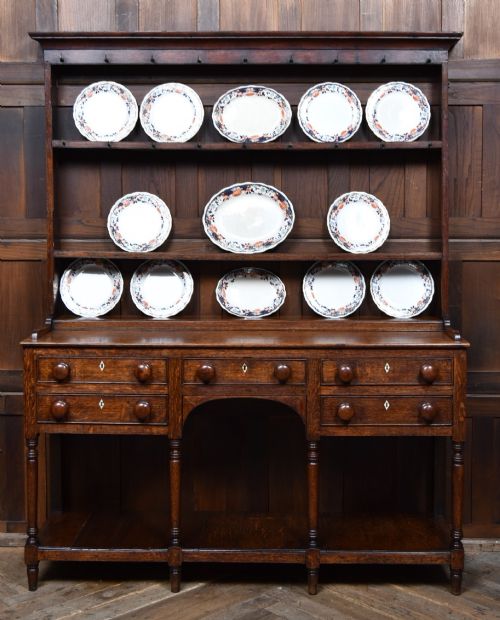
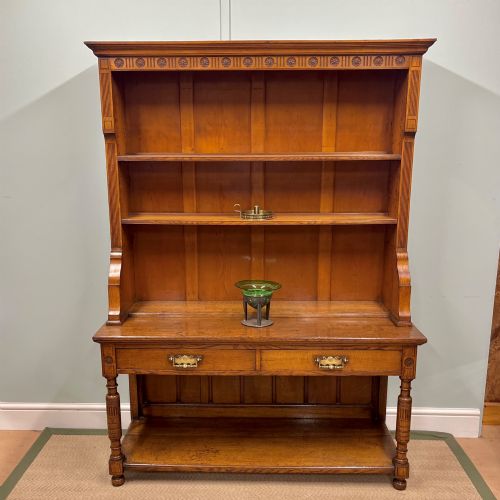
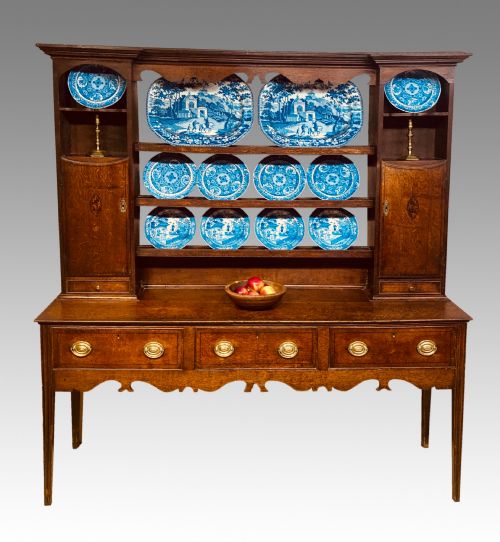
A traditional country house dresser represents the backbone of domestic life, originating in kitchens, pantries, and living quarters across regions like Wales, Shropshire, and the West Country. These forms include open plate racks, potboards, and enclosed bases designed to hold heavy earthenware and pewter.
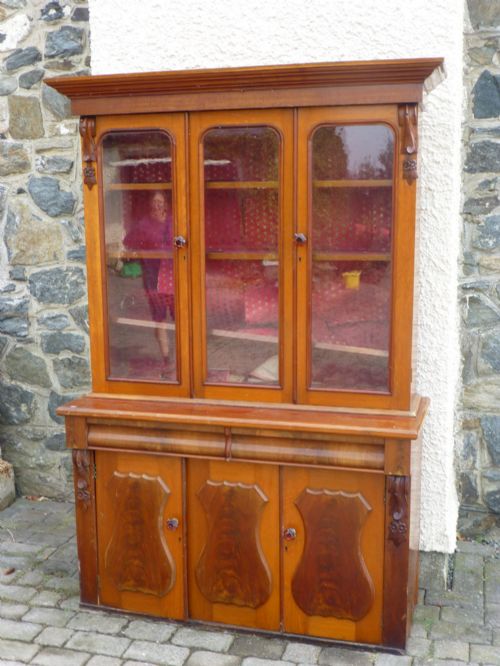
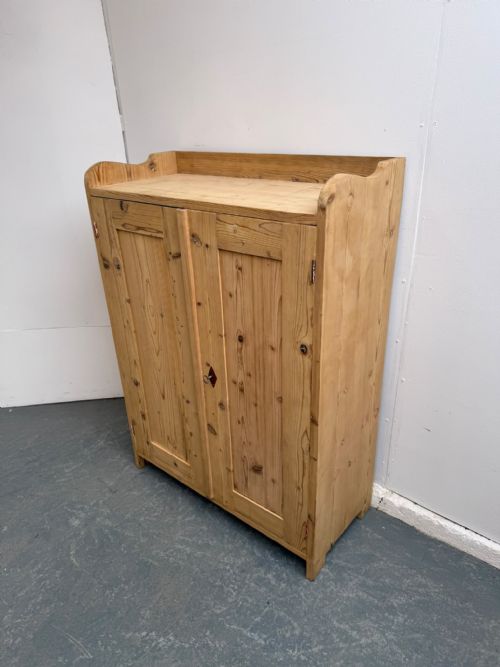
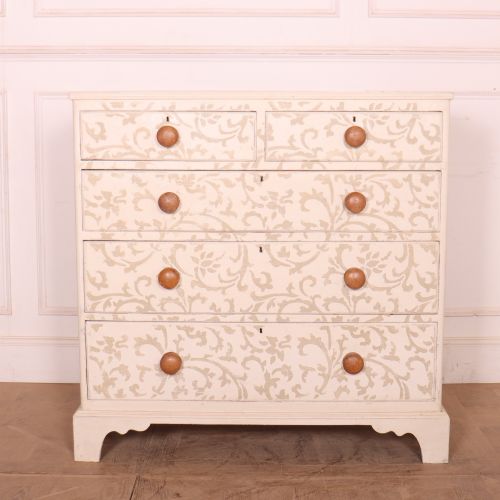
The versions most commonly found here date from the 18th and 19th centuries, spanning Georgian and Victorian eras. They range from unpretentious pine and painted surfaces to substantial oak and elm examples featuring breakfront drawers or glazed upper cabinets.
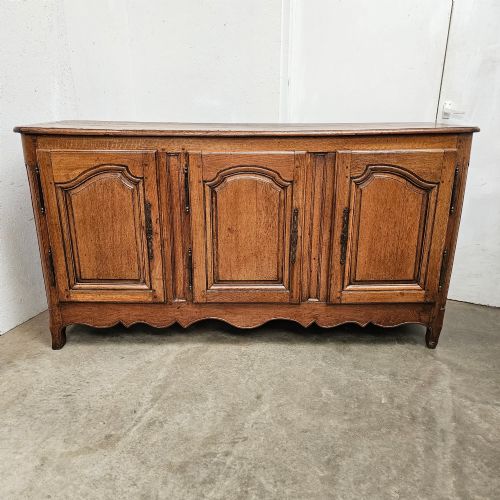
Beyond standard kitchen dressers, the selection encompasses related vernacular storage furniture such as dresser bases, housekeeper cupboards, and enfilades. Each piece reflects the practical needs of large country households through utilitarian design and straightforward construction.
Materials and construction
Makers relied primarily on native timbers such as oak, elm, pine, and mahogany, often combining woods within a single piece depending on structural requirements. Secondary timbers and backboards frequently utilised deal or fruitwoods to support heavier primary facades.
Surface finishes vary from polished or waxed natural grain to historical painted layers and patinated coatings. Metalwork is typically restricted to functional brass handles, hinges, and occasional escutcheons that secure drawers and cupboard doors.
Listings feature 18th-century and 19th-century periods alongside Georgian and Victorian eras, utilising oak, pine, elm, and painted surfaces.
What separates the examples
Quality rests in the integrity of the timber selection and the retention of original components, such as plate racks and hardware. Pieces retaining their early or original painted finishes command particular attention for their undisturbed historical character.
Proportion and regional vernacular detailing also dictate distinction. A well-proportioned Shropshire or Welsh dresser with balanced breakfront drawers and a harmonious plate rack displays a superior architectural presence compared to altered or assembled examples.
The Traditional Country House Dresser Glossary
- Dresser base
- A lower sideboard component without the upper plate rack, often featuring drawers and cupboards arranged above a potboard or plinth.
- Plate rack
- The shelved upper superstructure attached to a dresser designed for displaying ceramic plates and platters upright.
- Potboard
- An open lower shelf built into the base of a dresser specifically intended for storing pots and pans off the floor.
- Enfilade
- A long sideboard or low cabinet featuring a continuous line of multiple doors, originating in continental European traditions.
- Vernacular
- Architecture and furniture built by local craftsmen using traditional regional methods and materials rather than academic high-style designs.
Traditional Country House Dresser: Frequently Asked Questions
Where did these dressers originate?
These pieces trace their origins to domestic kitchens and dining spaces across regional English counties, Wales, and Scotland. Local joiners built them to serve specific household storage functions.
Over generations, they migrated from working quarters into main living areas as valued decorative antiques.
Can I store heavy crockery on them?
Most traditional dressers feature robust timber construction designed to hold everyday ceramic plates, bowls, and serving dishes. The structural stability of the base and plate rack easily accommodates heavy earthenware.
Care should be taken to check that wall-mounted racks are securely anchored when holding exceptionally heavy collections.
How do I care for painted finishes?
Painted surfaces require gentle dusting with a dry or slightly damp cloth without chemical solvents. Avoid placing them in direct sunlight or near heat sources to prevent the historic paint from flaking.
Applying a microcrystalline wax can protect original decorative paint layers over time.
How do I distinguish regional styles?
Regional differences often reveal themselves through timber choices, such as elm and oak combinations in West Country pieces or specific drawer arrangements in Welsh examples. Local building traditions dictated the joinery techniques and proportions used by regional makers.
Comparing hardware styles and cornice details also helps identify the likely geographic origin.