


Traditional Chandelier Lighting
Traditional chandelier lighting gathers grand hanging lights and hall lanterns from the nineteenth century into the twentieth, offering brass, bronze and crystal presence for a room.
Traditional Chandelier Lighting
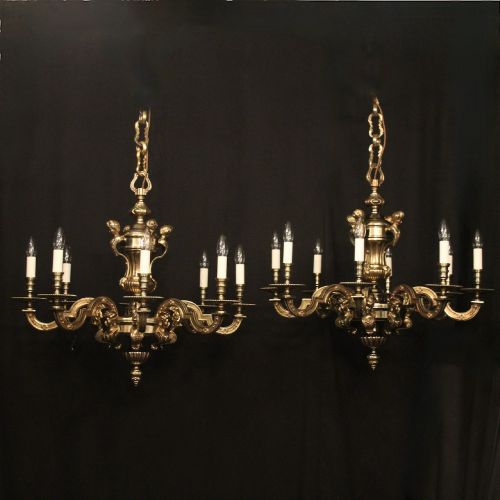
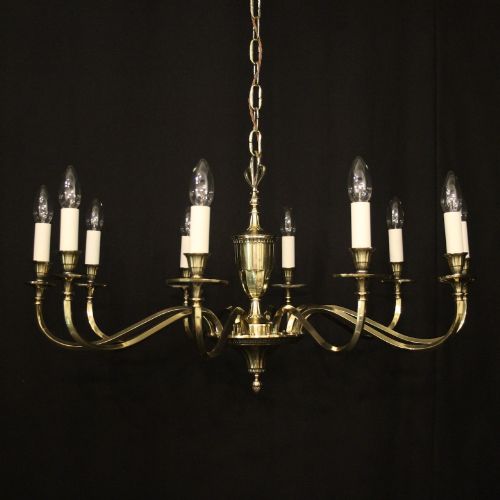
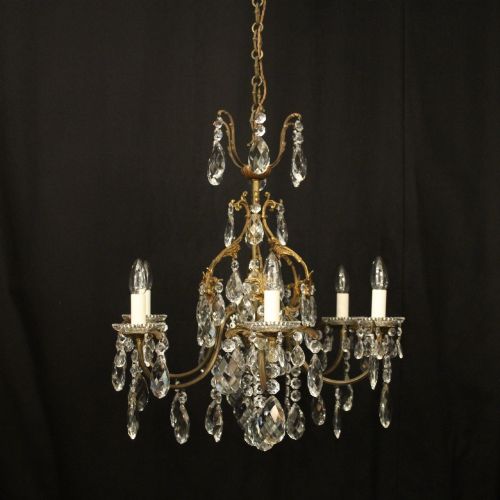
Traditional chandelier lighting encompasses multi-armed ceiling fixtures, hanging hall lanterns and large crystal centerpieces originating from English, French and Italian workshops. When searching this phrase, a buyer encounters pieces spanning the nineteenth century, Victorian era, Edwardian period and the early decades of the nineteen-hundreds. French designs heavily dominate the selections, appearing in styles ranging from Rococo and Neoclassical to Chateau and Empire Revival.
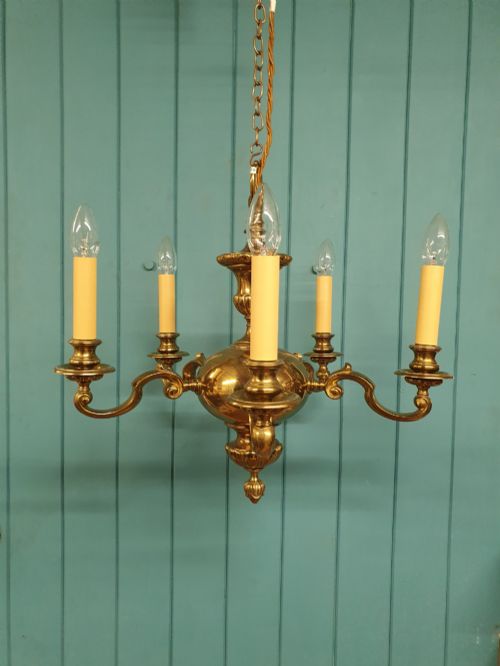
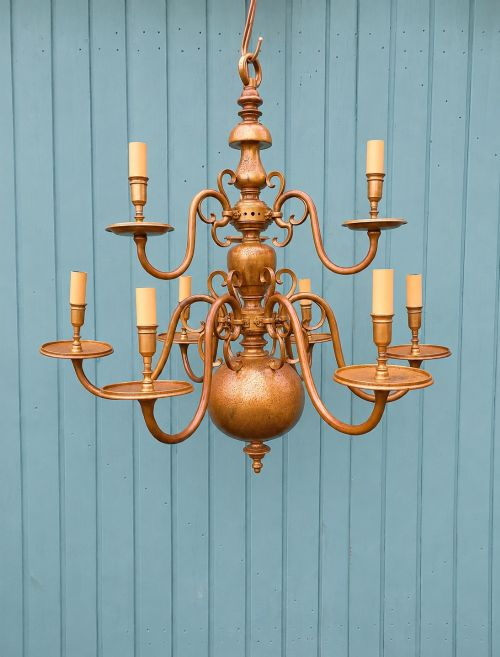
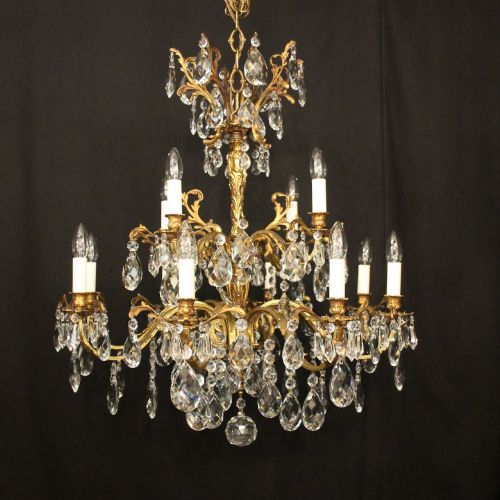
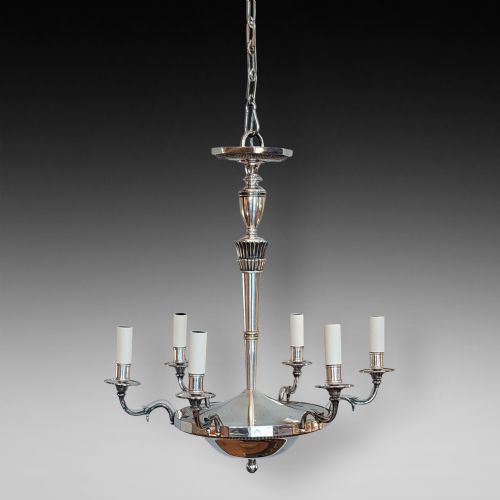
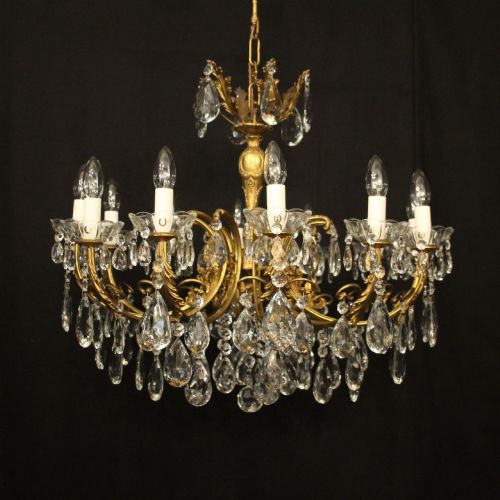
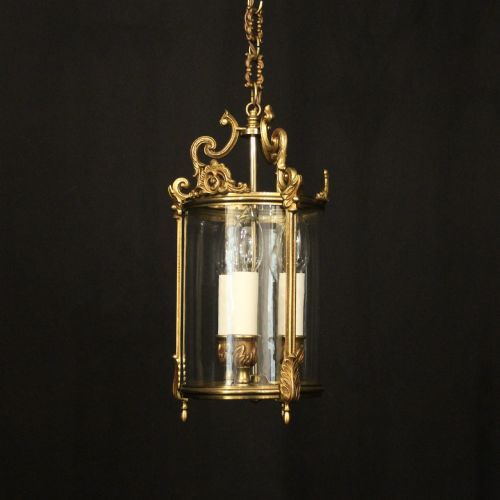
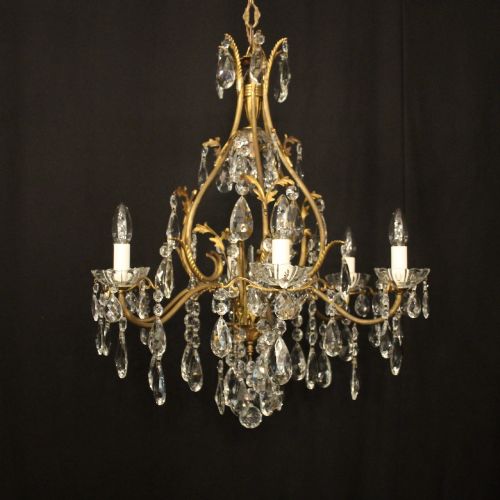
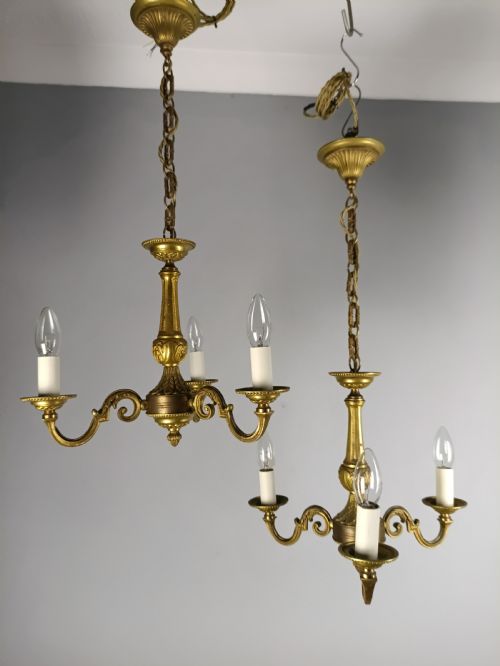
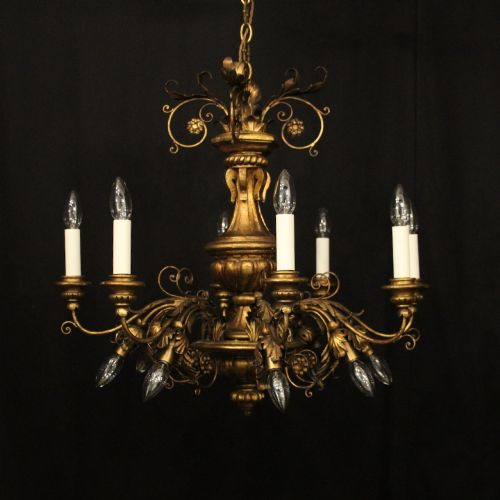
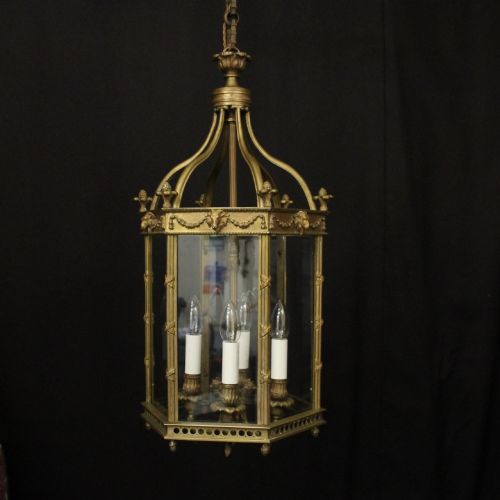
The objects take many configurations, from compact single-tier brass frames holding three to six lights to massive sixteen-light constructions hung with crystal drops and waterfalls. Hall lanterns provide a related ceiling-hung option, often featuring convex glass panels set in bronze or brass frames for entryways and corridors. Alongside these, Florentine giltwood and polychrome pieces offer distinct regional alternatives to standard metal and glass chandeliers.
Materials and Construction
Makers constructed these fixtures using robust metal foundations of cast bronze, brass, copper and gilded brass, paired with hand-cut glass and crystal components. Gilt bronze and gilded brass surfaces received gold leaf or metallic finishes to enhance light reflection from gas burners or early electric bulbs. Large multi-tier frames required sturdy central metal columns to support heavy arrangements of glass drops, lustres and arms.
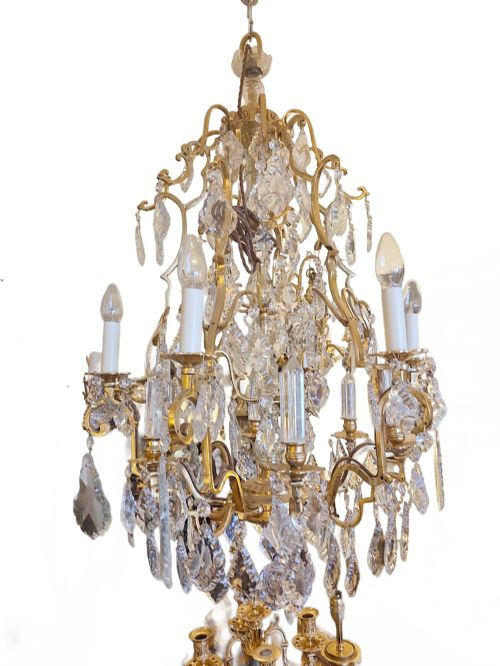
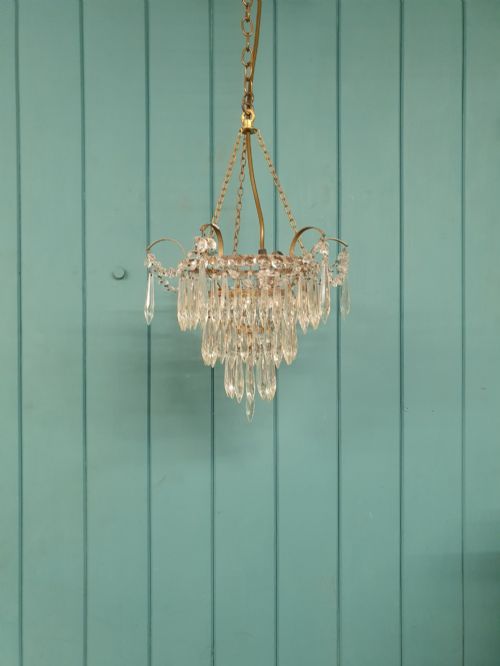
Glass and crystal elements were individually cut, moulded and pinned to metal armatures using wire or small fixings, creating cascading tent and waterfall effects. Hall lanterns integrated curved convex glass panes held within hinged metal frames, requiring precise metalwork to enclose internal candle or light clusters securely. Wood appears in specific regional pieces, such as Florentine giltwood frames carved and finished with polychrome pigments.
Traditional Chandelier Lighting Retail Price Guide 2026
Typical asking prices for traditional chandelier lighting among the pieces listed under this phrase on Sellingantiques today, from the lower quarter to the upper quarter. They describe what is for sale here now, not the wider market.
Materials represented across the current selection include bronze, gilt brass, cut glass, crystal, and Florentine giltwood.
Quality and Execution
Distinctions in quality rest upon the crispness of metal casting, the weight of the bronze or brass framework, and the clarity of the cut glass. Superior examples display deeply chased bronze or finely finished gilt brass alongside heavy, brilliant crystal drops that scatter light evenly without cloudy impurities. Lesser pieces rely on simpler stamped metal components and lighter glass elements that lack the structural presence of the finest workshop output.
The harmony of proportions and the completeness of original lustres and arms define the upper tier of these fixtures. Elaborate multi-tier constructions with integrated glass spikes, tents and numerous balanced light arms require exceptional design discipline during manufacture. Consistency in the gilding and the integration of specialised elements like convex lantern glass further separate standard production from masterwork lighting.
Faraday and Son
The Traditional Chandelier Lighting Glossary
- Tent and waterfall
- A lighting configuration where strings of small crystal beads form an upper conical tent shape above a wider cascading waterfall of drops.
- Hall lantern
- An enclosed ceiling-hung light fixture designed primarily for corridors and entranceways, frequently featuring glazed glass panels within a metal frame.
- Gilt bronze
- Bronze metal treated with a gold wash or mercury gilding to produce a rich, durable golden surface finish.
- Lustre
- A cut glass or crystal pendant suspended from the arms or crown of a chandelier to refract and amplify illumination.
Traditional Chandelier Lighting: Frequently Asked Questions
How do I choose the right size chandelier?
Scale depends directly upon room dimensions and ceiling height, balancing the physical spread of the arms against the volume of the space.
Larger sixteen-light or multi-tier fixtures require substantial rooms to avoid overwhelming the architecture, while compact three or six-light lanterns suit narrower halls.
Were these lights electrified originally?
Most pieces originating from the nineteenth and early twentieth centuries were built for candles or gas lighting before later conversion to electricity.
Wiring updates are standard practice to allow safe modern operation while preserving the original metal and crystal structure.
Where should hall lanterns be hung?
Hall lanterns function best in entryways, vestibules and high-ceilinged corridors where their enclosed glass panels direct illumination downward.
Their compact vertical profile makes them suitable for transitional spaces that cannot accommodate the wide spread of a traditional multi-arm chandelier.
How do I identify French chandelier styles?
French lighting frequently incorporates gilt brass, bronze, and elaborate crystal draping reflecting Rococo, Neoclassical, or Empire design traditions.
These pieces emphasise symmetry, decorative casting details like acanthus leaves, and cascading crystal arrangements that set them apart from plainer utilitarian fixtures.