




Traditional Caged Chandelier
A traditional caged chandelier brings dramatic presence and tiered illumination to a space, combining metal frameworks with cascades of glass drops.
Traditional Caged Chandelier
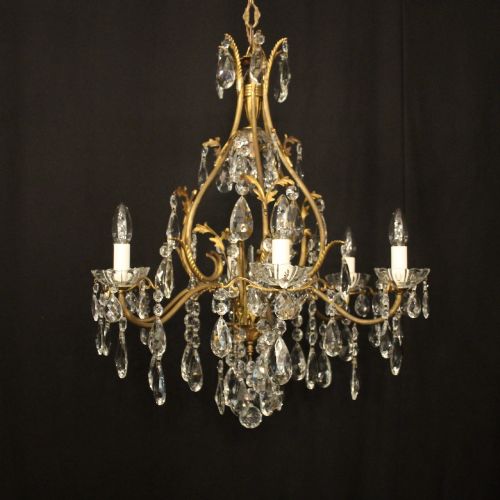
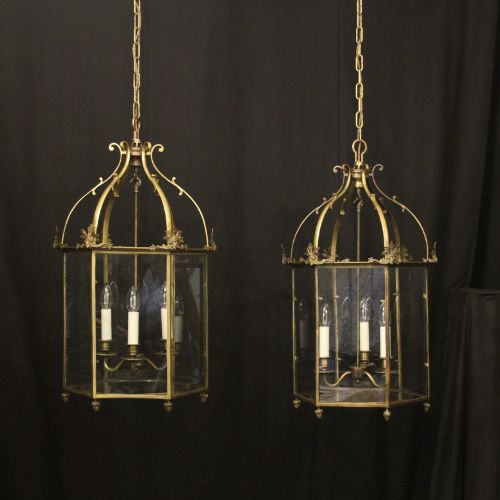
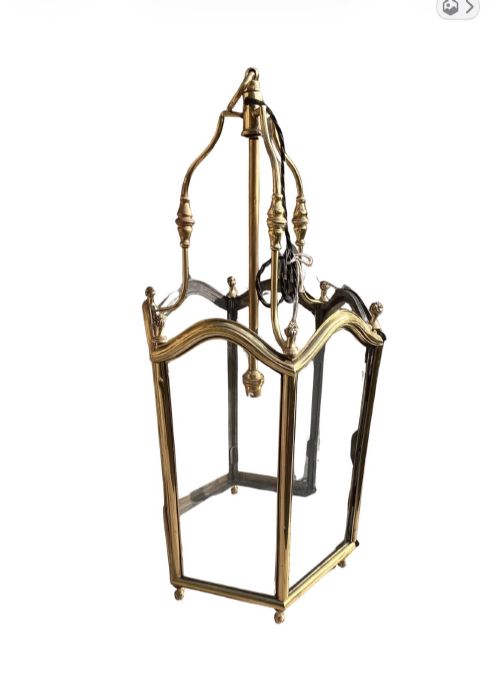
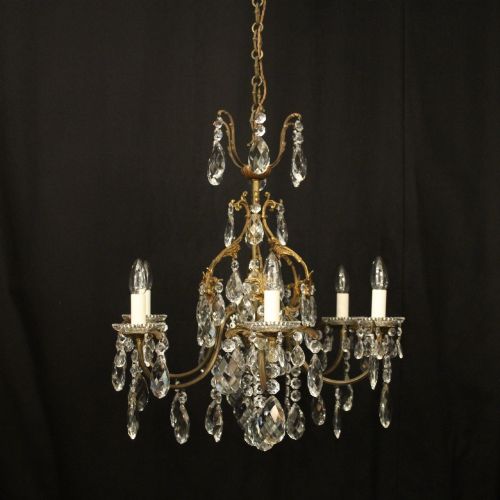
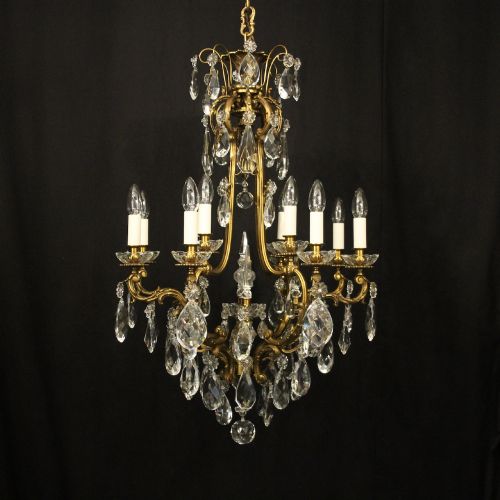
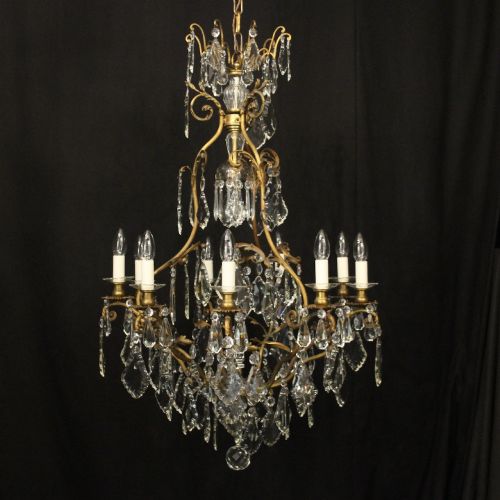
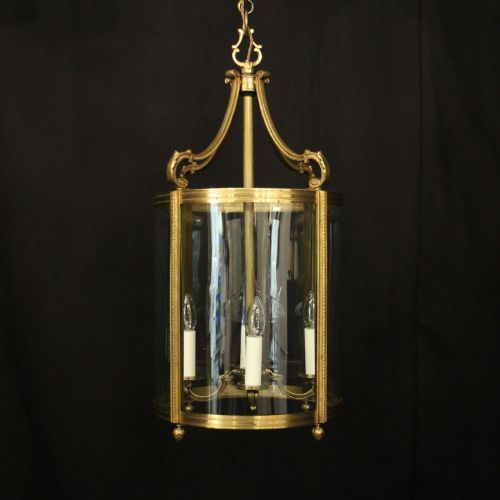
A traditional caged chandelier organises multiple lights within a skeletal metal or wire frame, frequently taking the form of a French cage or a hall lantern. These fittings emerge predominantly from the nineteenth and early twentieth centuries, spanning periods from eighteen-eighty through nineteen-thirty.
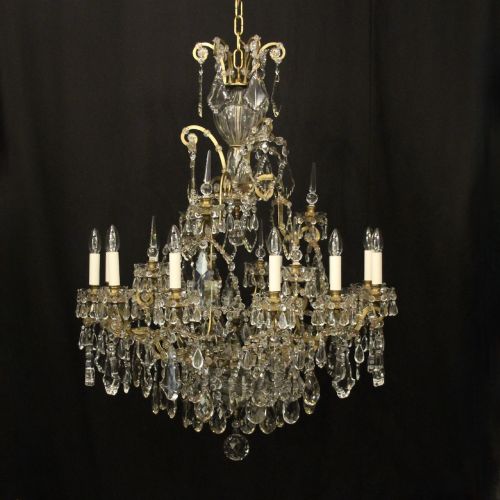
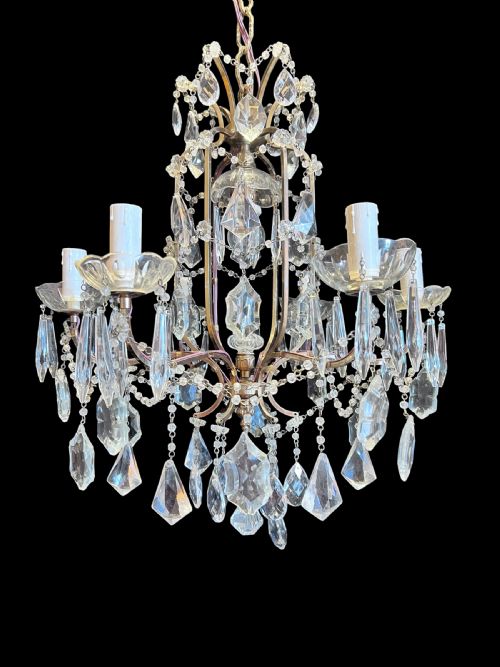
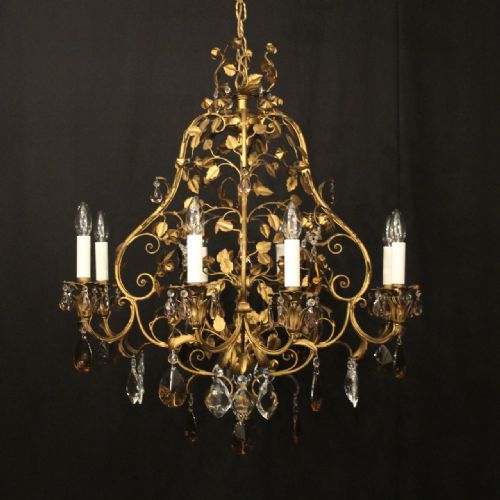
The version most commonly met on this page is the French or Italian chandelier featuring a brass, gilt bronze, or iron frame enclosing glass and crystal drops. Designs range from compact four-light fixtures to large twelve-light or fifteen-light installations.
How they were made
The framework relies on metals such as brass, gilt bronze, wrought iron, and gilt metal, shaped into cages or lanterns that support the electrical or candle-burning components. Makers employed dark brass, silver gilt bronze, and toleware to construct the supporting armature.
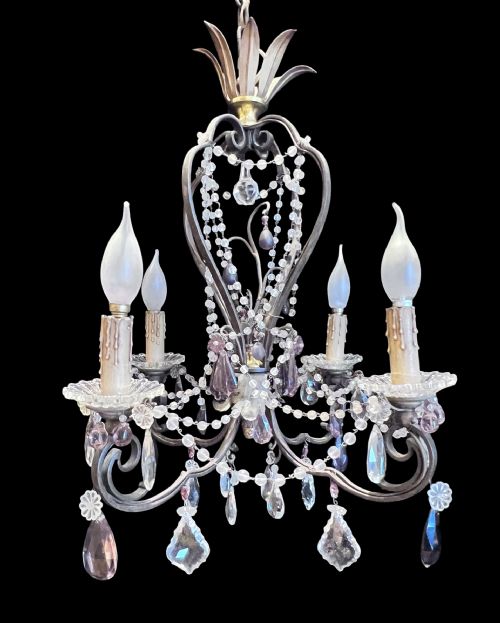
Cut crystal, bevelled glass, and coloured glass drops are suspended from the metal frames to refract the light. These glass elements are threaded or wired directly into the cage structure, creating layered tiers of illumination.
Traditional Caged Chandelier Retail Price Guide 2026
Typical asking prices for traditional caged chandelier among the pieces listed under this phrase on Sellingantiques today, from the lower quarter to the upper quarter. They describe what is for sale here now, not the wider market.
At least one nineteenth-century example incorporates amethyst glass, introducing unexpected colour into the traditional crystal cascade.
What varies in quality
The distinction in quality rests upon the weight and finish of the metal frame, whether cast in gilt bronze or formed from simpler iron or brass. Finer examples display meticulous chasing and gilding on the bronze armature alongside heavier cut crystal drops.
Proportion and scale dictate the visual impact of the piece, with larger multi-light configurations demanding balanced framing to support substantial glass weights. The integration of bevelled glass panels and complex multi-tiered arrangements separates standard productions from more ambitious designs.
La Mason Bagues
The Traditional Caged Chandelier Glossary
- Cage chandelier
- A lighting fixture featuring a skeletal metal frame enclosing central lights and draped with glass or crystal elements. This design concentrates the visual weight around a vertical axis.
- Gilt bronze
- Bronze that has been coated with a thin layer of gold or gold-coloured alloy. This technique provides a durable and luminous finish to the metal framework.
- Bevelled glass
- Glass panes featuring an angled edge cut around the perimeter. This treatment refracts light at distinct angles within lanterns and framed structures.
- Toleware
- Painted or enamelled sheet metal utilised in decorative objects and light fittings. It introduces coloured surfaces to the metal components of the fixture.
- Drop
- A small pendant of cut crystal or glass suspended from a chandelier. Drops catch and multiply the illumination emitted from the bulbs or candles.
Traditional Caged Chandelier: Frequently Asked Questions
How do I clean a caged chandelier?
Maintenance involves gentle cleaning of the glass drops and metal framework while they remain suspended. Careful wiping preserves the delicate wiring and glass attachments.
Specialist glass cleaner applied to a cloth prevents moisture from damaging the surrounding metal frame and fixings.
What periods do these chandeliers date from?
The available pieces originate primarily between the late nineteenth century and the nineteen-thirties. This span covers late Victorian periods through to early twentieth-century designs.
Stylistic influences during these decades draw heavily upon French chateau, neoclassical, and Italian baroque revivals.
How many lights do these fixtures have?
Light configurations vary widely depending on the physical size of the chandelier. Smaller examples typically feature four to six lights.
Larger installations scale upward to twelve or fifteen lights distributed across multiple tiers and expansive cages.
Where were these chandeliers made?
The recorded pieces originate predominantly from French and Italian workshops and studios. Regional stylistic traits distinguish the French gilt bronze pieces from Italian Florentine designs.
Craftsmen in these regions utilised local traditions of metalworking and glass cutting to produce distinct cage and lantern structures.