



Traditional Brass Kerosene Lamp
These traditional brass kerosene lamps are heavy metal lighting pieces from the Victorian and Edwardian periods, prized for their warmth and decorative columns.
Traditional Brass Kerosene Lamp
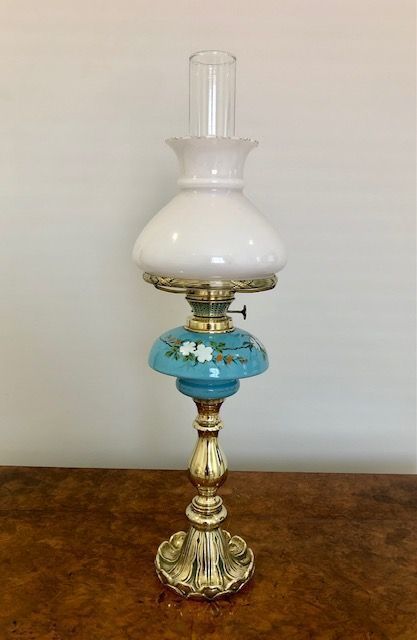
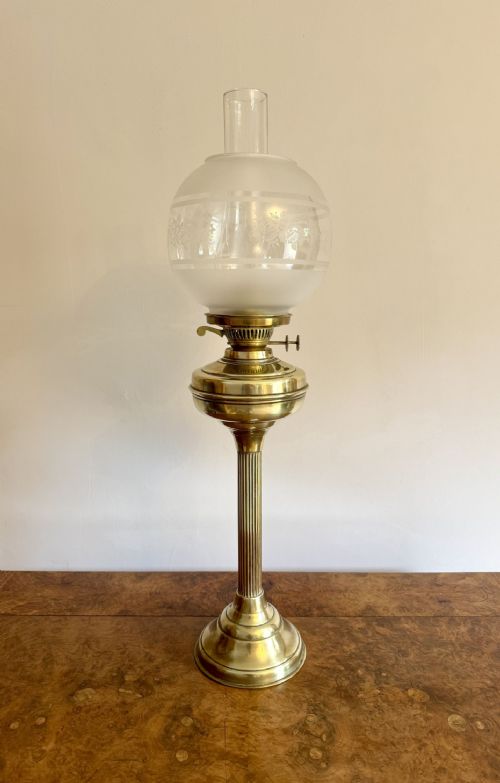
When you search for a traditional brass kerosene lamp, you are looking at nineteenth and early twentieth century lighting pieces designed for domestic illumination. These objects combine metal reservoirs and columns with glass fonts and shades, originating mostly from Victorian and Edwardian workshops.
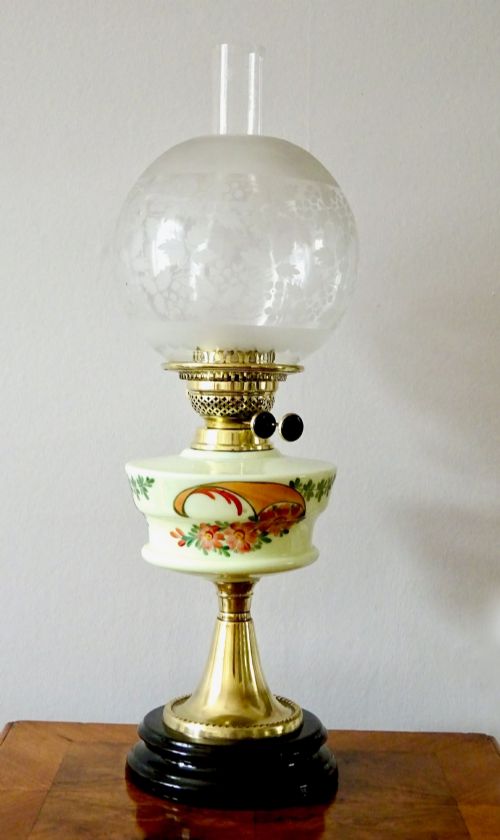
The version you are most likely to meet on this page is a Victorian or Edwardian table lamp featuring a brass column. Many examples include coloured or etched glass shades, whilst others pair brass with ceramic or cut glass components.
How they were made
Makers constructed these lighting pieces using cast and turned brass for the columns and bases, often combining them with glass or ceramic fonts. Metal components were frequently polished or plated to achieve a bright finish.
Shades and fonts utilised specialised glass techniques, including opaline, cut, and cranberry glass, alongside etched patterns on tulip-shaped shades. Some designs incorporated ebonised wood bases to provide stability and contrast.
Listings feature brass, glass, ceramic, and opaline glass materials across Victorian and Edwardian periods.
What varies in quality
The weight and substance of the metalwork set the better examples apart, with heavier brass columns and solid bases indicating superior construction. Finer pieces often feature decorative architectural details such as Corinthian columns.
The integration of the glass shade with the metal body dictates visual harmony. Quality is further defined by the clarity and colour of glass fonts, such as cranberry or cut glass, paired thoughtfully with the brass structure.
The Traditional Brass Kerosene Lamp Glossary
- Duplex
- A double-wick burner system that produces a brighter light than single-wick alternatives. This mechanism is frequently found on larger Victorian table lamps.
- Opaline Glass
- An opaque white glass used widely for lamp shades during the nineteenth century. It diffuses light softly across a room.
- Corinthian Column
- A classical architectural style adapted for the stems of brass table lamps. These detailed capitals add formal decoration to the lighting piece.
- Cranberry Glass
- A rich red glass created by adding gold chloride to the molten mixture. It forms striking coloured fonts and shades on Victorian pieces.
Traditional Brass Kerosene Lamp: Frequently Asked Questions
How do I clean a brass oil lamp?
Dust the metal gently with a soft cloth to preserve the surface finish. Avoid harsh chemical cleaners that can strip patination from older brass.
Keep glass shades washed in warm soapy water and dry them completely before replacing them on the burner.
Can these lamps still burn kerosene?
Most antique lamps are sold for decorative display rather than active fuel use. Modern safety standards often discourage burning kerosene in historic reservoirs.
Collectors usually wire them for electricity or leave them unlit to protect the original brass and glass components.
How do I date a brass oil lamp?
Examine the materials and burner styles recorded in the manufacturing details. Victorian examples often feature heavy brass columns and coloured glass fonts.
Edwardian pieces from around nineteen hundred tend to introduce lighter forms and different shade pairings.
What is a duplex burner?
A duplex burner uses two flat wicks placed side by side to generate a wider flame. This arrangement increased the illumination output of late nineteenth century lighting.
Look for twin thumbwheels on the burner mechanism that control each wick independently.