






Traditional Book Cupboard
These traditional book cupboard pieces bring a proper library presence to a room, offering structured storage for volumes and papers in timber frames.
Traditional Book Cupboard
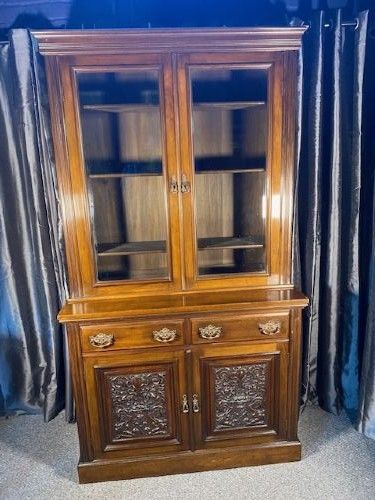
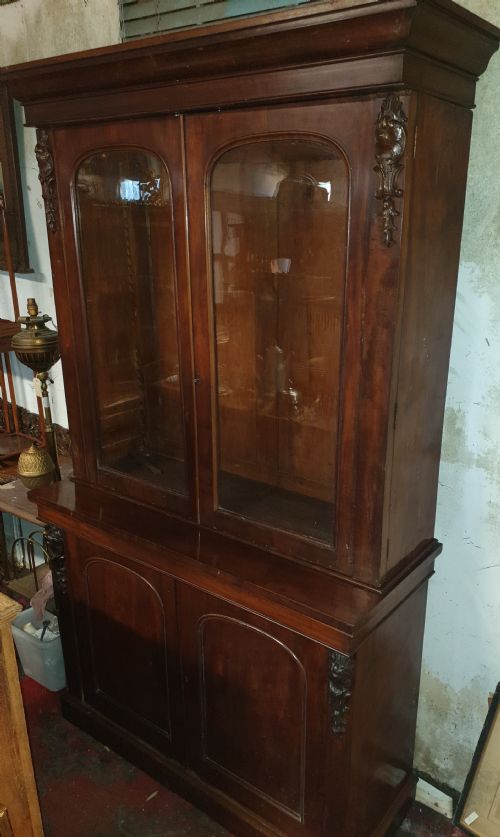
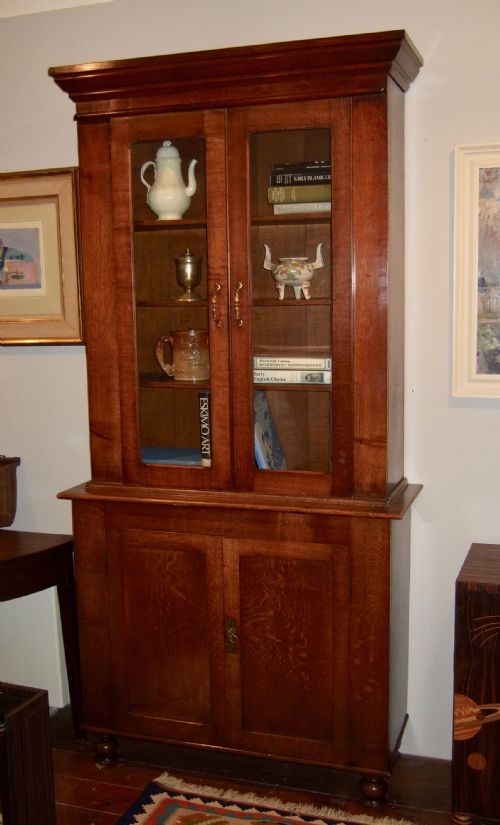
A traditional book cupboard combines open shelving or glazed doors with enclosed lower compartments, creating a dual-purpose piece for housing volumes and concealing papers. The selection spans several distinct eras, touching on Victorian, Edwardian, and Regency periods alongside earlier stylistic revivals.
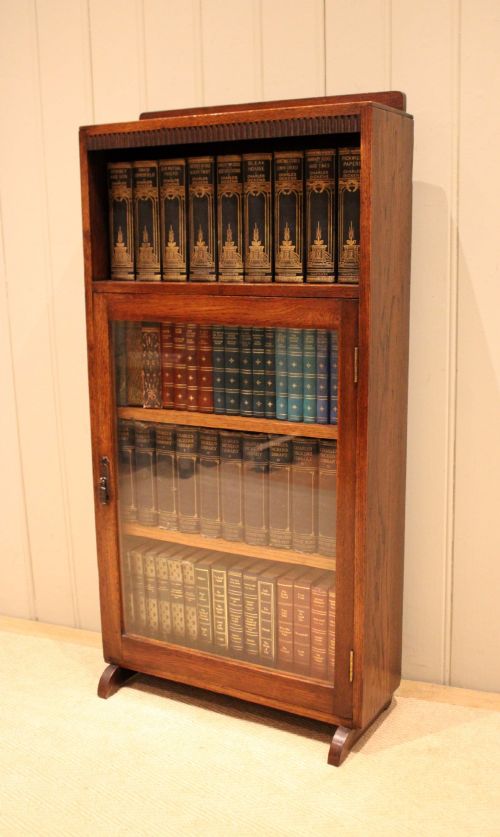
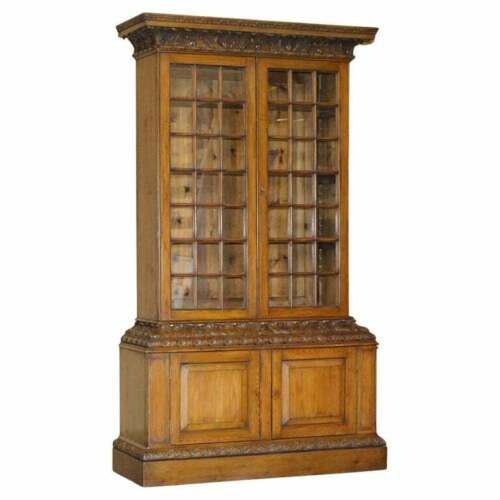
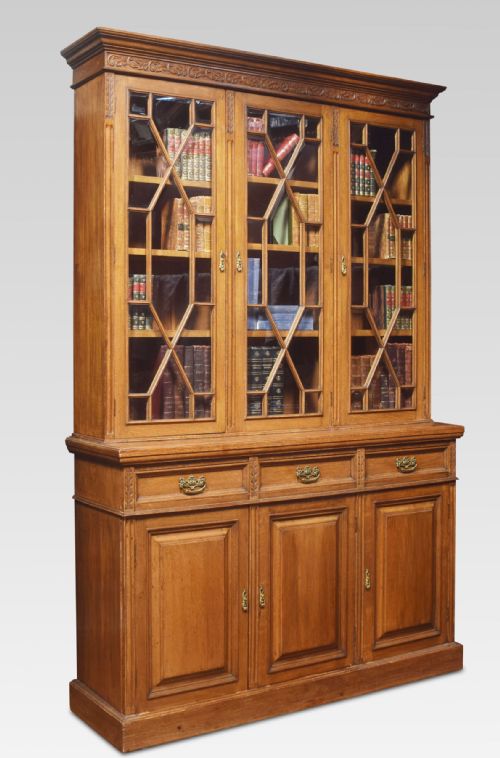
The dominant forms on this page include tall breakfront library bookcases, open oak shelving units, and two-part cabinet configurations fitted with glazed upper sections. Buyers frequently encounter solid oak and mahogany constructions, occasionally featuring flame mahogany veneer or walnut surfaces.
Origins stretch from the nineteenth century into the early decades of the twentieth century, encompassing utilitarian oak presses and grander architectural library pieces. Each example reflects the prevailing domestic storage needs of its respective period, from simple open shelving to secure cabinet doors.
Materials and construction methods
Makers relied heavily on dense hardwoods such as oak, mahogany, and walnut, selecting timber for both structural strength and visual grain pattern. Flame mahogany veneer provided a decorative surface on grander pieces, while solid oak served utilitarian presses and open bookcases.
Glazing bars divided the upper door glass into geometric panes, and brass hardware such as hinges and handles secured the doors. Structural assembly involved traditional joinery techniques suited to heavy library weights, ensuring stability across tall two-section carcasses.
Traditional Book Cupboard Retail Price Guide 2026
Typical asking prices for traditional book cupboard among the pieces listed under this phrase on Sellingantiques today, from the lower quarter to the upper quarter. They describe what is for sale here now, not the wider market.
Samuel Pepys makes an unexpected appearance on this page via a large library bookcase created after the original.
Judging quality in these pieces
Quality rests in the selection of timber, the crispness of carved details such as beaded edges or raised galleries, and the balance of architectural proportions. Finer examples display carefully matched veneers and robust internal shelving designed to support heavy volumes without sagging.
The integration of functional elements, from smoothly operating doors to well-fitted glazed panels and intact brass fittings, marks the distinction between standard utility items and finer cabinet work. Proportion and the integrity of the original timber surfaces carry significant weight.
The Traditional Book Cupboard Glossary
- Breakfront
- A piece of furniture where the central section projects forward from the flanking wings. This architectural layout appears on larger library bookcases.
- Glazed Bookcase
- A cabinet featuring glass-fronted upper doors to display books while protecting them from dust. These doors often utilise timber framing bars to create individual panes.
- Book Press
- A heavy mechanical device utilised for flattening paper or binding volumes. Examples on this page include early oak models from the nineteenth century.
- Raised Gallery
- A low decorative railing or rim running along the top edge of a piece. This feature appears on open mahogany bookcases from the early twentieth century.
- Flame Mahogany Veneer
- A thin slice of mahogany timber cut from the fork of the tree to create a flickering flame pattern. Cabinet makers applied this to prominent surfaces for visual depth.
Traditional Book Cupboard: Frequently Asked Questions
How do I clean timber bookcases?
Dust surfaces regularly with a soft, dry cloth to prevent dirt accumulation on the timber grain.
Avoid silicone-based polishes and maintain stable room humidity to protect the wood and veneer.
Are these pieces suitable for modern books?
Most traditional shelves accommodate standard modern hardbacks and paperbacks, though shelf heights vary.
Check internal depth and vertical clearance measurements before placing oversized volumes inside.
How do I identify a Victorian bookcase?
Victorian pieces often utilise dense mahogany or oak with heavier proportions and dark finishes.
Construction details typically include hand-cut dovetails, brass hardware, and two-section carcass builds.