



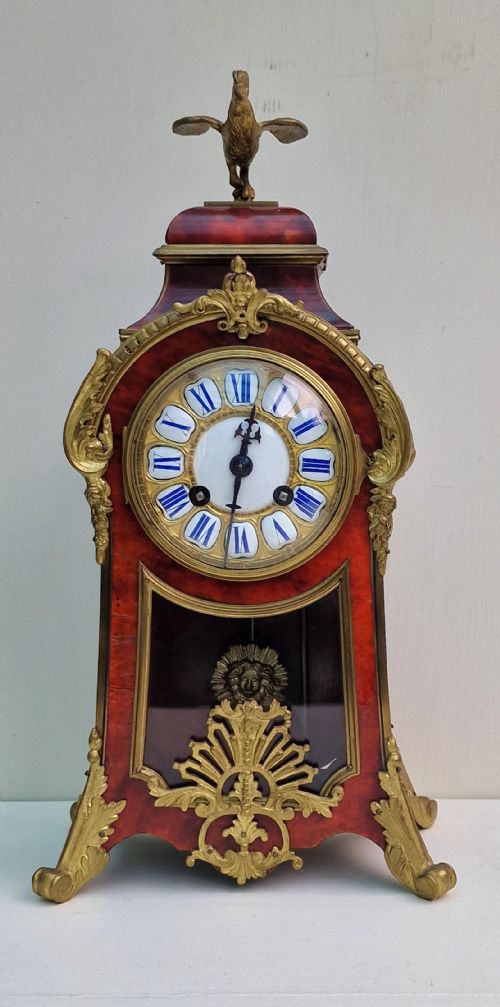


Tortoiseshell Clock
A tortoiseshell clock brings rich amber warmth and intricate brass inlay into a room, capturing centuries of skilled Parisian and British craftsmanship.
Tortoiseshell Clock
A tortoiseshell clock combines intricate organic patterning with metalwork to form a striking domestic timepiece. These objects appear in various formats, from compact mantel pieces to grand longcase installations.
Most examples encountered here originate from the nineteenth century, reflecting Victorian, Edwardian, and Regency tastes alongside French revival styles. Makers house these movements in wooden carcasses veneered with genuine material or faithful painted substitutes.
Forms span wall clocks, desk timepieces, bracket clocks with matching wall supports, and substantial pedestal arrangements. Buyers select these works for their decorative presence and historical mechanical complexity.
How they were made
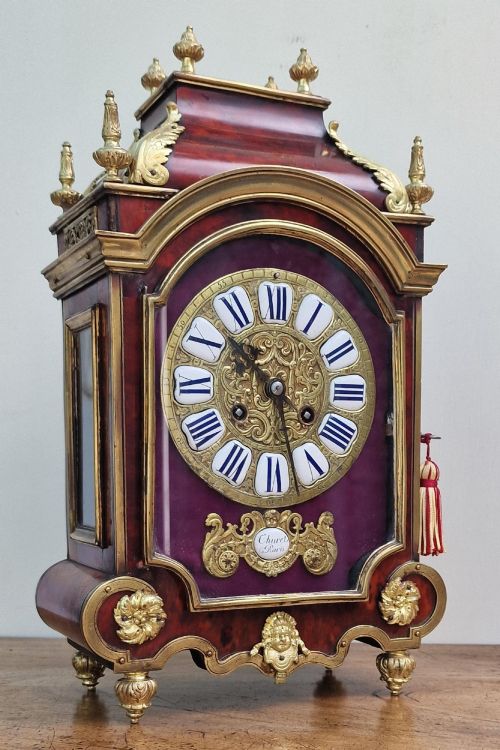
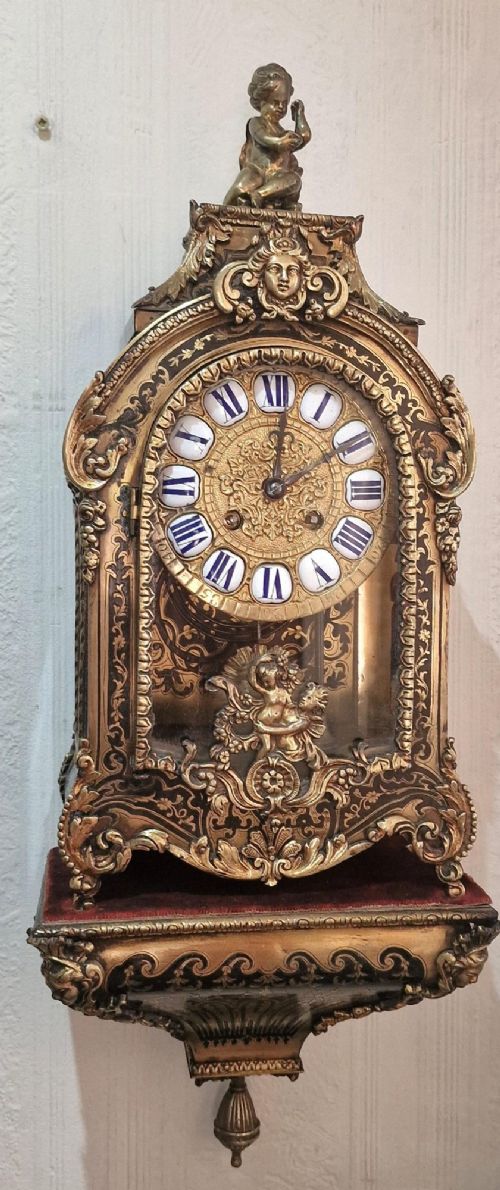
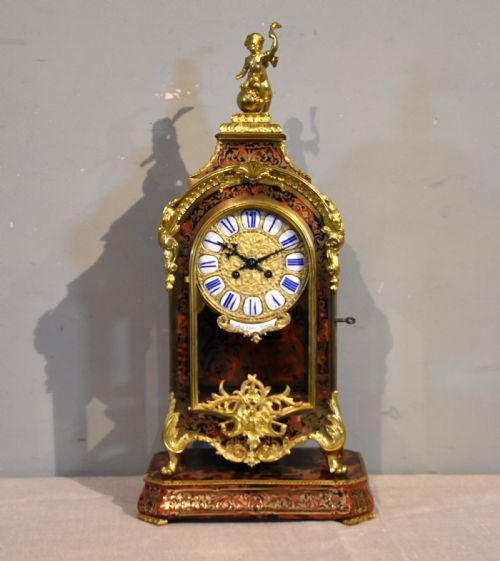
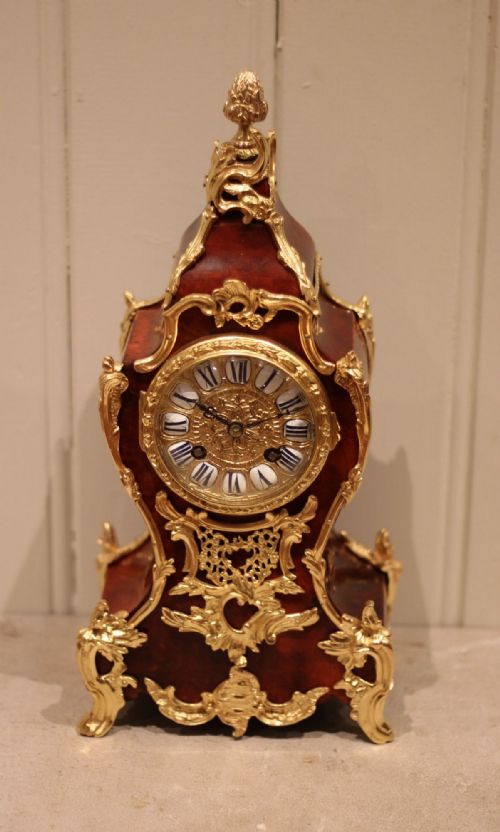
Craftsmen applied thin veneers of tortoiseshell or faux tortoiseshell over wooden carcases, often combining the translucent shell with engraved brass and tortoiseshell marquetry known as Boullework. Ormolu mounts, cast bronze, and gilded brass accents provide structural framing and decorative highlights around the dial and feet.
Enamel dials, sometimes featuring individual cartouches for numerals, house complex mechanical movements driven by springs or weights. Glass panels protect the delicate hands and face while allowing visibility of the escapement and pendulum.
Tortoiseshell Clock Retail Price Guide 2026
Typical asking prices for tortoiseshell clock among the pieces listed under this phrase on Sellingantiques today, from the lower quarter to the upper quarter. They describe what is for sale here now, not the wider market.
Some timepieces include built-in thermometers, ensuring the household knew the exact temperature while waiting for the hour to chime.
What varies in quality
The refinement of the brass marquetry and the crispness of the ormolu casting dictate the visual standard of a tortoiseshell clock. Finer pieces display deeply layered tortoiseshell with rich amber tones paired with meticulously hand-engraved metal inlay rather than stamped decoration.
The architectural harmony between the clock body and any associated wall bracket or pedestal reveals the original ambition of the piece. Mechanical integrity, original movement signatures, and the preservation of the delicate veneer without excessive modern restoration further separate standard workshop output from master production.
Thuret Paris·Henri Marc of Paris·J Batson and Son·Samuel Marti·William Hardy London·A D Mougin·Payne London·William Comyns
The Tortoiseshell Clock Glossary
- Boullework
- A decorative technique of marquetry using contrasting materials such as tortoiseshell and brass cut simultaneously from stacked sheets. This method creates matching positive and negative panels.
- Ormolu
- Gilded bronze used for decorative mounts, feet, and bezels on furniture and clocks. The process involves applying a mercury and gold amalgam to bronze.
- Fusee
- A conical pulley connected to the mainspring by a cord or chain that equalises the torque as the spring unwinds. This mechanism improves timekeeping accuracy across the power reserve.
- Bracket clock
- A portable domestic clock designed to sit on a table, shelf, or dedicated wall bracket. Many historical versions include striking trains to chime the hours.
- Cartouche
- A small enamelled plaque bearing an individual hour numeral on the clock face. These elements are typically pinned to the chapter ring individually.
Tortoiseshell Clock: Frequently Asked Questions
How do you care for tortoiseshell?
Tortoiseshell requires protection from direct sunlight and extreme temperature fluctuations to prevent warping or fading of the natural material.
Keep the surface clean with a soft, dry cloth and avoid chemical polishes that might damage the delicate veneer or adjacent brass work.
Are these clocks weight driven?
Most mantel and bracket versions rely on spring-driven 8-day movements that require occasional winding with a matching key.
Larger longcase formats utilise suspended weights running inside the trunk to power the timekeeping and striking trains.
How do you date a tortoiseshell clock?
Dating relies on stylistic clues such as the revival period, the shape of the brass inlay, and the characteristics of the enamel dial.
Maker signatures engraved on the movement backplate or dial provide a reliable anchor for determining the production era.