

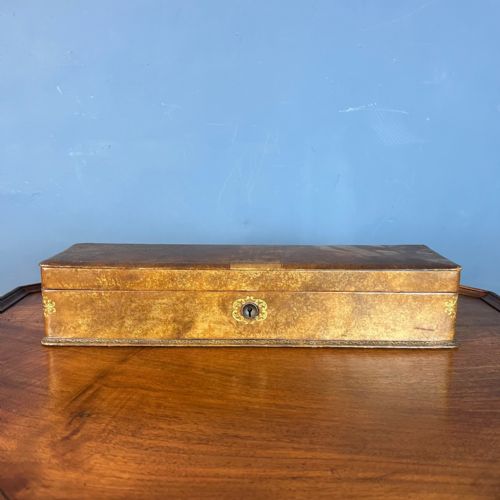


Tooled Leather Box
A tooled leather box is a practical container surfaced in textured hide and gold, offering a sturdy desk tidy or travelling companion.
Tooled Leather Box
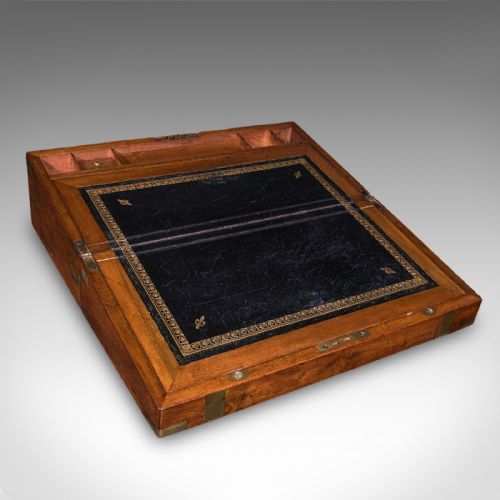
A tooled leather box encompasses a range of functional containers, from small pen cases and etui sewing boxes to larger writing slopes and table cabinets. These pieces surface across Victorian, Regency, and later twentieth-century periods in forms designed for correspondence, games, and needlework.
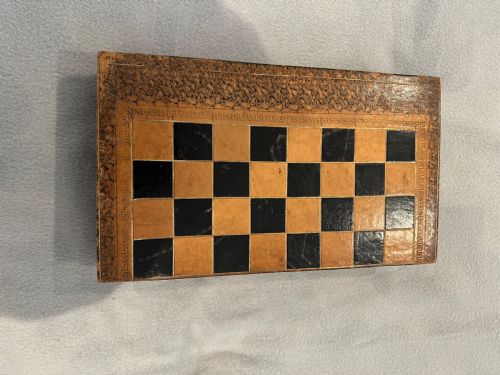
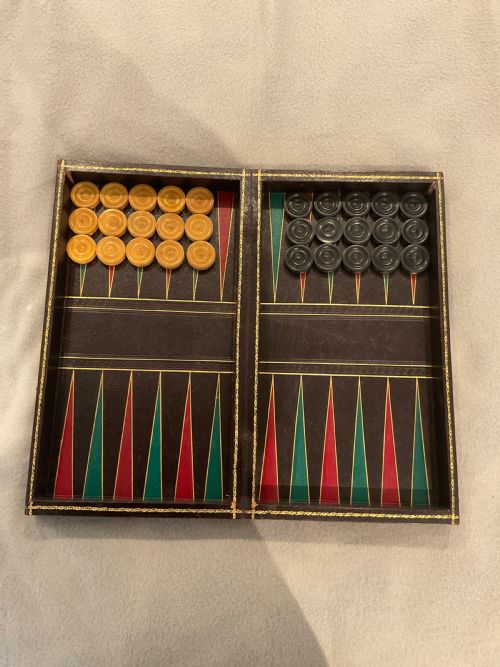
The versions most commonly met on this page include faux book games boards and leather-bound caskets, alongside traditional English and French provincial containers. Makers shaped these objects from wood or pig's skin, applying surface tooling and metallic mounts to store household items and personal valuables.
How they were made
Construction relies on a wooden or leather foundation, often formed from walnut or pig's skin, which provides a rigid internal structure for the outer hide. Artisans then applied gold leaf tooling to ornament the surface with decorative borders and patterns.
Gilt-brass mounts, bone elements, and velvet linings complete the interior and exterior fittings of these pieces, particularly on desk accessories and sewing boxes. Metal hinges and clasps secure the lids, while paper or velvet interiors protect the contents.
Tooled Leather Box Retail Price Guide 2026
Typical asking prices for tooled leather box among the pieces listed under this phrase on Sellingantiques today, from the lower quarter to the upper quarter. They describe what is for sale here now, not the wider market.
Listings feature items spanning the Regency, Victorian, and Interwar periods, utilising materials such as walnut, pig's skin, brass, and gold leaf.
What varies in quality
Quality rests in the precision of the gold leaf tooling and the crispness of the impressions left upon the leather surface. Finer examples display clean, deep stamp work that remains distinct across the hide.
The selection of materials also dictates the tier of the piece, with solid walnut carcasses and gilt-brass mounts separating standard containers from superior table cabinets and writing slopes. Interior fittings finished in velvet and bone further distinguish the standard of manufacture.
The Tooled Leather Box Glossary
- Tooled leather
- Leather decorated by pressing heated metal tools into the damp surface to create patterns, often enhanced with gold leaf. This technique provides both texture and visual ornamentation.
- Writing slope
- A desk accessory featuring an inclined writing surface that opens to reveal storage compartments for paper, ink, and pens. These slope-lidded boxes were essential items for correspondence.
- Etui
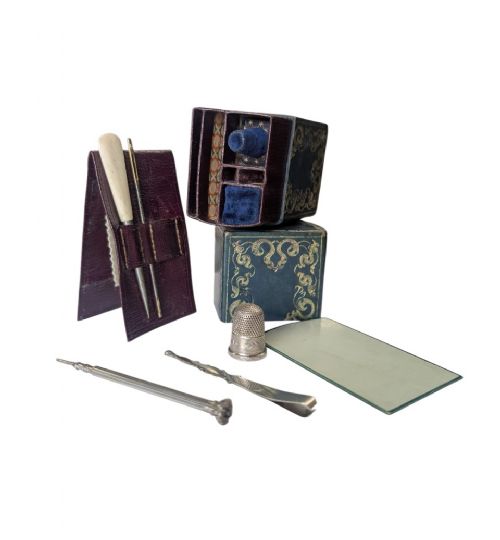
- A small ornamental case used to hold needles, scissors, and other sewing implements. These delicate containers are frequently lined with velvet or silk.
- Faux book
- A container designed to resemble a bound volume, often constructed with leather boards to conceal games pieces, cards, or storage compartments on a library shelf.
Tooled Leather Box: Frequently Asked Questions
How were these boxes used?
These boxes served practical domestic and travelling functions, organising correspondence, sewing implements, and games equipment. Writing slopes provided an inclined surface for letter-writing while securing inkwells and stationery inside.
Other variants acted as safe boxes or table cabinets for personal valuables, sitting upon desks and tables in studies and drawing rooms.
How do I care for antique leather?
Antique leather requires gentle handling and protection from direct sunlight and excessive moisture to prevent the hide from drying and cracking. Keeping the environment stable preserves both the leather and any applied gold leaf tooling.
Dusting with a soft, dry cloth is usually sufficient for regular maintenance, avoiding harsh chemical cleaners that might damage the surface.
How do I identify the period?
Period identification relies on observing the structural form, materials, and specific tooling styles associated with eras like the Regency or late nineteenth century. Regency pieces often feature classic proportions, whilst Victorian examples include faux book games boards and etui sewing boxes.
Interior fittings such as velvet linings and bone accessories also offer clues regarding the date of manufacture.