



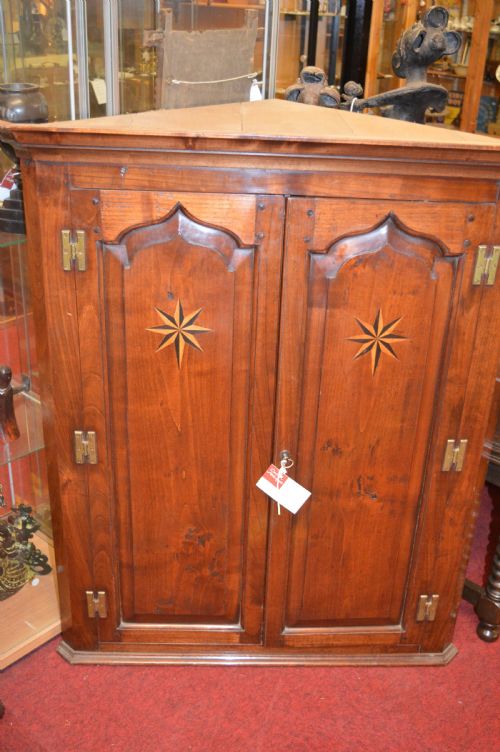


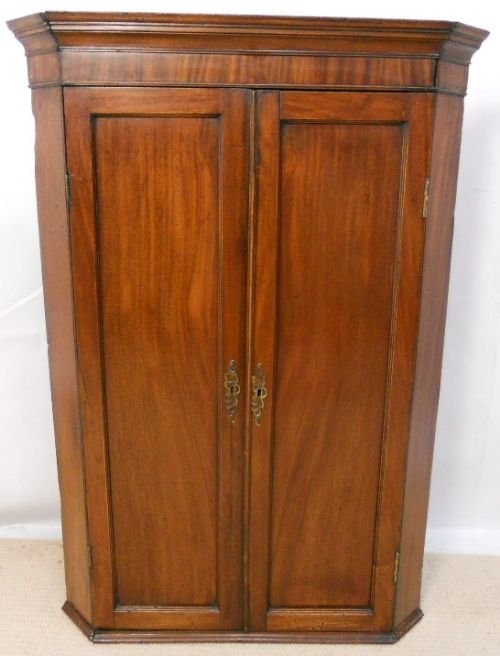

Timber Hanging Cupboard
These timber hanging cupboard examples organise storage efficiently off the floor, offering characterful period presence for modest spaces.
Timber Hanging Cupboard
A timber hanging cupboard provides wall-mounted or corner storage space, taking the form of corner cabinets, wardrobes, and cupboards across various periods. Buyers encountering this search phrase find architectural wall-mounted units and larger fitted wardrobes designed to save floor space.
The pieces on this page span Georgian, 17th Century, 18th Century, 19th Century, and 1920 periods. Origin styles include Welsh Vernacular, French Provincial, and Sheraton Revival forms.
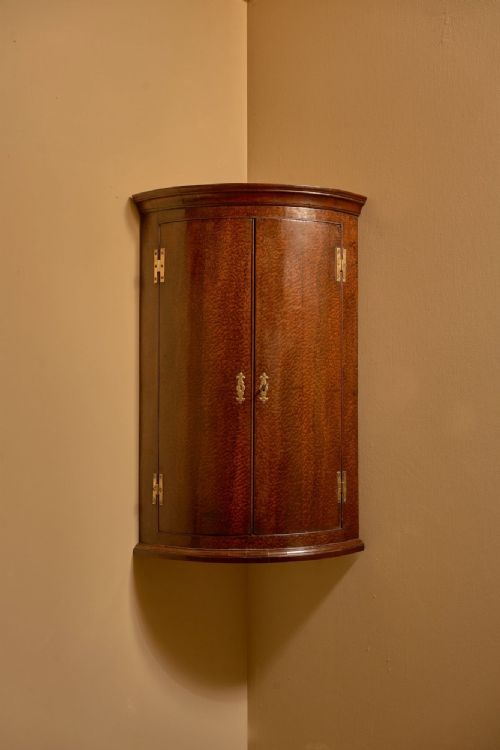
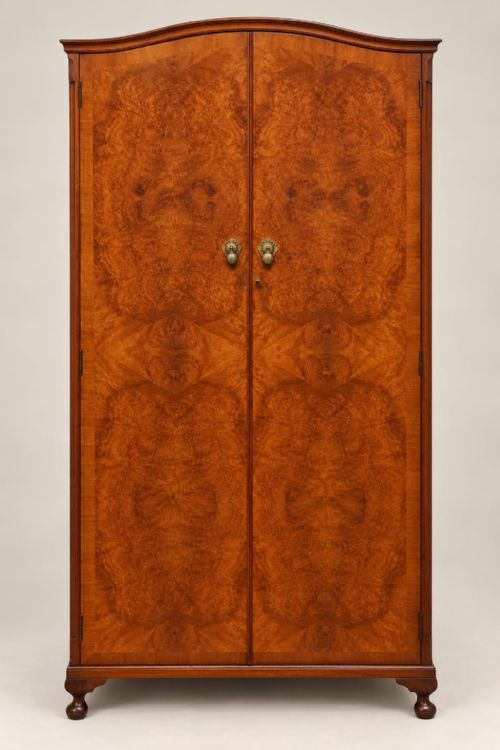
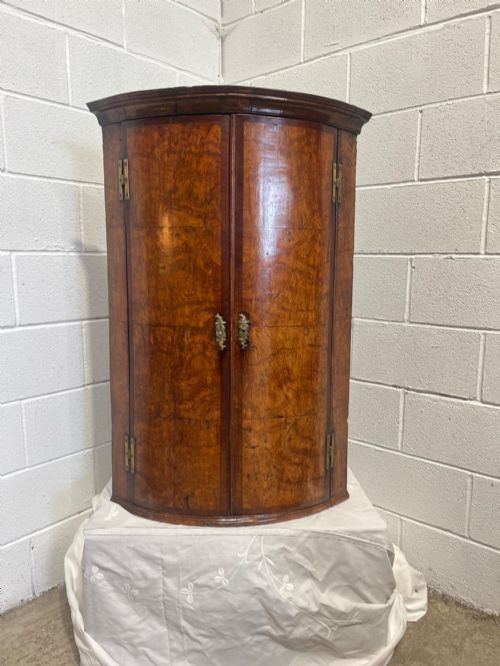
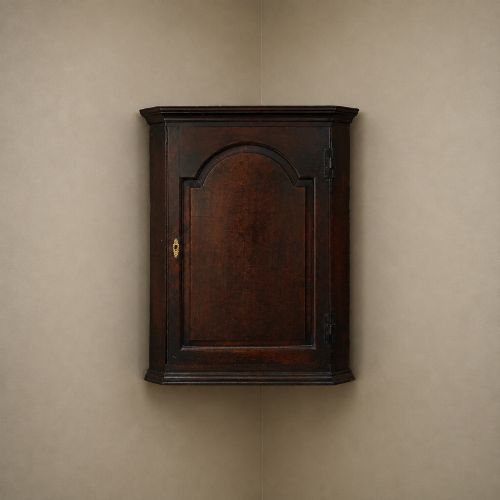
Corner cupboards dominate the available selection, often featuring single glazed or panelled wooden doors. Buyers also encounter larger armoires, linen presses, and small fitted wardrobes.
Materials and construction
Joiners built these cupboards primarily in oak and mahogany, frequently utilising burr walnut, burr oak, yew wood, and plum pudding mahogany for decorative effect. Secondary woods supported structural frames while primary timbers faced outward.
Surface treatments range from clear polish on figured grains to painted finishes on vernacular pieces. Brass hardware such as hinges and escutcheons secure doors and drawers, whilst glass panels appear in glazed door variants.
Timber Hanging Cupboard Retail Price Guide 2026
Typical asking prices for timber hanging cupboard among the pieces listed under this phrase on Sellingantiques today, from the lower quarter to the upper quarter. They describe what is for sale here now, not the wider market.
Materials across these listings include mahogany, oak, walnut, burr walnut, burr oak, yew, glass, brass, and paint.
Distinctions in quality
The selection of primary timber dictates the visual weight of each piece, with burr veneers and figured mahogany sitting above plain native boards. Craftsmanship shows in the precision of cabinet joinery and the integration of decorative details such as satinwood inlay.
Hardware execution and glazing quality differentiate workshop standards. Original brass furniture and well-proportioned cornices elevate the architectural presence of wall-hung storage.
The Timber Hanging Cupboard Glossary
- Corner cupboard
- A storage unit built specifically to fit into the internal angle of a room. These save floor space while utilising otherwise dead wall areas.
- Satinwood inlay
- Contrasting pale timber inserted into the primary wood surface in geometric or floral patterns. This decorative technique appears on late eighteenth-century pieces.
- Burr walnut
- Timber taken from the abnormal growth of a walnut tree, yielding complex swirling grain patterns. Cabinetmakers used it as a high-status veneer.
- Plum pudding mahogany
- A dense variety of mahogany featuring distinctive circular grain markings resembling fruit in a pudding. It provides rich visual texture on Georgian furniture.
- Glazed door
- A door framework fitted with glass panes to display contents within the cabinet. These often feature wooden glazing bars dividing the glass.
Timber Hanging Cupboard: Frequently Asked Questions
Where should I hang a corner cupboard?
Mount these units securely into wall studs within a dining room, hallway, or kitchen to maximise empty room angles. Ensure the supporting wall structure bears the weight of the timber before installation.
Position the cupboard at a height that allows comfortable access to internal shelving without obstructing surrounding furniture or doorways.
How do I identify a Georgian cupboard?
Look for characteristic proportions, timber choices such as mahogany or oak, and period construction methods like hand-cut dovetails. Hardware and decorative inlay often point directly to eighteenth-century workshop practices.
Examine the secondary woods at the back and interior for signs of period hand-tool work that distinguish older joinery from later reproductions.
What is the difference between oak and mahogany versions?
Oak versions generally originate from earlier vernacular traditions, displaying visible grain and robust pegged joints. They suit rustic or traditional interiors with heavy textural presence.
Mahogany models typically reflect refined Georgian or Sheraton aesthetics with smoother polished surfaces and decorative veneer work. They integrate well into formal reception rooms.
How do I care for wooden hanging cupboards?
Maintain stable indoor humidity levels to prevent timber splitting or veneer lifting over seasonal changes. Dust regularly with a soft dry cloth and apply appropriate furniture wax sparingly.
Avoid placing wall-hung cabinets in direct sunlight, which can fade polished mahogany and dry out antique oak surfaces.