

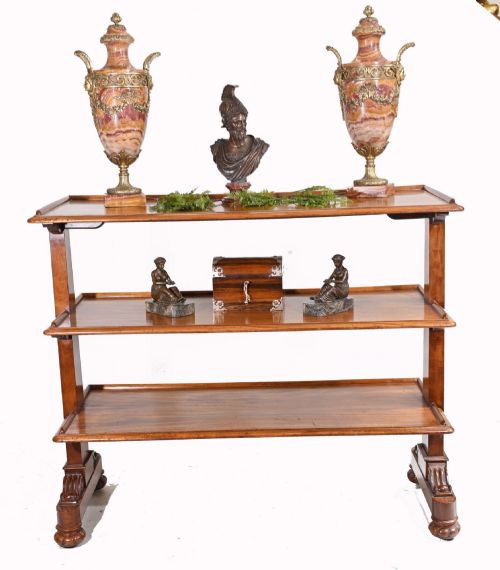
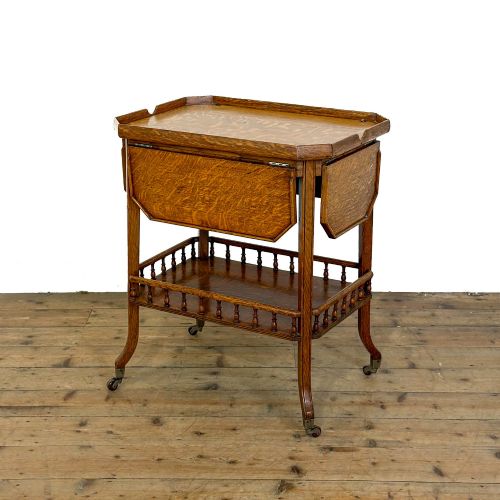
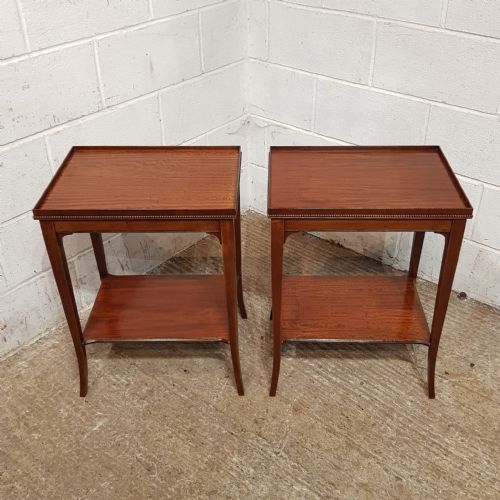
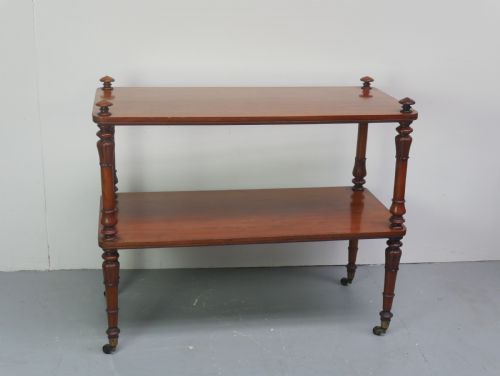


Tiered Wooden Tray
These tiered wooden tray pieces bring practical service and multi-level display to a room, offering the structured charm of earlier centuries.
Tiered Wooden Tray
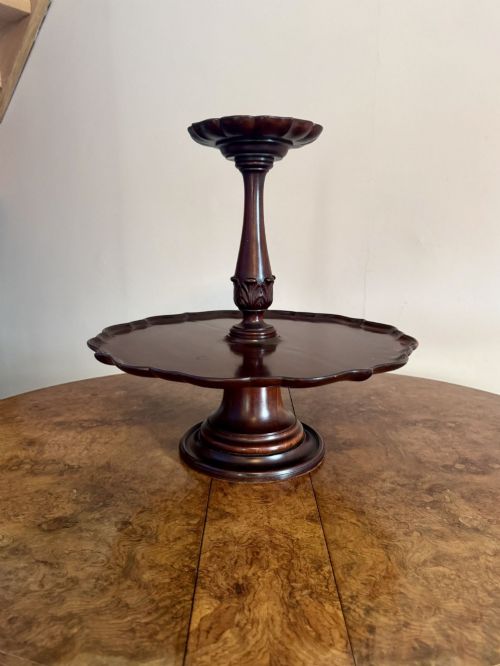
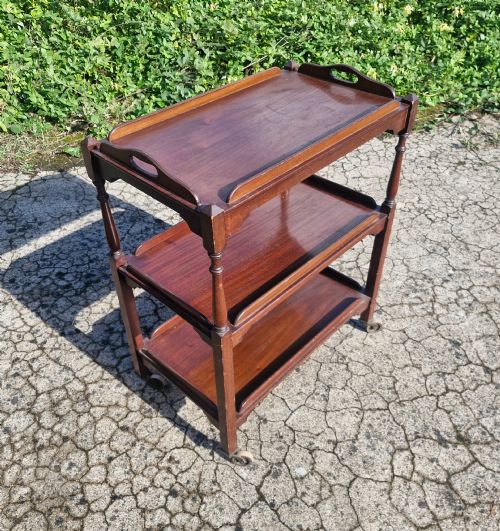
A tiered wooden tray primarily manifests as an English dumb waiter, tea trolley, or multi-level stand designed for serving and display. These functional items span from the 18th century through the Edwardian era and the 1930s, reflecting changing domestic habits.
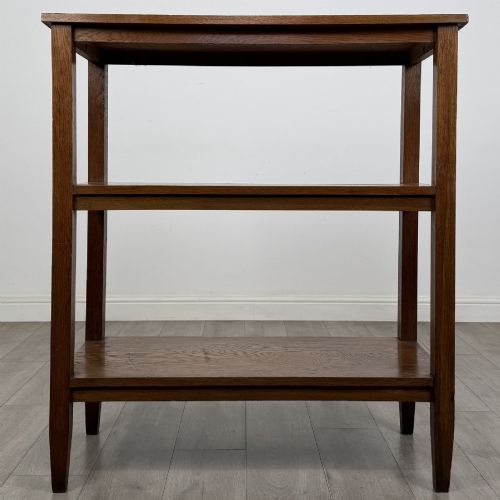
The most common formats on this page include mahogany tea trolleys, oak side tables, and revolving lazy susans with multiple levels. Makers utilised various woods to create structures intended for mobility or central display in reception rooms.
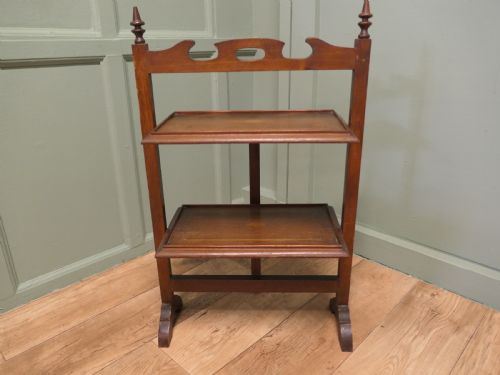
Forms range from the grand George III dumb waiter to folding cake stands and occasional tables with removable carrying trays. Buyers encounter pieces equipped with wheels, bun feet, and graduated shelves built for practical utility.
What varies in quality
The distinction between standard utility items and finer examples lies in the selection of timber and the precision of the joinery. Mahogany and satinwood pieces with subtle inlay demonstrate superior craftsmanship compared to plain utilitarian oak.
Hardware integration dictates the overall refinement, particularly the quality of brass castors, hinges on folding tiers, and the fit of removable trays. Pieces retaining original wheels and stable multi-tier movement represent higher standards of period production.
Tiered Wooden Tray Retail Price Guide 2026
Typical asking prices for tiered wooden tray among the pieces listed under this phrase on Sellingantiques today, from the lower quarter to the upper quarter. They describe what is for sale here now, not the wider market.
Some Victorian dumb waiters were built heavy enough to survive a minor indoor earthquake, while folding cake stands fold flat like awkward wooden storks.
Gillows and Co·Maple and Co
The Tiered Wooden Tray Glossary
- Dumb waiter
- A tiered freestanding piece of dining room furniture designed to hold dishes or bottles without servant assistance. These revolve or feature graduated circular shelves.
- Étagère
- A piece of furniture consisting of a set of open shelves for displaying small objects. Satinwood and mahogany examples date predominantly to the late 19th and Edwardian periods.
- Lazy Susan
- A revolving tray placed on a table or counter to assist in moving food. 19th-century versions typically utilise solid mahogany construction.
- Tea trolley
- A wheeled table utilised for serving afternoon tea. Edwardian and 1930s variants often include removable carrying trays.
Tiered Wooden Tray: Frequently Asked Questions
What are tiered wooden trays used for?
These items served various domestic purposes ranging from dining room service to displaying tea wares and holding books in reception rooms. Their multiple tiers maximised vertical space for storage and presentation.
Today, they function well as side tables, bar carts, or display stands in living spaces. The removable trays on certain trolleys offer practical versatility for serving drinks.
How do I date a tiered tray?
Dating relies on timber selection, structural hardware, and stylistic indicators associated with periods like the Georgian era, Victorian period, or Edwardian times. Mahogany and heavy brass castors often point to the 19th century.
Later pieces from the 1920s and 1930s tend toward lighter oak trolleys and folding cake stands. Comparing the joinery and finish helps confirm the era of production.
Are the trays removable on these trolleys?
Many Edwardian and 1930s trolleys feature lift-off top trays designed for carrying items independently from the wheeled base. This functional detail allowed servants to transport items directly to a table.
Buyers should examine the runners and edges of the upper tier to see if the tray lifts clear. Fixed tiers remain more common on older dumb waiters and multi-level stands.
Where should I place a tiered stand?
These pieces suit corners or empty wall spaces where multiple levels can display decorative objects without crowding the room. Trolleys fit neatly beside seating as mobile side surfaces.
Revolving lazy susans and dumb waiters work effectively as centrepieces or freestanding furniture in dining spaces. Their compact footprints allow them to add surface area in modest rooms.