





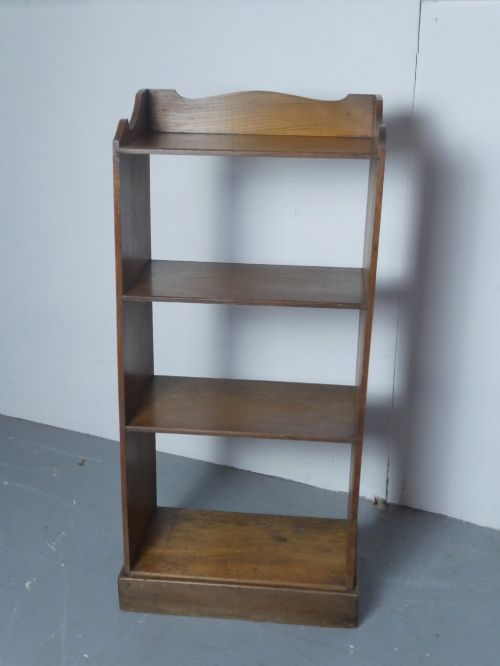
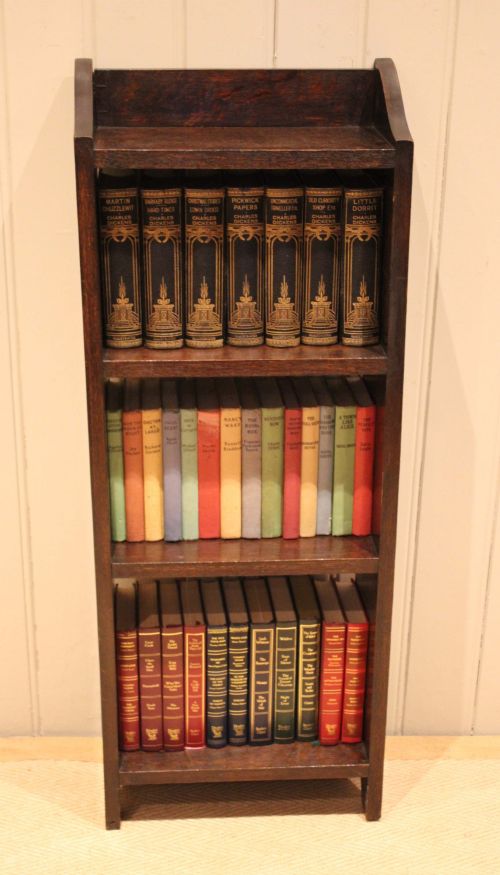
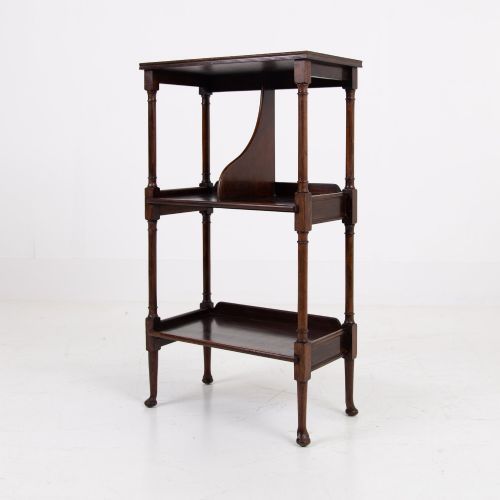
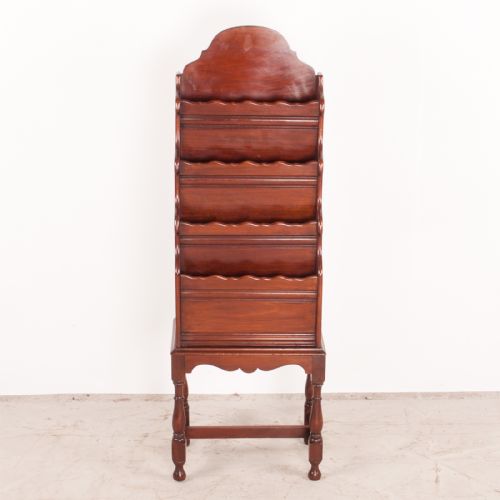


Tiered Wooden Rack
A tiered wooden rack brings useful vertical display and storage to a room, turning empty wall space or corners into organised tiers of mahogany, oak and walnut.
Tiered Wooden Rack
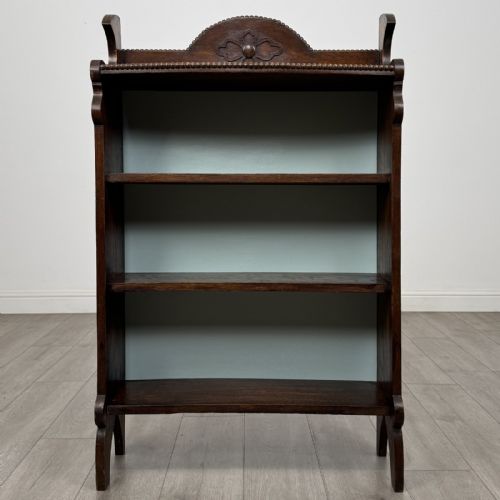
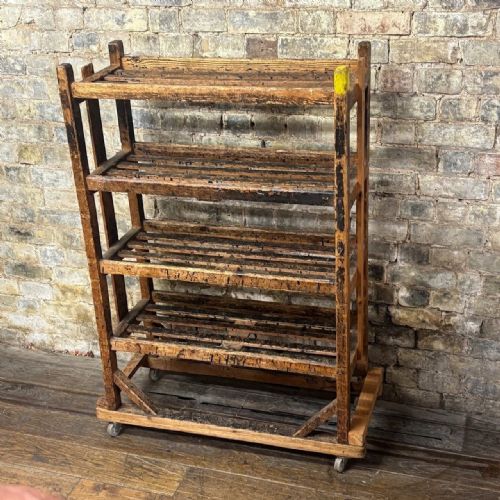
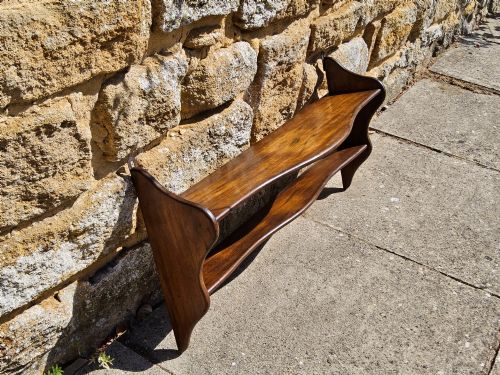
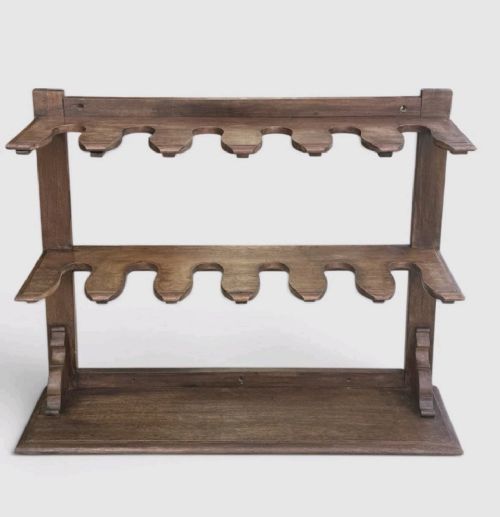
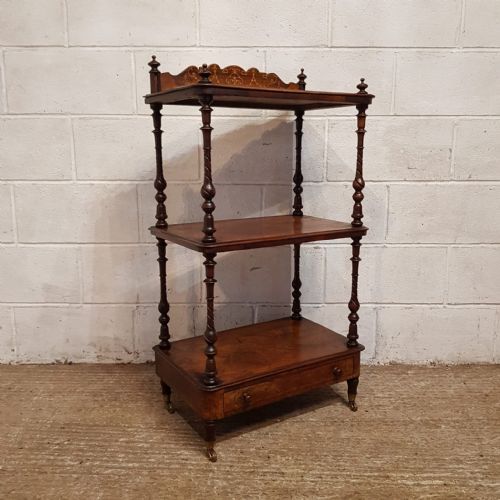
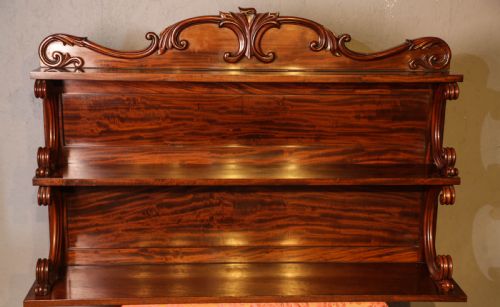
A tiered wooden rack serves various domestic duties, appearing on this page as hanging wall shelves, floor-standing whatnots, book troughs, magazine holders and boot stands. The evidence shows these pieces span from the late eighteenth century through the Victorian and Edwardian periods up to the 1920s.
Mahogany and oak dominate the forms, while walnut, burr walnut, pine and exotic hardwoods such as Indian hardwood appear across bookcases, etageres and desk tidies. Buyers are most likely to encounter Victorian and Edwardian examples alongside pieces dating from the Regency era and the 1920s.
The objects range from multi-tiered display stands and music racks to simpler shoe trolleys and spoon racks, reflecting how makers adapted vertical tiers for books, papers, boots and ornaments. Regional variations also surface, including Scottish pine and Welsh oak constructions alongside refined English cabinet work.
Materials and construction methods
Cabinet makers utilised dense timbers like mahogany, walnut and oak, often selecting burr veneers for decorative effect on the shelves and panels of whatnots and occasional tables. These woods provided the necessary structural strength to support multiple stacked tiers without sagging.
Metal fittings played a functional and decorative role, with brass galleries, hinges and castors appearing alongside bronze and iron components on industrial shoe trolleys and ship's shelves. Joinery relied on traditional methods suited to the weight of stacked shelves, while painted and polished finishes protected the timber surfaces.
Tiered Wooden Rack Retail Price Guide 2026
Typical asking prices for tiered wooden rack among the pieces listed under this phrase on Sellingantiques today, from the lower quarter to the upper quarter. They describe what is for sale here now, not the wider market.
The documented periods span from the eighteenth century through the Regency, Victorian and Edwardian eras up to the 1930s.
Assessing quality in tiered woodwork
Quality rests in the selection of timber and the precision of the joinery connecting each tier to its uprights or wall supports. Finer examples display carefully matched wood grains, well-turned supports and robust galleries that secure objects safely on every level.
The distinction between standard utility items and superior pieces often lies in secondary details, such as inlaid stringing, carved galleries, or substantial brass fixtures rather than simple construction. Proportion and stability dictate how well a multi-tiered structure holds its balance under daily use.
The Tiered Wooden Rack Glossary
- Whatnot
- An open set of freestanding shelves designed for displaying ornaments or books, typically featuring three or more tiers.
- Canterbury
- A low, tiered stand originally designed for holding sheet music, folios or magazines, often fitted with slatted partitions and small castors.
- Etagere
- A French term for a piece of furniture consisting of a set of open shelves for displaying small objects, similar in function to a whatnot.
- Gallery
- A raised ornamental border or rail fitted around the edge of a shelf to prevent items from sliding off.
- Book trough
- A small desk or tabletop rack with sloping sides designed to hold a handy selection of books upright.
Tiered Wooden Rack: Frequently Asked Questions
What rooms suit a tiered wooden rack?
These pieces fit easily into sitting rooms, hallways and studies where extra surface space is needed without occupying a large footprint.
Wall-hanging versions free up floor area, while freestanding etageres and whatnots anchor corners and empty wall spaces effectively.
How were hanging shelves secured?
Hanging shelves use integrated wooden brackets, side panels with screw holes, or brass hanging loops attached to the rear uprights.
Because tiered racks hold heavy items like books or ceramics, they require secure fixings into wall studs or solid masonry.
Can these racks hold heavy books?
Sturdy mahogany, oak and walnut examples handle substantial volumes, particularly smaller open bookcases and dedicated book troughs.
Lighter folding cake stands and wall shelves suit display items, magazines or lighter papers rather than heavy library sets.
How do I date a wooden rack?
Dating relies on timber choice, construction techniques, hardware and stylistic cues such as Regency brass inlay or Arts and Crafts simplicity.
Victorian and Edwardian pieces often show machine-sawn backing boards or standardised screws, while earlier pieces exhibit hand-finished joinery.