

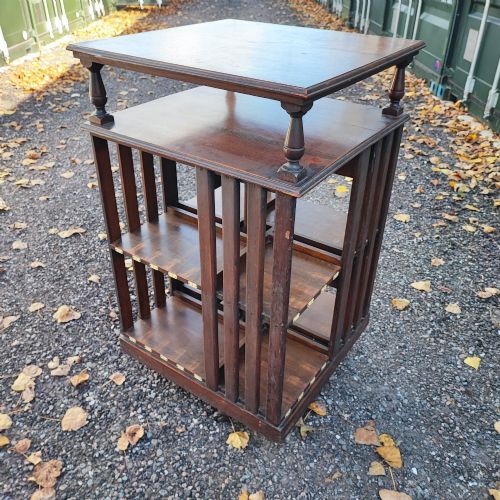
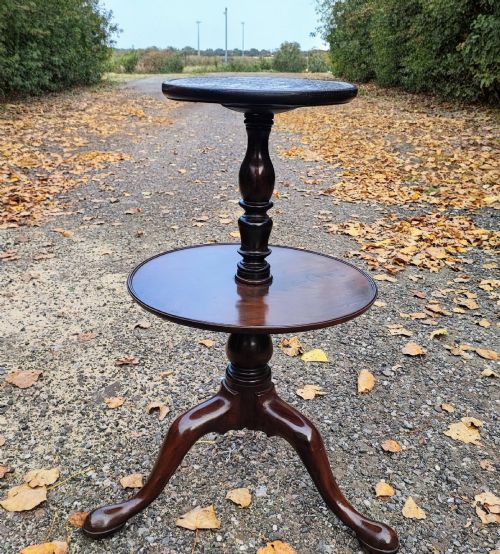
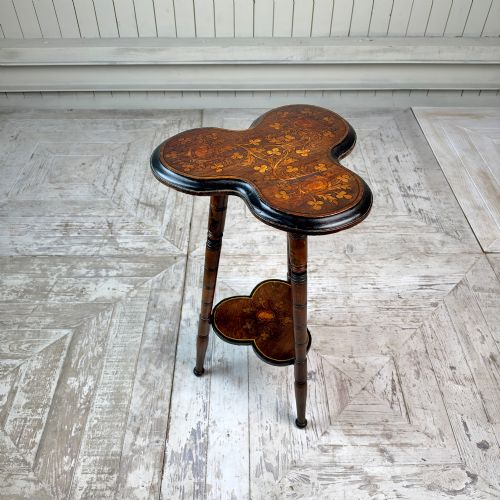
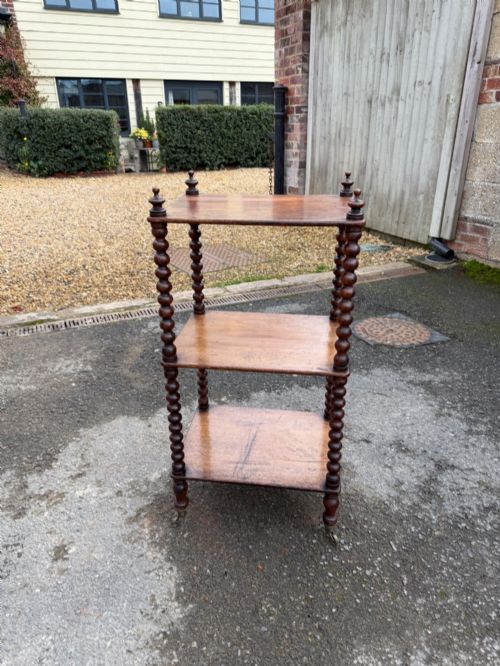
Tiered Wood Stand
A tiered wood stand solves the perennial problem of display and surface space without crowding a room.
Tiered Wood Stand
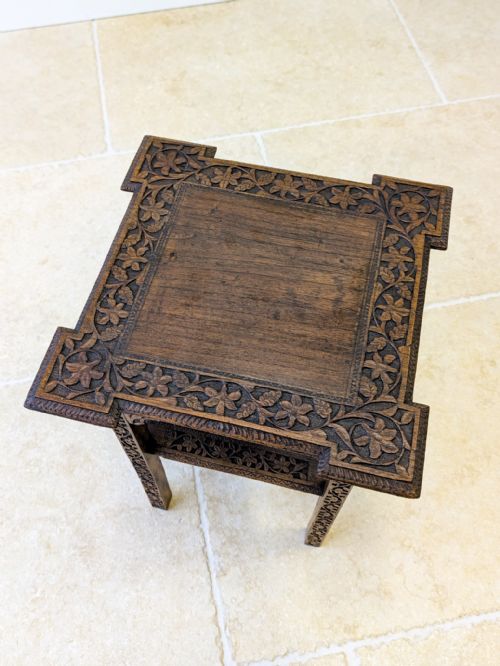
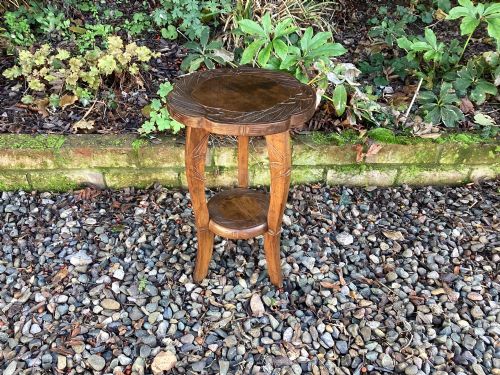
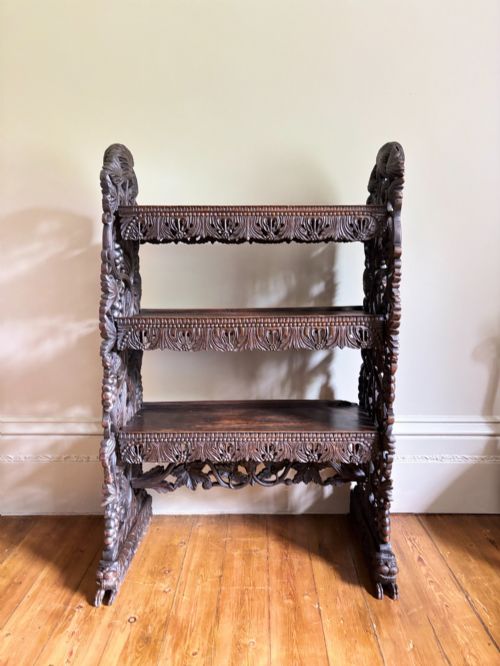
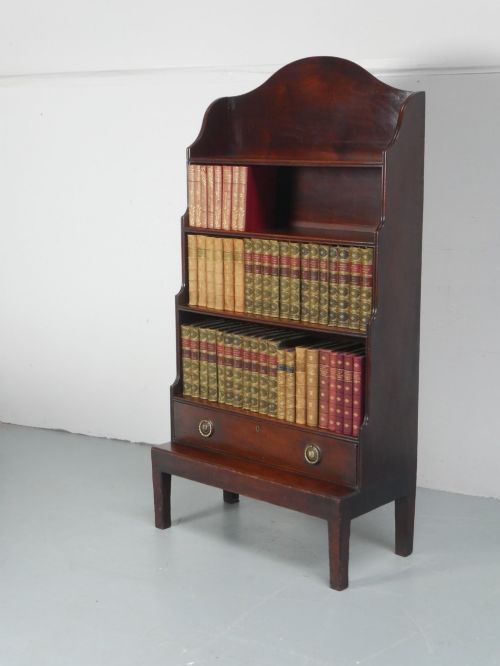
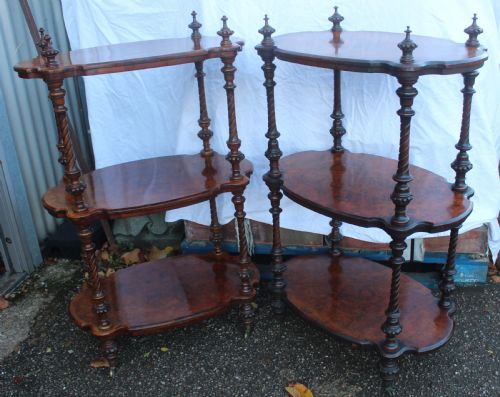
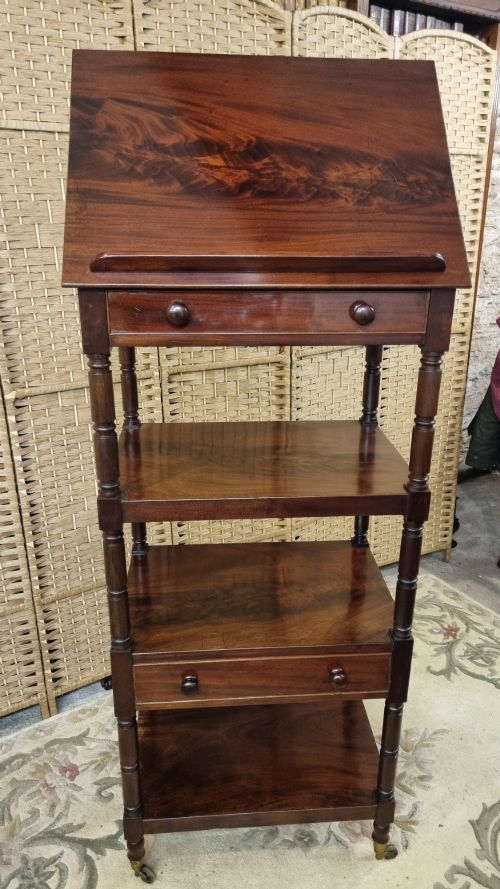
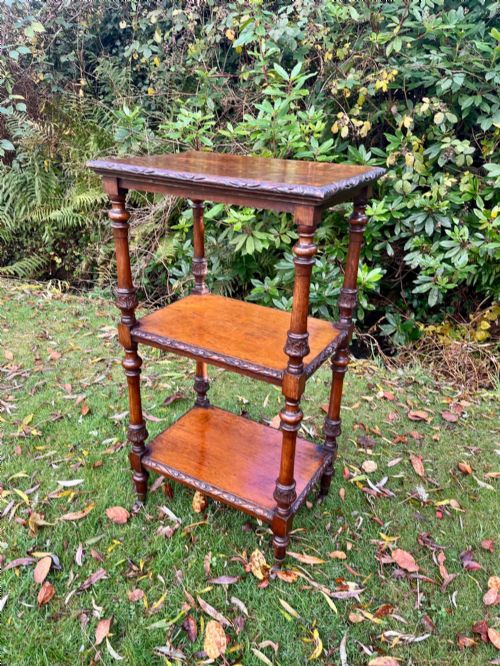
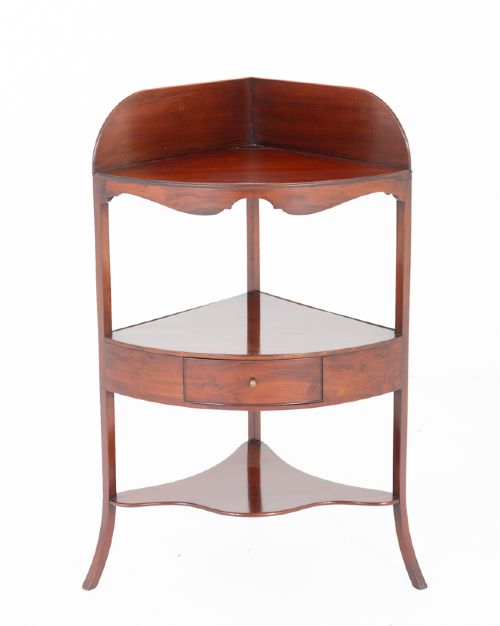
When you search for a tiered wood stand, you encounter a lineage of multi-level furniture spanning the Georgian, Regency, Victorian, and Edwardian eras. These pieces range from simple lamp tables and corner shelves to elaborate whatnots and étagères designed to hold books, plants, and decorative objects.
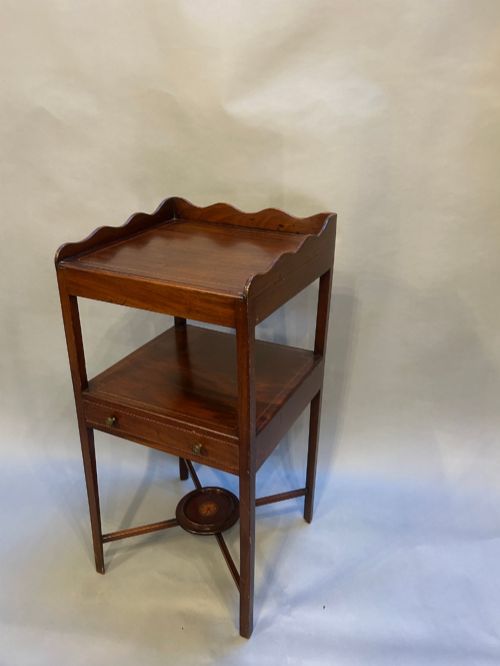
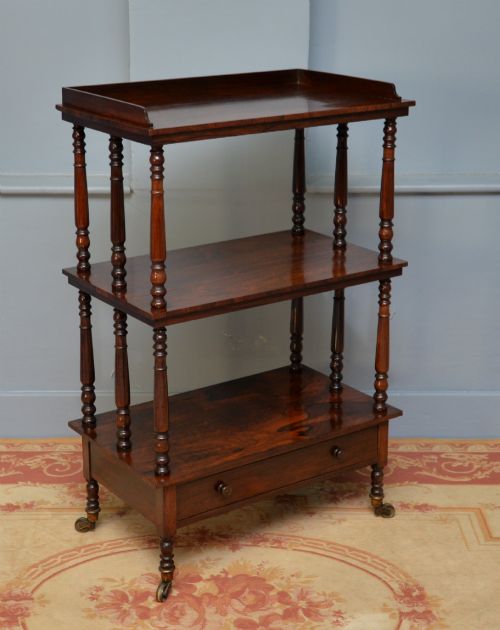
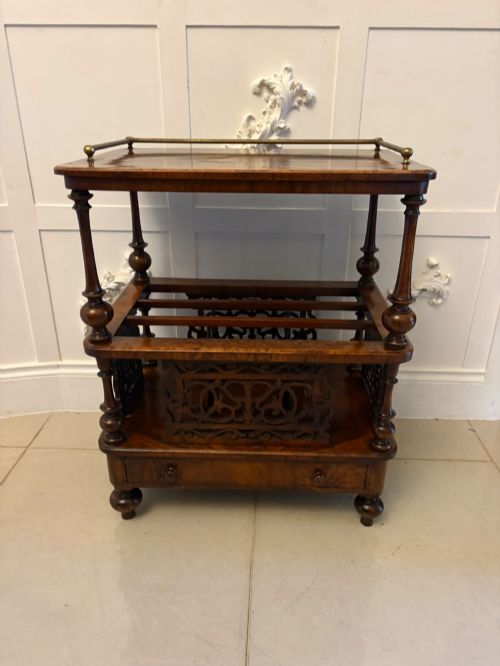
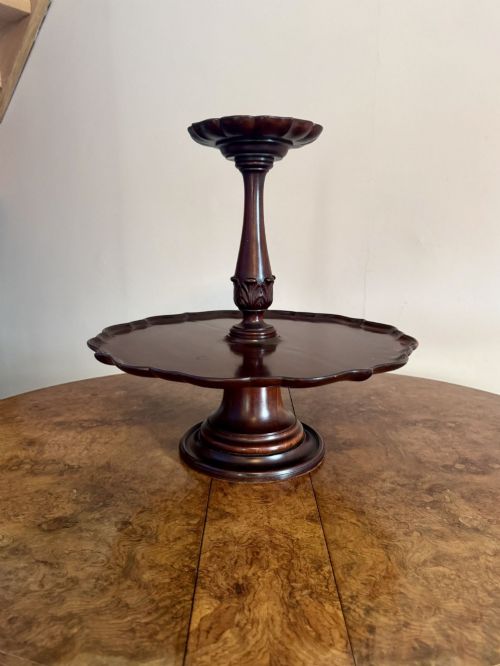
The version you meet most often on this page is the Edwardian or Victorian mahogany multi-tier table or whatnot. These domestic items utilise successive horizontal surfaces supported by vertical columns or turned legs to multiply usable space within a compact footprint.
How they were made
Cabinetmakers constructed these stands predominantly from dense timbers such as mahogany, walnut, rosewood, and oak, frequently enhanced with satinwood inlay or contrasting ebony details. Structural integrity relied on traditional joinery to support multiple stacked shelves without the frame twisting.
Makers incorporated functional metal elements including brass galleries, castors, and pierced fretwork galleries to secure items placed on the upper tiers. Surface finishes varied from polished wood polish to red lacquer and paint for Chinoiserie and French-influenced pieces.
Tiered Wood Stand Retail Price Guide 2026
Typical asking prices for tiered wood stand among the pieces listed under this phrase on Sellingantiques today, from the lower quarter to the upper quarter. They describe what is for sale here now, not the wider market.
Cotton reel stands and pin cushion stands prove that even sewing accessories received the multi-tier architectural treatment.
What varies in quality
The distinction between standard domestic furniture and the finest workshop output lies in the crispness of the timber selection and the refinement of subsidiary details. Superior pieces display carefully matched grain patterns on every tier and precise execution in inlaid borders or turned supports.
Proportion and stability separate the better examples from ordinary production. A top-tier stand maintains visual balance across its multiple levels, whereas lesser items can feel top-heavy or cluttered when viewed from across a room.
LIBERTY & CO·Heals·Gillows
The Tiered Wood Stand Glossary
- Étagère
- A piece of furniture consisting of a set of open shelves for displaying small objects. Originating in France, these stands became popular in British drawing rooms during the nineteenth century.
- Whatnot
- An open set of shelves used for displaying ornaments or holding books. They typically feature three or four tiers supported by slender uprights.
- Dumb waiter
- A tiered stand fitted with revolving or stationary shelves, historically used in dining rooms for serving food without domestic staff present.
- Gadrooned edge
- A decorative carved moulding featuring curved, overlapping patterns along the perimeter of a table top or shelf.
- Fretwork
- Openwork ornamentation carved or pierced in a flat pattern, frequently seen on the galleries of Edwardian and Victorian lamp tables.
Tiered Wood Stand: Frequently Asked Questions
What is a tiered wood stand used for?
These stands serve primarily as display surfaces and compact storage solutions within living spaces. Historically, specific variants held books, tea services, or indoor plants.
Today, they function well beside seating to hold lamps and daily reading materials while occupying minimal floor area.
How do I identify a Victorian whatnot?
Victorian examples typically feature dark timbers like mahogany or walnut, often incorporating turned barley twist columns or pierced fretwork galleries. They frequently utilise three or four ascending tiers designed for corner placement or freestanding display.
Closer inspection reveals the dense grain and substantial weight characteristic of mid to late nineteenth-century cabinetmaking.
Where should I place a tiered stand?
A tiered stand fits naturally beside a sofa, in an empty hallway corner, or beneath a window to hold trailing plants. Because they offer multiple levels, they draw the eye upward and make efficient use of vertical space in smaller rooms.
Keep them away from direct heat sources to protect the polished wood surfaces and delicate inlay work.