

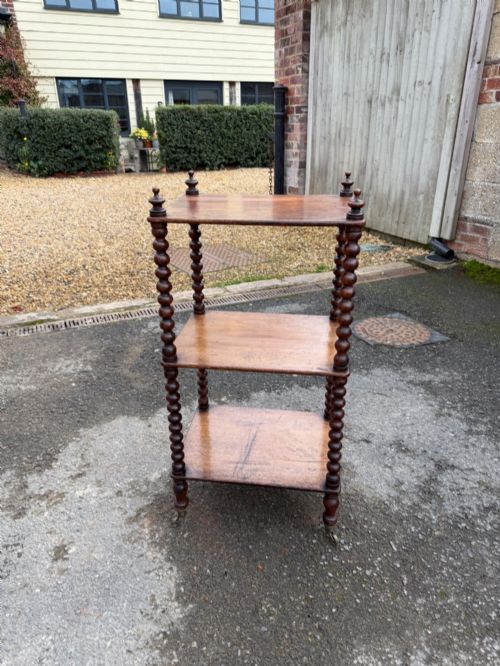
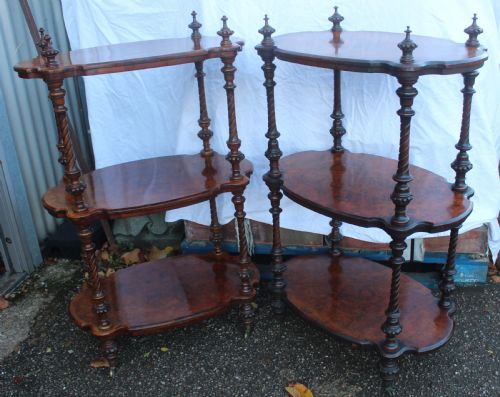
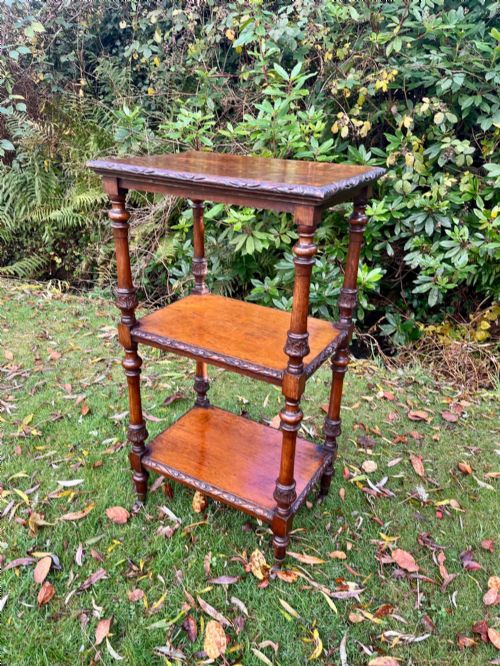
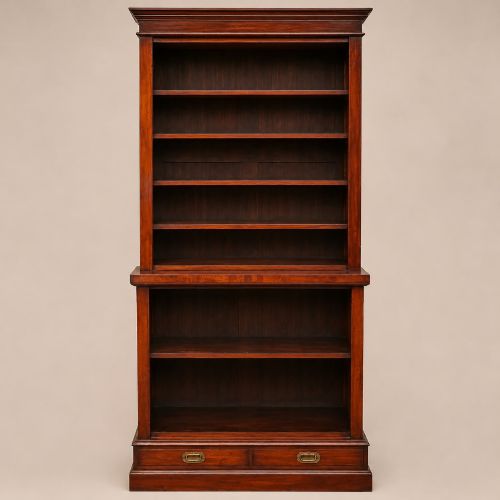

Tiered Wood Shelving
Tiered wood shelving brings practical vertical display and timeless proportion to any room, offering multiple levels for books and ornaments.
Tiered Wood Shelving
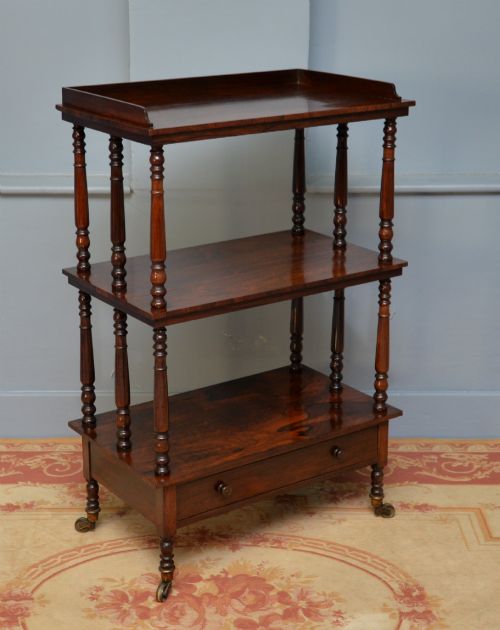
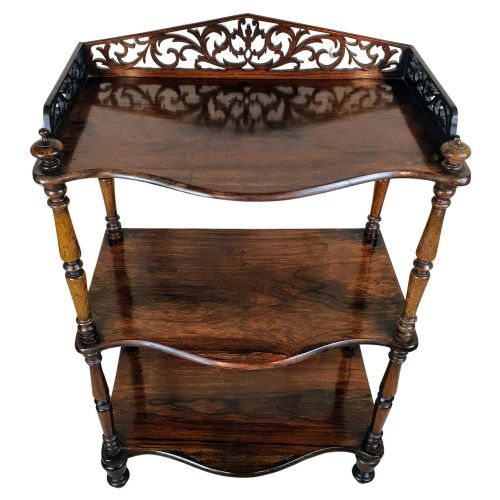
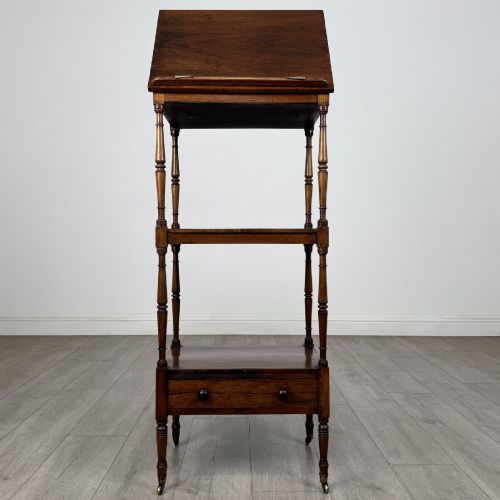
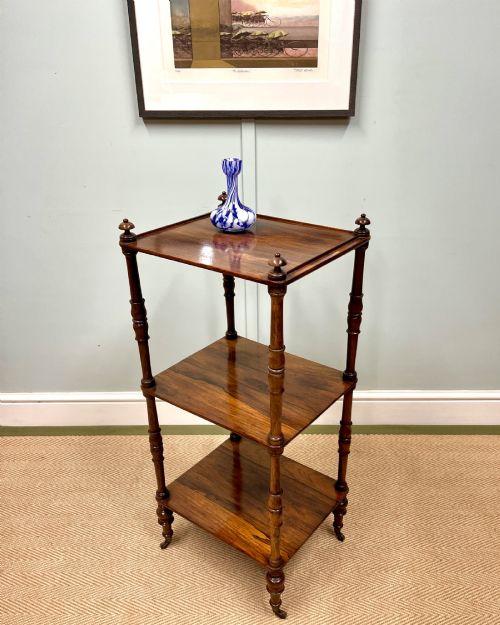
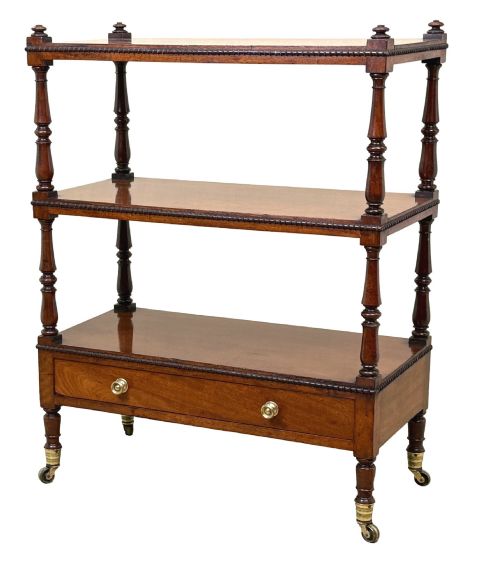
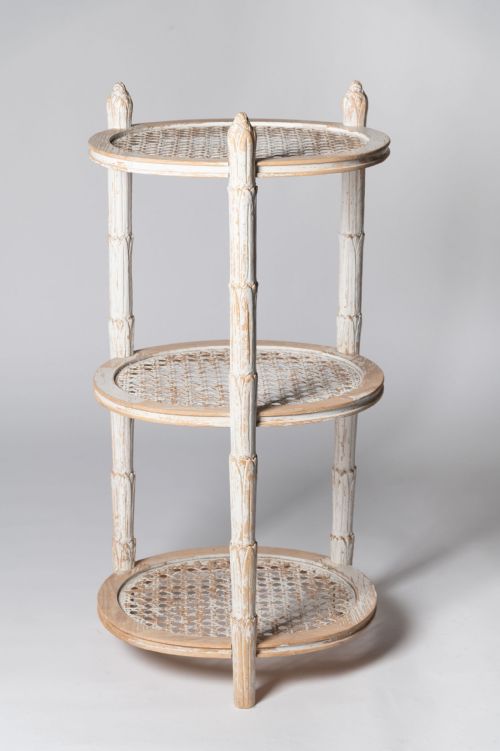
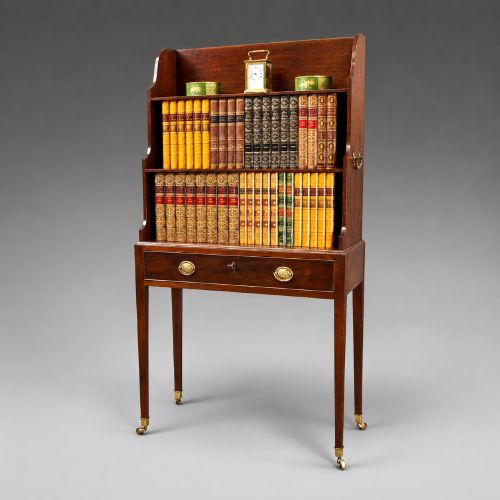
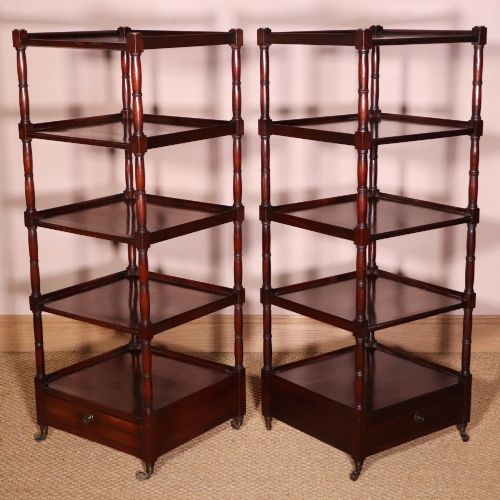
When you search for tiered wood shelving, you encounter a variety of multi-level display furniture including whatnots, etageres, and wall-hanging shelves. These items provide structured surface area across distinct horizontal tiers supported by vertical framing or columns.
The versions most frequently met on this page date from the nineteenth century and the Victorian era, executed primarily in rich timbers. Forms range from corner units and wall-mounted shelves to freestanding bookcases and central standing buffet shelves.
Originating across British, French, and Indian workshops, these structures served traditional functions of holding books, ceramics, and ornaments in sitting rooms and libraries. Their multi-tiered design maximises floor or wall space while keeping collections visible from multiple angles.
How they were made
Makers utilised dense hardwoods such as mahogany, walnut, rosewood, and satinwood, often selecting figured veneers like burr walnut to cover primary surfaces. Structural stability relied on precise joinery, with vertical supports taking the form of turned columns, barley twists, or graduated side panels.
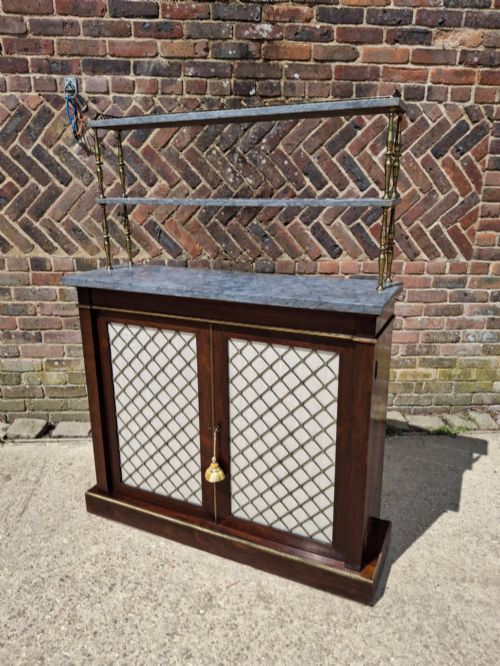
Metal components played a structural and decorative role, incorporating brass rods, castors, and hanging brackets to secure multi-tiered assemblies. Ebonised finishes and parcel gilding appeared on specific pieces, alongside pierced fretwork panels and inlaid details.
Tiered Wood Shelving Retail Price Guide 2026
Typical asking prices for tiered wood shelving among the pieces listed under this phrase on Sellingantiques today, from the lower quarter to the upper quarter. They describe what is for sale here now, not the wider market.
Listings feature mahogany, walnut, rosewood, and burr walnut across multiple centuries.
What varies in quality
The calibre of timber selection and veneer matching defines the upper tier of these pieces, where cabinetmakers chose richly figured grain patterns for prominent display surfaces. Superior examples demonstrate meticulous attention to structural joints, ensuring that tiered platforms remain level and stable under load.
Refinement in decorative detailing separates standard utility pieces from exceptional ones. This includes crisp turning on upright columns, cleanly pierced fretwork, and the integration of original brass hardware rather than later replacements.
Gillows·Globe Wernicke
The Tiered Wood Shelving Glossary
- Whatnot
- An open piece of furniture with multiple tiers used for displaying ornaments or books. Originating in the eighteenth century, it gained immense popularity during the Victorian period.
- Etagere
- A piece of furniture consisting of a set of open shelves for displaying small objects. French in origin, these often feature lighter framing and decorative supports.
- Waterfall bookcase
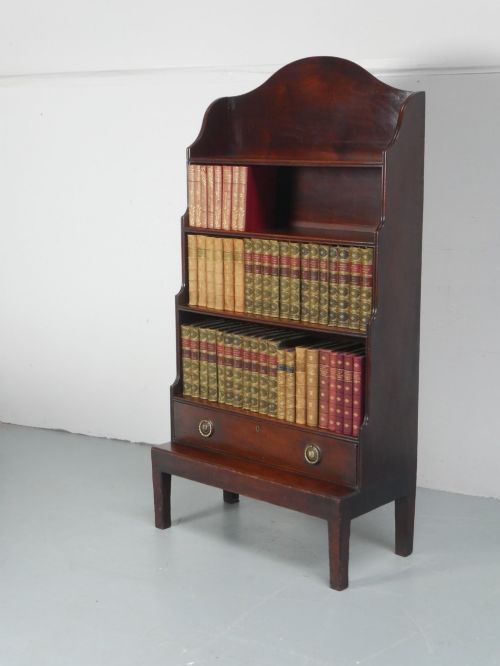
- A set of open shelves where the side panels decrease in depth from bottom to top, creating a stepped profile resembling a cascading waterfall.
- Fretwork
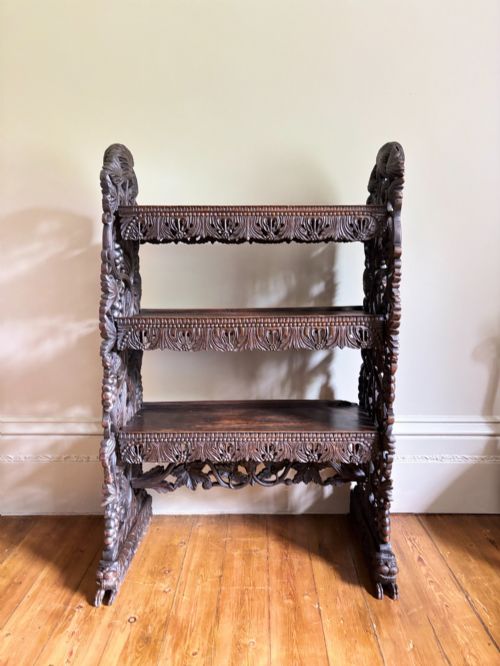
- Ornamental perforated carving or woodwork created by piercing panels with a scroll saw. It frequently appears on the galleries of Victorian corner whatnots.
- Barley twist
- A type of turning resembling a rope wound around a cylinder, used to shape vertical wooden supports. This decorative technique appears frequently on nineteenth-century stands.
Tiered Wood Shelving: Frequently Asked Questions
What is a whatnot shelf?
A whatnot is a multi-tiered piece of freestanding furniture designed specifically for displaying ornaments, ceramics, and small books.
First appearing in the late eighteenth century, these open shelving units became staples of nineteenth-century drawing rooms for showcasing household collections.
How do I hang wall shelves safely?
Wall-hanging shelves require secure fixing points into solid masonry or internal wall studs to support the weight of the timber and displayed items.
Antique wall shelves often feature original brass brackets or hanging plates designed for traditional picture hooks or screws.
What is an etagere used for?
An etagere serves as an open display stand for ornaments, decorative plates, and small personal collections.
Derived from French furniture traditions, these lightweight tiered structures allow light to pass through while keeping objects organised across multiple levels.
How do I date a mahogany shelving unit?
Dating relies on examining timber characteristics, construction methods, and hardware styles such as brass castors or turned supports.
Nineteenth-century examples frequently exhibit solid mahogany framing, hand-cut joinery, and specific stylistic traits associated with the Regency or Victorian periods.