





Tiered Walnut Nightstand
These tiered walnut nightstand selections offer practical multi-level surface space with rich wood grain, bringing classic proportion and utility to the bedroom.
Tiered Walnut Nightstand
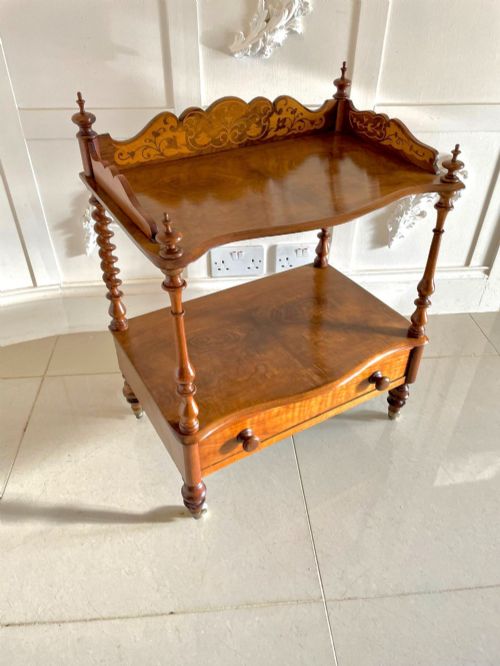
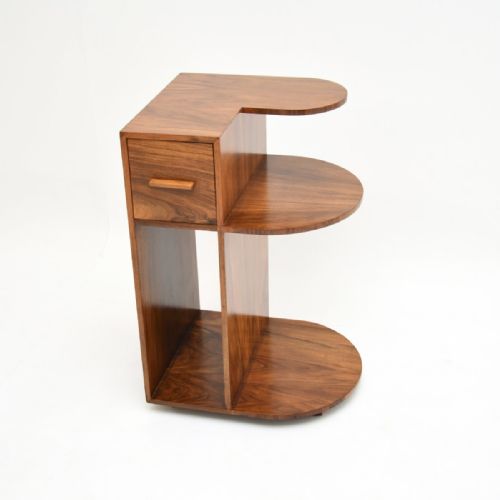
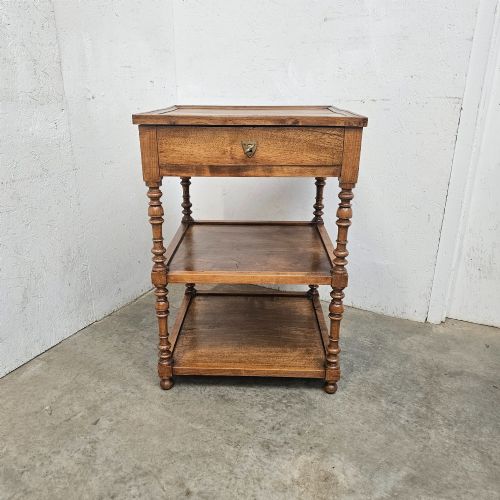
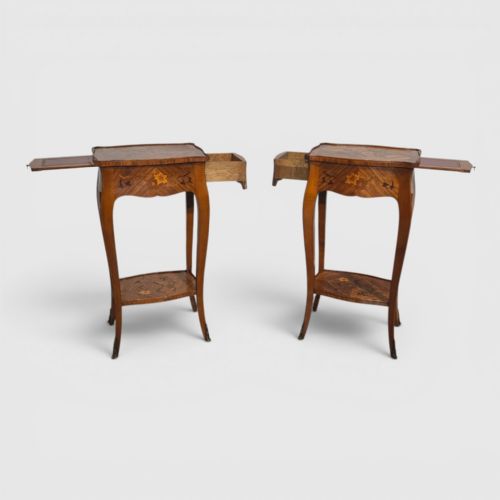
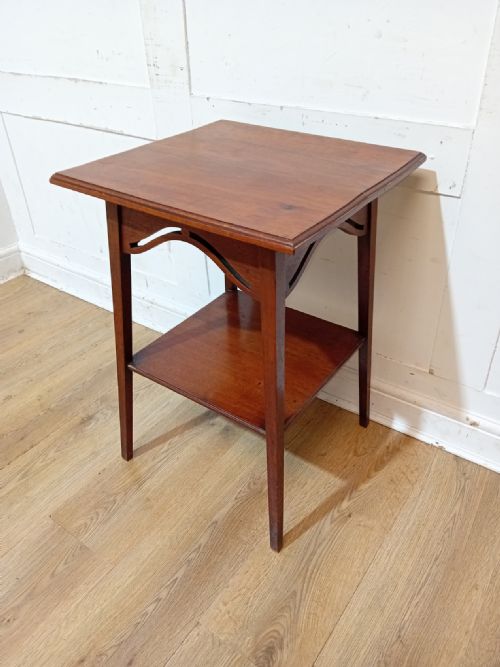
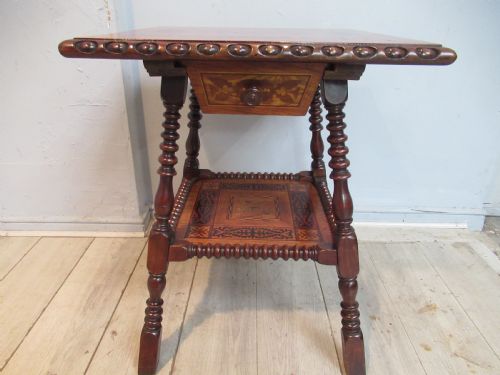
A tiered walnut nightstand provides multiple stacked surfaces for bedside storage, appearing across various historical periods from the Victorian era to Art Deco. Buyers seeking this form will encounter diverse configurations, including tiered etageres, multi-shelf stands, and compact occasional tables.
The pieces available incorporate distinct regional influences, ranging from French marquetry and Louis XV style to English Arts and Crafts designs. These items frequently function as bedside tables, lamp tables, or small side tables depending on their exact height and tier arrangement.
Materials and construction methods
Makers utilised solid walnut alongside figured and burr walnut veneers to achieve rich surface patterns across the tiers. Supporting structures frequently incorporate contrasting elements such as brass mounts, ormolu, ebonised wood, and fruitwood inlay.
Construction techniques span traditional joinery, turned legs, and marquetry inlay work, with some pieces fitted with casters for mobility. Surfaces are finished with polish to highlight the natural grain and colour variations of the timber.
Some small tables come equipped with hidden wheels, proving that Victorians also appreciated mobile snack delivery.
Assessing quality in tiered walnut nightstand pieces
Quality in a tiered walnut nightstand is evident in the selection of the veneer, particularly where burr or figured walnut displays balanced grain patterns across multiple tiers. The precision of marquetry inlay and the integration of brass or gilt metal mounts signal superior craftsmanship.
Structural integrity depends on the stability of the tier supports and the quality of the underlying timber, such as oak or secondary woods. Finer examples maintain crisp carving on turned legs and precise fit across all joined surfaces.
Liberty of London
The Tiered Walnut Nightstand Glossary
- Burr walnut
- A prized timber cut from the wart-like growths on walnut trees, yielding highly swirling and decorative grain patterns.
- Marquetry
- The art of applying small pieces of veneer to a structure to form decorative patterns and pictorial designs.
- Etagere
- A piece of furniture consisting of a set of open shelves for displaying small objects or holding bedside items.
- Ormolu
- Gilded bronze ornamentation applied to furniture mounts, popular in French and revival styles.
Tiered Walnut Nightstand: Frequently Asked Questions
What periods do these nightstands come from?
The pieces span the nineteenth and early twentieth centuries, covering Victorian, Edwardian, and Art Deco design movements.
Buyers will find examples ranging from mid-nineteenth-century campaign pieces to 1930s modernist tiers.
How were tiered stands used originally?
These pieces served multiple domestic purposes as bedside tables, lamp tables, and small etageres for holding books or washstand accessories.
The stacked tiers allowed users to keep lighting on top while storing smaller items on the lower shelves.
Are these tables made of solid wood?
Makers used a combination of solid walnut, fruitwood, oak, and decorative walnut veneers over secondary timbers.
Finer decorative surfaces often rely on burr walnut or detailed marquetry veneer applied to the primary structure.
How do I distinguish French styles?
French pieces often feature marquetry inlay, gilt metal mounts, or specific forms like the etagere and poudreuse.
Stylistic cues draw heavily on Louis XV revival curves and part-ebonised details distinct from British Arts and Crafts work.