

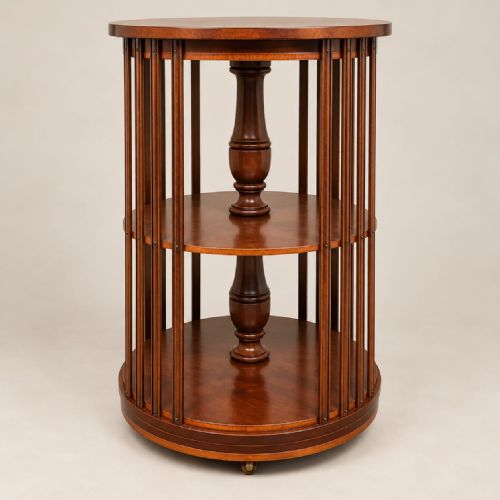
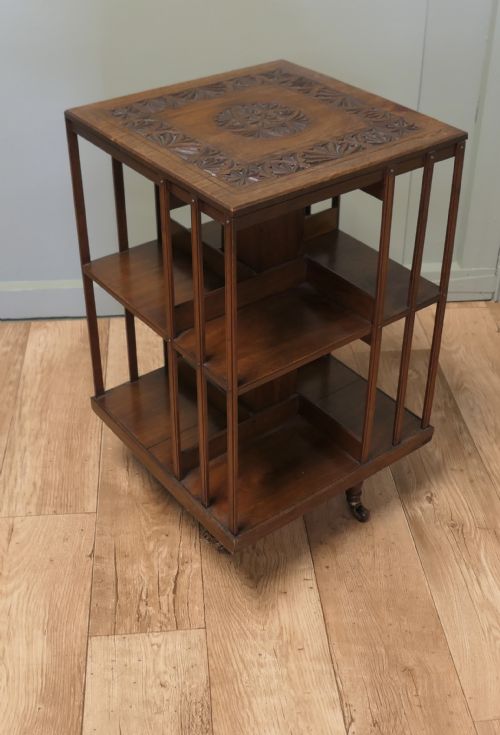
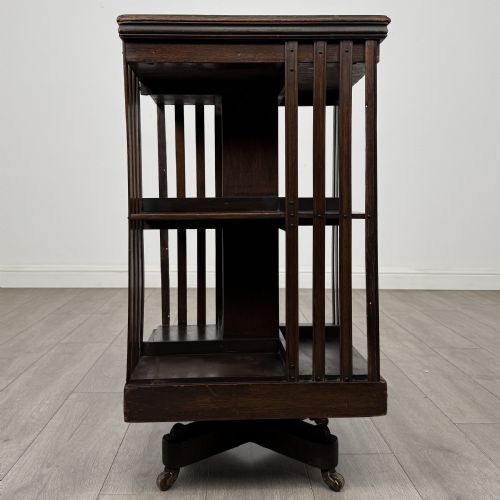
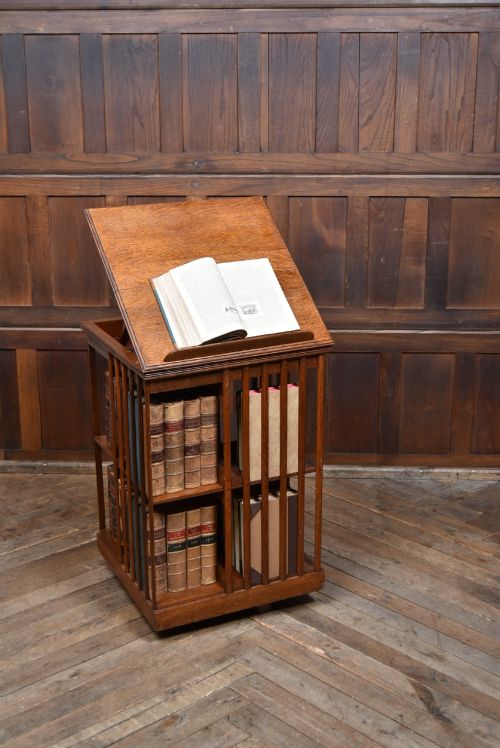
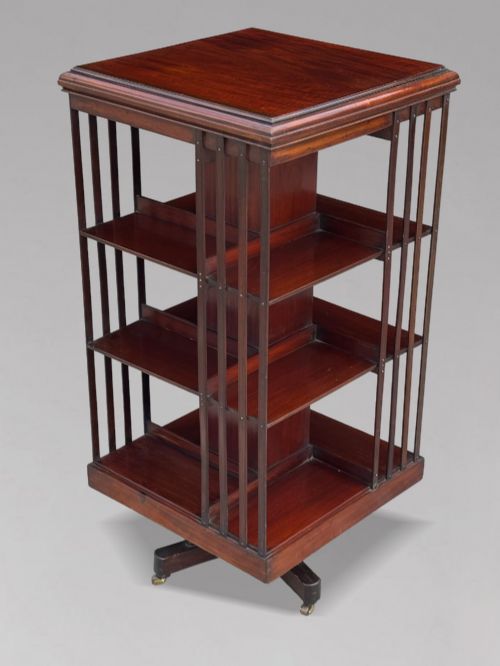
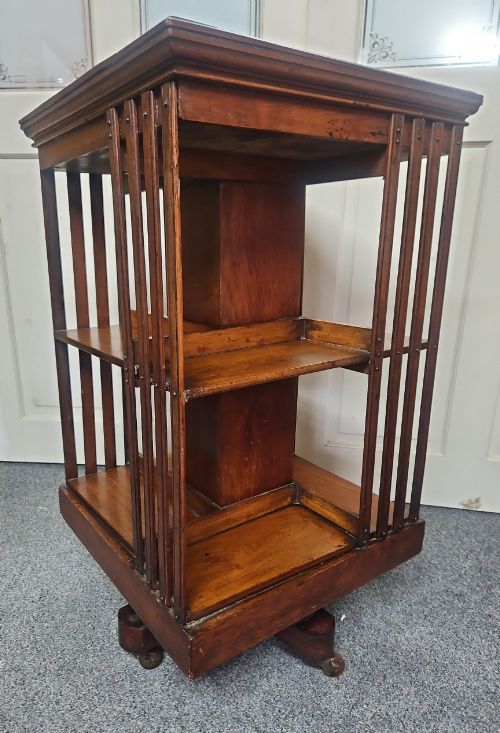
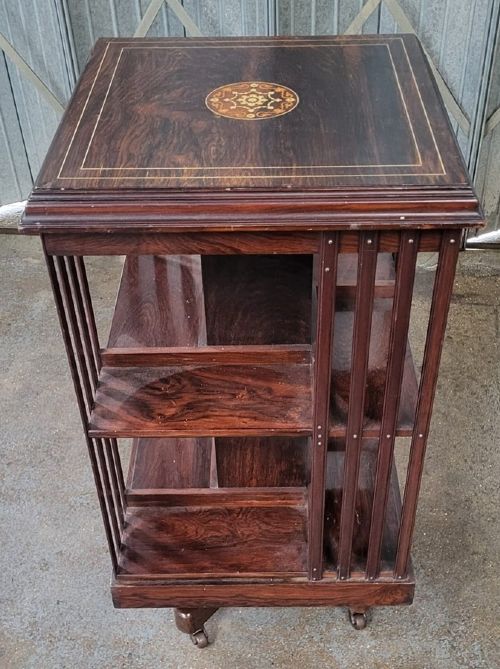
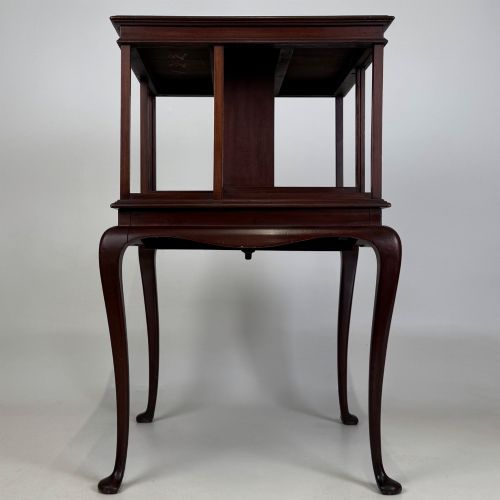


Tiered Rotating Book Stand
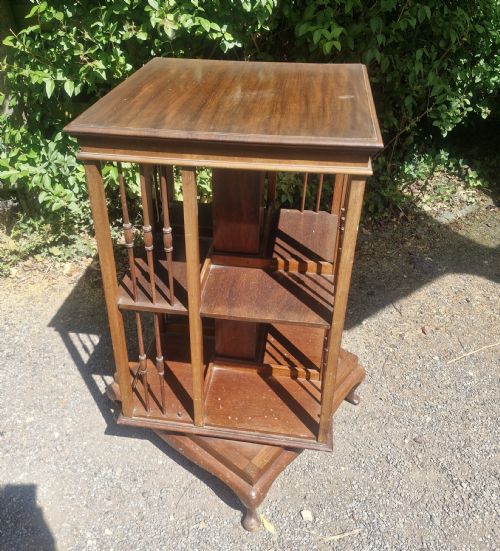
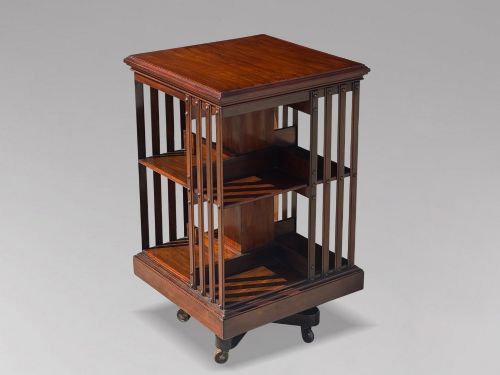
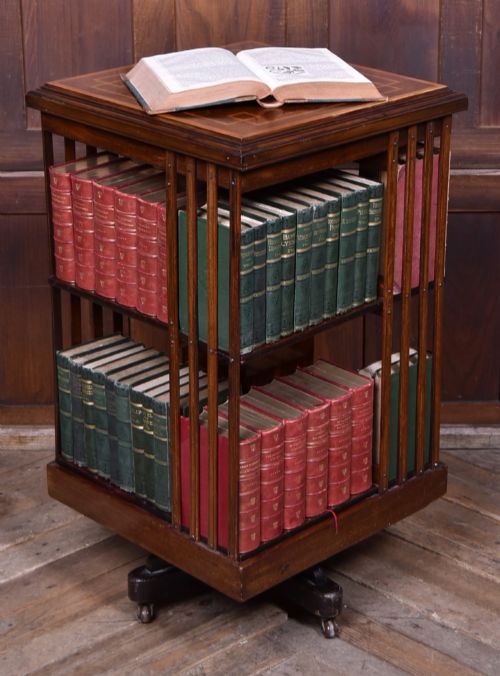
A tiered rotating book stand brings multiple levels of accessible volumes to a desk, table, or floor.
Tiered Rotating Book Stand
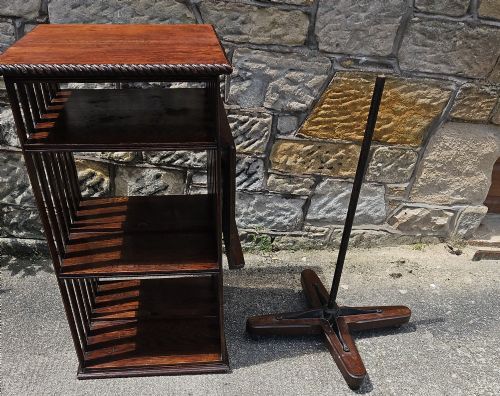
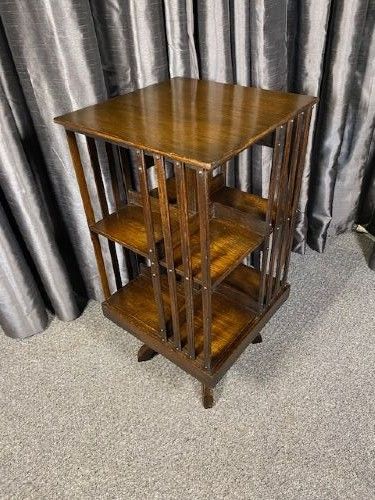
A tiered rotating book stand, frequently found as a revolving bookcase or book table, offers compact storage designed to spin for easy volume selection. The pieces meeting this search phrase originate primarily from the Victorian and Edwardian eras, spanning the late nineteenth century into the early decades of the twentieth.
Most examples appearing here take the form of freestanding or table-standing book stands constructed with multiple tiers. Makers shaped these practical furnishings in various styles, including Edwardian, Victorian, Queen Anne, Regency, Chippendale, and French provincial designs.
The prevailing format on this page relies on mahogany, oak, or walnut timber, often built in circular or square multi-tiered configurations. These revolving structures allow readers to consult a small library without leaving a seat.
How they were made
Cabinetmakers utilised dense hardwoods such as mahogany, oak, walnut, rosewood, and kingwood for the structural framework and shelves. Brass and cast iron mechanisms provide the internal pivot support required to let the tiers turn smoothly.
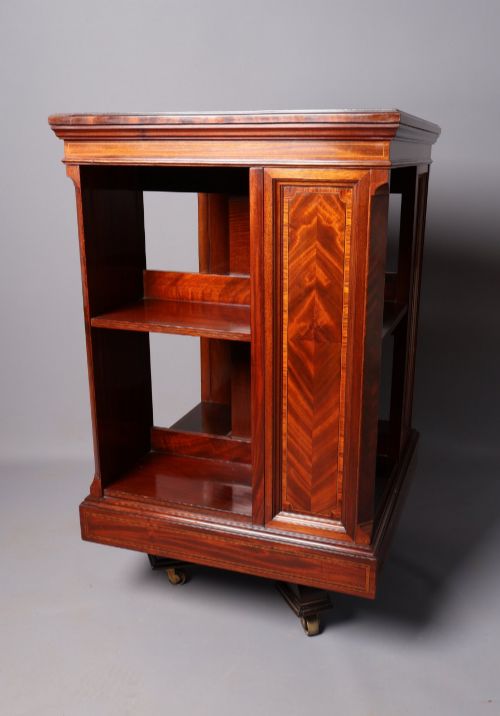
Surface decoration often involves satinwood inlay, brass mounts, and ormolu details applied to the timber frames. Flame mahogany veneers appear on selected panels to create figured grain patterns across the exterior.
Tiered Rotating Book Stand Retail Price Guide 2026
Typical asking prices for tiered rotating book stand among the pieces listed under this phrase on Sellingantiques today, from the lower quarter to the upper quarter. They describe what is for sale here now, not the wider market.
Listings span the Victorian and Edwardian eras up to the 1930s, using mahogany, oak, walnut, and satinwood inlay.
What varies in quality
The underlying timber selection and the complexity of the revolving mechanism separate standard examples from finer productions. Solid mahogany and figured flame veneers indicate higher workshop standards than simpler utility pieces.
Subtle decorative elements, such as satinwood inlay, ormolu mounts, or marble tops, distinguish elaborate variants from plain oak or mahogany builds. The precision of the internal rotating bearing ensures the tiers spin evenly without binding.
Maple & Co
The Tiered Rotating Book Stand Glossary
- Revolving bookcase
- A freestanding or table-top unit mounted on a concealed pivot mechanism allowing the tiers to turn 360 degrees. This design keeps multiple volumes within reach.
- Flame mahogany
- A wood veneer cut from the branch junction of a mahogany tree, producing a distinctive flickering flame pattern. Cabinetmakers reserved this timber for prominent exterior surfaces.
- Satinwood inlay
- Contrasting pale timber inserted into recesses on a darker wood surface to create geometric or floral patterns. This decorative technique appears frequently on Edwardian pieces.
- Ormolu
- Gilded bronze mounts applied to furniture for decorative effect, commonly seen on French-influenced designs. The metal parts provide bright contrast against dark hardwoods.
- Kingwood
- A dense, dark exotic timber with lighter streaks used for fine veneering during the nineteenth century. It yields a rich finish on formal library pieces.
Tiered Rotating Book Stand: Frequently Asked Questions
How do these revolving book stands work?
An internal pivot mechanism concealed beneath the base allows the tiers to spin freely in either direction.
This central bearing supports the weight of the books while letting users access every side from a single position.
What periods do these pieces date from?
The available selection consists mainly of Victorian and Edwardian pieces produced between the late nineteenth century and the 1920s.
Maker styles from this span draw on earlier design languages like Chippendale, Regency, and Queen Anne.
Where were these stands placed in a room?
Victorian and Edwardian readers positioned them beside armchairs, on top of study desks, or freestanding near library tables.
Their compact footprint made them useful for keeping reference books close at hand without occupying extensive floor space.
How do I distinguish Edwardian from Victorian examples?
Edwardian models frequently display lighter timbers, satinwood inlay, and streamlined proportions typical of the early twentieth century.
Victorian pieces often lean towards heavier mahogany construction, deeper colour tones, and occasionally marble tops or brass embellishments.