

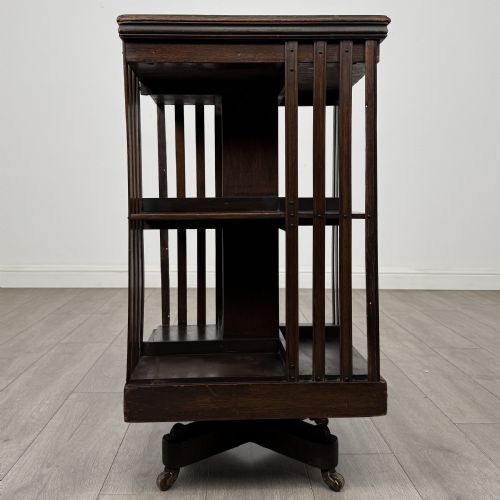
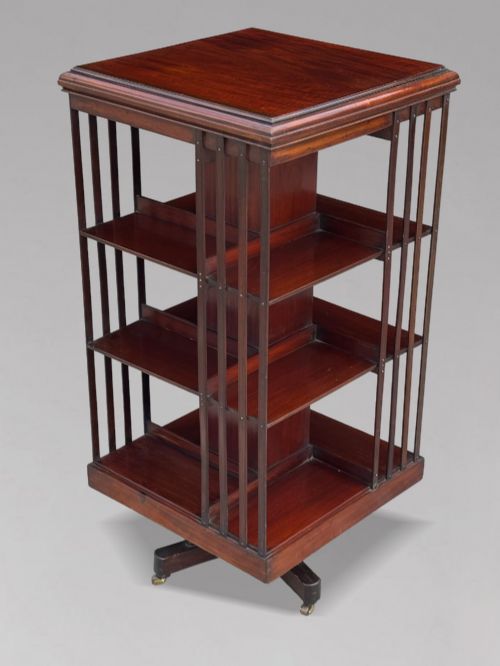
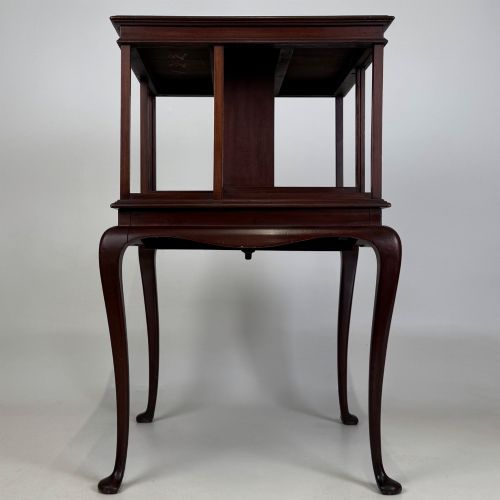
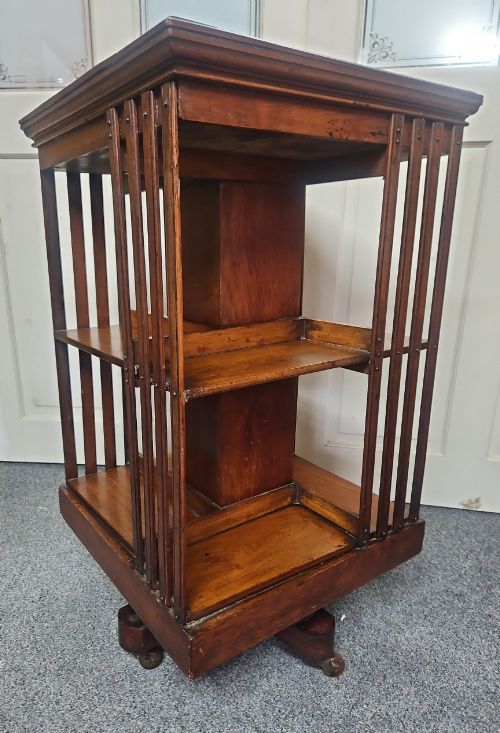

Tiered Revolving Book Stand
A tiered revolving book stand brings practical access and classic timber forms together in a compact piece built for daily reading.
Tiered Revolving Book Stand
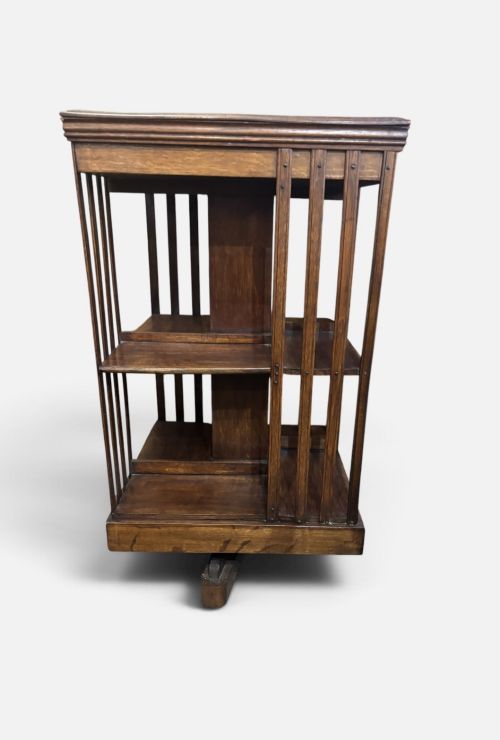
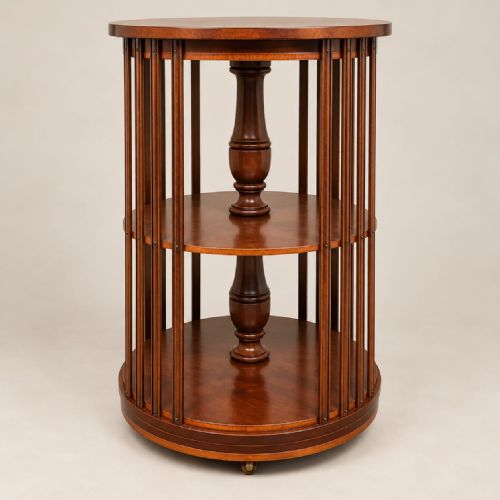
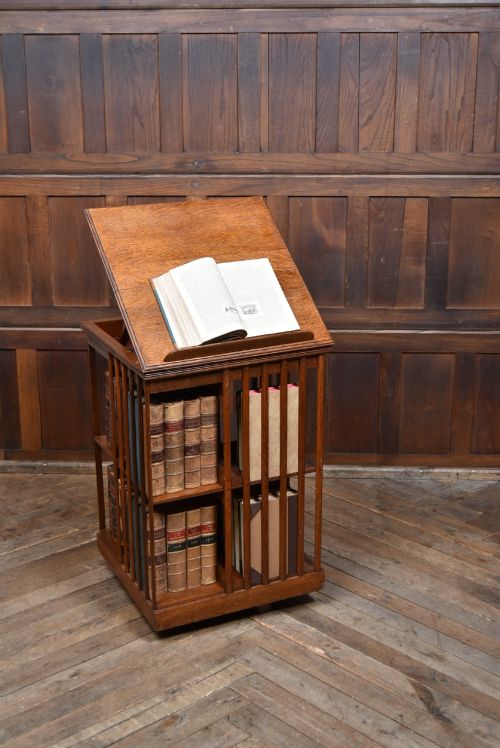
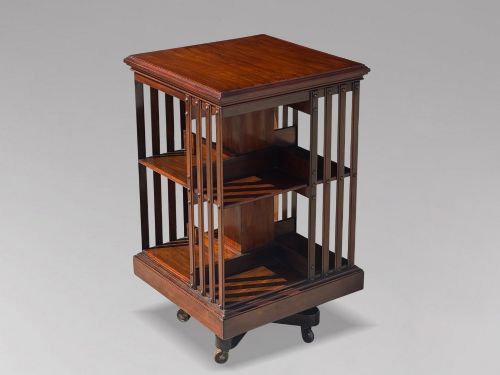
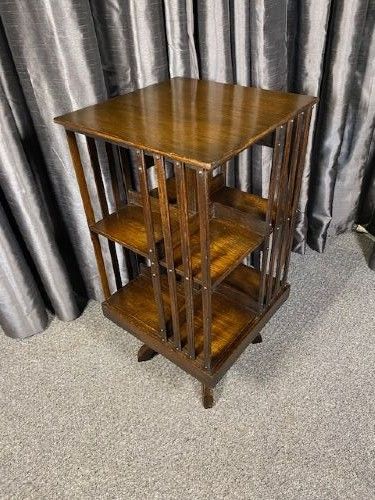
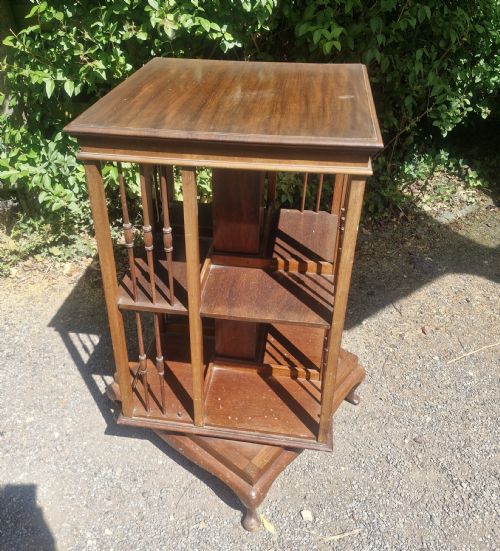
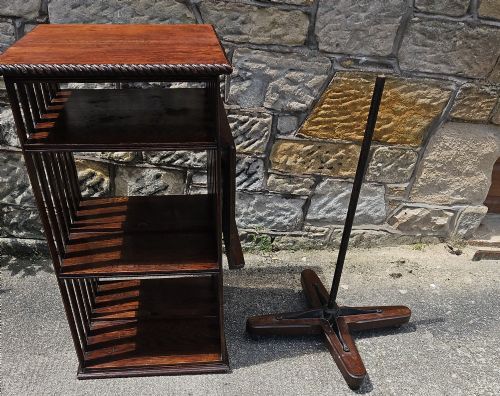
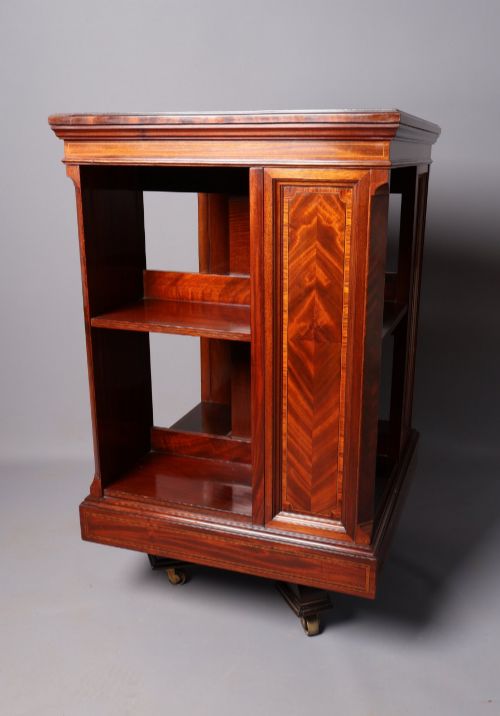
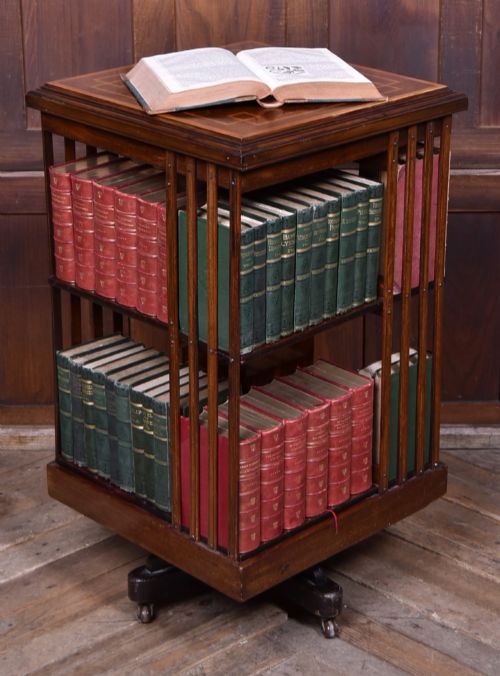
A tiered revolving book stand is a rotating piece designed to hold volumes upright within easy reach of a chair or desk. These items appear across Victorian, Edwardian, and interwar periods, with Edwardian mahogany and oak versions forming the largest share of the selection here.
The format ranges from low two-shelf models to taller constructions with slatted or solid sides. Makers produced circular tables, square book stands, and multi-tiered skyscraper designs to suit libraries, studies, and drawing rooms of the nineteenth and early twentieth centuries.
How they were made
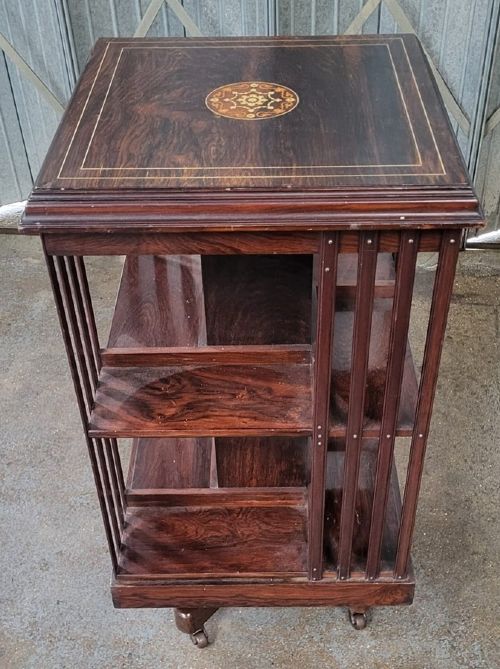
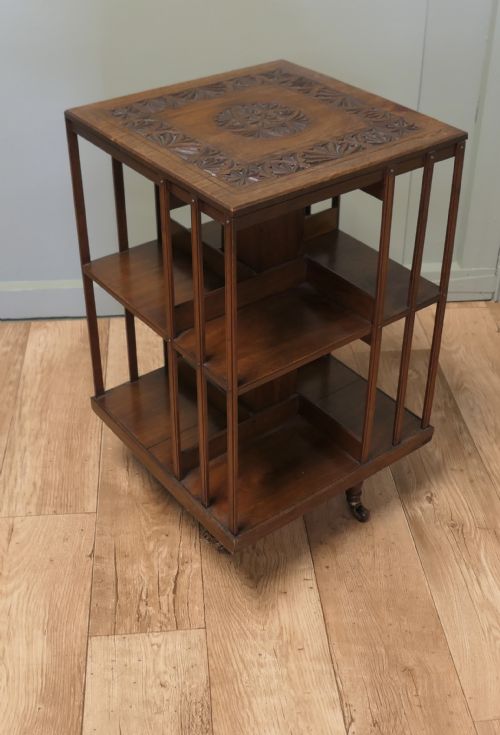
Cabinetmakers constructed these revolving stands primarily in mahogany, oak, and walnut, often applying satinwood stringing, brass fittings, or carved details. Timber selection dictated the structural integrity needed to support heavy loads of books while maintaining smooth rotation on internal mechanisms.
Internal iron and brass pivot components allow the tiers to turn freely on a central axis without binding. Carved elements, inlaid veneers, and marble tops appear on select pieces from Victorian and Edwardian workshops, showing varied levels of joinery skill.
Tiered Revolving Book Stand Retail Price Guide 2026
Typical asking prices for tiered revolving book stand among the pieces listed under this phrase on Sellingantiques today, from the lower quarter to the upper quarter. They describe what is for sale here now, not the wider market.
Mahogany and oak dominate the timber selections across these nineteenth and twentieth-century listings.
What varies in quality
Quality rests on the precision of the turning mechanism and the choice of timber figure, such as flame mahogany or quarter-sawn oak. Superior examples feature stable rotation, tight corner joints, and clean marquetry or ormolu mounts rather than plain secondary woods.
Proportion and scale also distinguish finer pieces, from petite four-shelf stands to large multi-tiered tables. The presence of secondary details like slatted sides, cabriole legs, or fine satinwood inlay separates standard utility items from refined parlour pieces.
Maple & Co
The Tiered Revolving Book Stand Glossary
- Flame mahogany
- A timber veneer displaying a distinct torch-like grain pattern. Cabinetmakers selected these figured boards for prominent exterior surfaces.
- Ormolu
- Gilded bronze mounts applied to furniture for decoration. Found on select French-influenced pieces from the nineteenth century.
- Satinwood
- A pale, lustrous exotic timber utilised for contrasting inlay work. It appears frequently in Edwardian stringing and banding.
- Slatted sides
- Vertical wooden bars forming the partitions of a bookcase tier. This construction keeps volumes visible while holding them securely in place.
Tiered Revolving Book Stand: Frequently Asked Questions
How do I choose the right size?
Consider the floor space beside your seating and the volume of books you wish to keep nearby. Lower two-shelf models sit neatly beside armchairs, while taller tiered variants suit larger collections.
Measure the height and width carefully to ensure the piece balances with surrounding furniture. Compact circular stands take up minimal floor space while offering full access from any angle.
How do I maintain the revolving mechanism?
Keep the internal pivot clean and free from dust accumulation over the years. Gentle rotation prevents undue wear on the central wooden and metal axis.
Apply a light furniture wax to timber surfaces periodically to preserve the finish. Avoid placing the stand in direct sunlight to protect mahogany, walnut, and oak veneers.
Are these stands sturdy enough for heavy books?
Most pieces utilise solid timber frames and sturdy internal pivots designed to bear the weight of numerous volumes. Edwardian and Victorian examples were built for daily use in working libraries and studies.
Distribute heavier encyclopaedias and reference books on the lower tiers to maintain stability. The rotating action should remain smooth even when fully loaded.
How can I tell an Edwardian stand from a Victorian one?
Victorian stands often feature rich, dark mahogany, sometimes paired with brass inlay or marble tops. They frequently date from the late nineteenth century and display heavier carved details.
Edwardian pieces tend to incorporate lighter mahogany, oak, or walnut, often enhanced with satinwood stringing or crossbanding. The aesthetic reflects a lighter, more refined domestic interior style.