



Tiered Mahogany Credenza
These tiered mahogany credenza examples combine rich timbers and practical shelving, offering both elegant display space and traditional storage for the home.
Tiered Mahogany Credenza
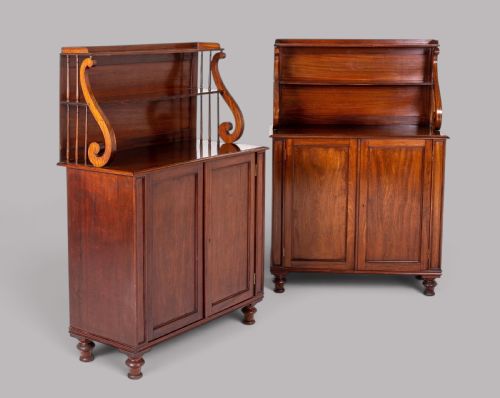
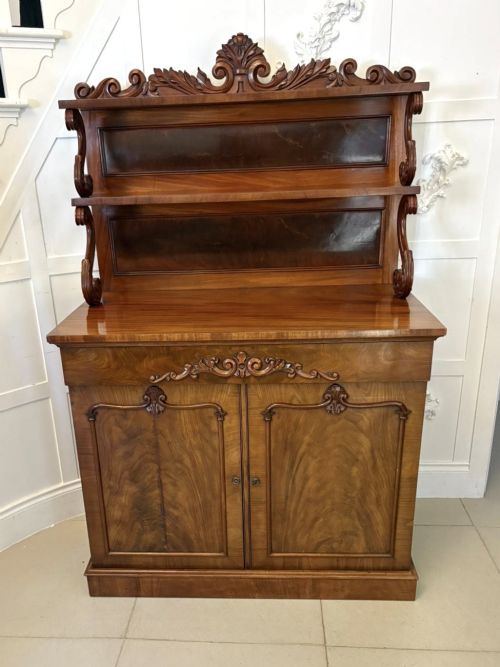
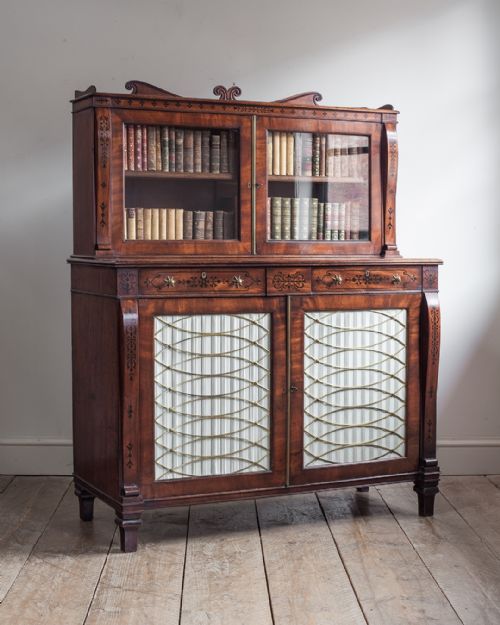
A tiered mahogany credenza typically aligns with forms such as sideboards, chiffoniers, and buffet servers seen across the Victorian, Regency, and Georgian periods. Buyers searching for these items encounter versatile low storage furniture incorporating upper display tiers or shelving backs.
The pieces listed on this page span the nineteenth century, including specific dates like eighteen sixty alongside broader Regency and Victorian classifications. These items function primarily as serving tables, side cabinets, and bookcase cabinets within traditional dining and morning rooms.
Most examples rely on rich timber construction and often feature multi-tier configurations designed for displaying decorative objects or storing dining accessories. The selection bridges formal Regency elegance and heavier Victorian utility.
Materials and Construction Methods
Makers utilised solid mahogany and flame mahogany veneer to construct the primary bodies and surfaces of these cabinets. This timber choice provided a deeply figured grain pattern that defined the visual character of the furniture.
Brass hardware, glass panels, and occasional fabric inserts appear alongside the wood to complete the functional design of the shelving backs and cabinet doors. These secondary materials offered both structural support and decorative contrast.
Tiered Mahogany Credenza Retail Price Guide 2026
Typical asking prices for tiered mahogany credenza among the pieces listed under this phrase on Sellingantiques today, from the lower quarter to the upper quarter. They describe what is for sale here now, not the wider market.
Some nineteenth-century makers snuck secret writing drawers into sideboard tiers so homeowners could pen polite declinations of dinner invitations right where they stood.
Distinctions in Quality and Craftsmanship
Quality in these pieces rests upon the selection of timber figures, such as flame mahogany veneer, and the finesse of the joinery in the tiered superstructures. Finer examples display superior wood grain matching and more intricate architectural mouldings on the cabinet facades.
The integration of functional elements, including writing drawers or structurally sound two-tier shelf backs, separates standard utility cabinets from finer production. The proportion of the upper tiers relative to the lower sideboard base dictates the overall visual balance.
James Shoolbred and Co
The Tiered Mahogany Credenza Glossary
- Mahogany
- A durable tropical hardwood prized for its deep reddish-brown colour and smooth grain. It served as the primary material for high-end nineteenth-century cabinet making.
- Chiffonier
- A small sideboard or low cabinet typically featuring a two-tier shelf back. This form evolved during the Regency and Victorian eras to serve dining and drawing rooms.
- Flame mahogany veneer
- A thin slice of wood cut from the fork of a mahogany tree to produce a flickering, flame-like pattern. Furniture makers applied this to prominent surfaces for decorative impact.
- Campaign style
- A genre of portable furniture designed for travel, characterised by recessed brass handles and robust construction. These pieces offered practical utility in military or domestic settings.
Tiered Mahogany Credenza: Frequently Asked Questions
What is a tiered mahogany credenza used for?
These pieces functioned historically as serving tables, sideboards, and display cabinets in dining rooms and morning rooms. The lower cupboards provided enclosed storage for dining accessories, while the upper tiers held decorative ceramics and glassware.
Today, they serve equally well in modern interiors as hallway consoles, media units, or statement storage pieces in living spaces. Their combination of surface space and vertical shelving accommodates both display and organisation.
How do I distinguish Regency from Victorian pieces?
Regency pieces typically exhibit cleaner lines, lighter proportions, and classical restraint influenced by ancient Greek and Roman designs. They frequently incorporate delicate brass inlay or simpler reeded columns.
Victorian items tend to be heavier and more robust, often featuring richer carved details, more elaborate door panels, and darker finishes. The architectural elements on Victorian pieces frequently display greater ornamentation.
What is a chiffonier?
A chiffonier is a compact sideboard style featuring an enclosed lower cabinet surmounted by one or more display shelves on upright supports. This form became particularly popular during the early nineteenth century.
Many examples also incorporate a small utility drawer beneath the top surface for papers or linens. Their modest footprint made them versatile additions to smaller reception rooms.