



Tiered Glass Vitrine
These tiered glass vitrine examples offer elegant glazed housing for cherished objects, bringing period craftsmanship into modern rooms.
Tiered Glass Vitrine
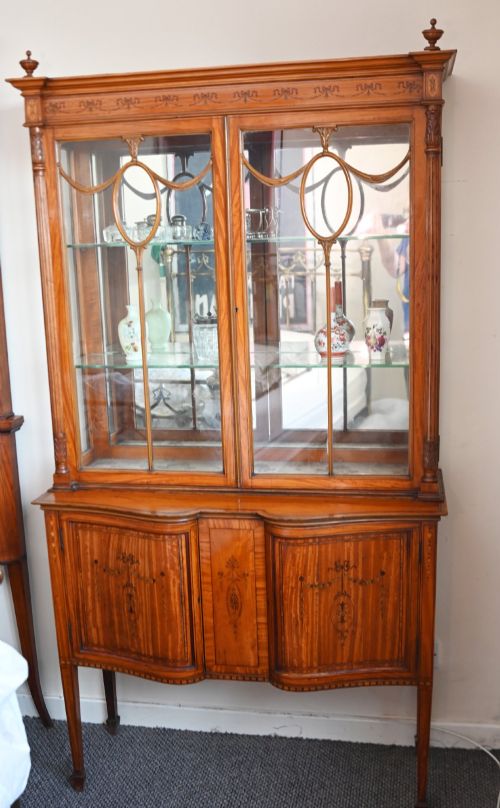
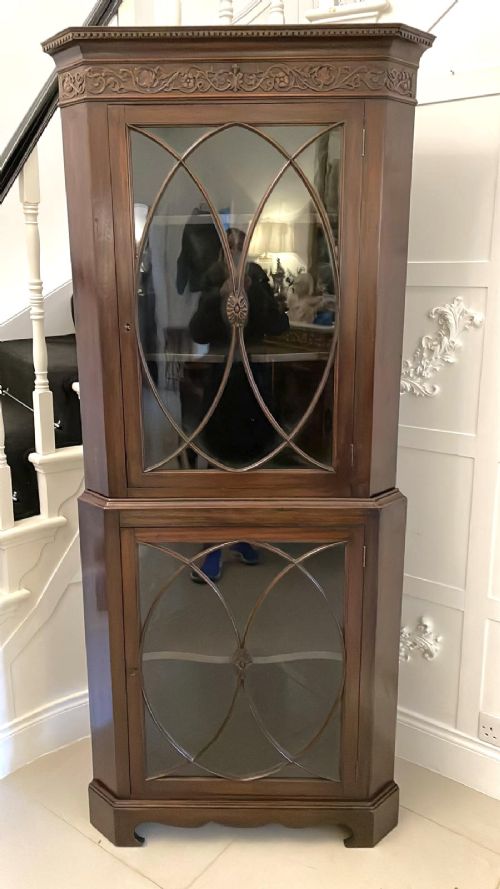
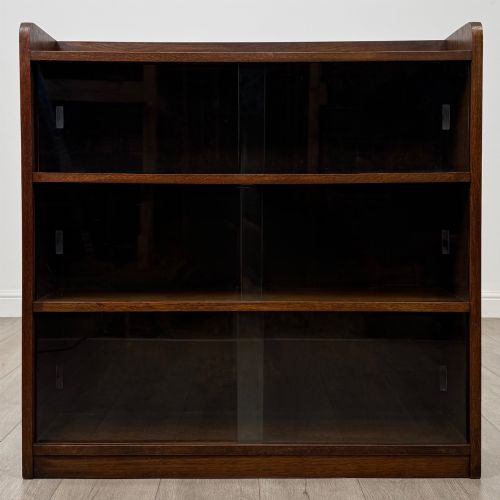
A tiered glass vitrine provides visible storage for small possessions through glass panels set within timber frames. The examples on this page span the nineteenth century, the Edwardian era, and the nineteen-thirties, reflecting diverse stylistic revivals.
Most entries here take the form of display cabinets, corner cabinets, and bookcases with glazed doors. Woods such as mahogany, oak, satinwood, and sycamore form the primary structures, often enriched with painted details or marquetry.
The selection ranges from Sheraton Revival satinwood pieces and French Directoire styles to Art Deco sycamore and walnut combinations. Buyers frequently encounter corner cabinets and freestanding display furniture designed to maximise light across multiple levels.
Materials and construction methods
Cabinet makers utilised solid and veneered hardwoods including mahogany, oak, and satinwood to build the structural carcase. Glazing techniques secured glass panes within timber frames, using astragal bars to divide the apertures on traditional models.
Decorative surfaces relied on wood inlay, marquetry, and painted details to add visual interest to the timber. Brass hardware frequently secured the doors and provided functional handles for daily use.
Tiered Glass Vitrine Retail Price Guide 2026
Typical asking prices for tiered glass vitrine among the pieces listed under this phrase on Sellingantiques today, from the lower quarter to the upper quarter. They describe what is for sale here now, not the wider market.
The listings span from the nineteenth century through the Edwardian period to nineteen-thirty, uniting mahogany, oak, satinwood, and sycamore.
Distinctions in quality
The sophistication of the timber work and decorative embellishments largely determines the standing of each piece. Finer examples incorporate detailed marquetry, painted motifs, and carefully chosen veneers rather than plain surfaces.
Proportion and the execution of the glazing bars reveal the skill of the original workshop. Clean lines in the framing and well-fitted sliding or hinged glass doors indicate superior execution.
The Tiered Glass Vitrine Glossary
- Astragal
- A moulding profile used to hold glass panes within a sash or door. These wooden bars create a grid pattern across the glazed sections.
- Marquetry
- Decorative veneer work arranged in pictorial or geometric patterns using various coloured woods. This technique adorns the surfaces of higher grade cabinets.
- Satinwood
- A durable hardwood with a lustrous yellowish sheen employed in fine cabinet making. It appears frequently in Sheraton Revival pieces.
- Vitrine
- A glass-panelled cabinet designed specifically for displaying objects of curiosity or porcelain. The term originates from the French word for glass.
- Whatnot
- A piece of freestanding furniture featuring multiple open shelves for display. Victorian examples sometimes combine this form with glazed cabinet elements.
Tiered Glass Vitrine: Frequently Asked Questions
What is a tiered glass vitrine used for?
These cabinets serve to display porcelain, small silver, and collected objects while protecting them from dust. The glass panels allow light to enter from multiple angles.
Historically placed in reception rooms and drawing rooms, they acted as focal points for displaying household treasures and curated collections.
How do I clean the glass and wood?
Dust the timber surfaces regularly with a soft, dry cloth and apply occasional specialist wax to nourish the grain. Avoid silicone sprays.
Clean the glass panels using a mild glass cleaner applied to a cloth rather than sprayed directly, preventing moisture from reaching the timber frames.
How can I tell an Edwardian piece from a nineteenth century one?
Edwardian examples often display lighter timbers like satinwood or sycamore, reflecting Sheraton and Georgian revival tastes. Construction methods remained precise.
Nineteenth century pieces tend to employ heavier mahogany frames, deeper carving, and more robust proportions typical of Victorian and earlier manufacturing.
Will a corner cabinet fit standard rooms?
Corner cabinets utilise unused wall junctions efficiently, making them suitable for smaller apartments or dining rooms where floor space is limited. Their triangular footprint projects less into the room than rectangular furniture.
Measure the height and wall depth carefully before placement to ensure the cornice clears picture rails and skirting boards.