




Tiered Glass Lamps
Tiered glass lamps bring layered illumination to a room, combining cut crystal drops and brass or gilt metal frames from the early twentieth century.
Tiered Glass Lamps
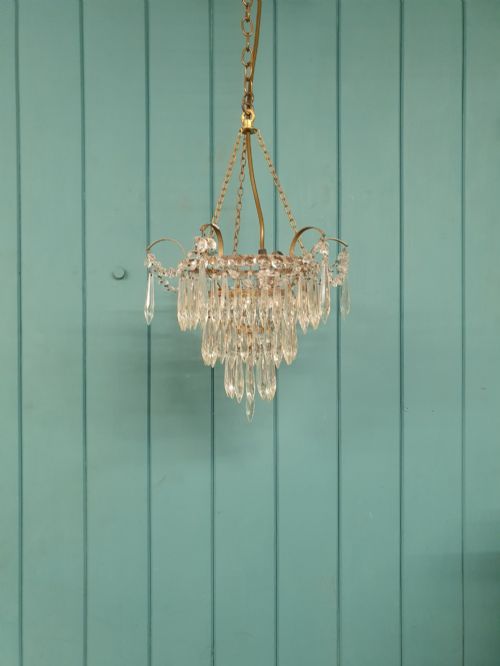
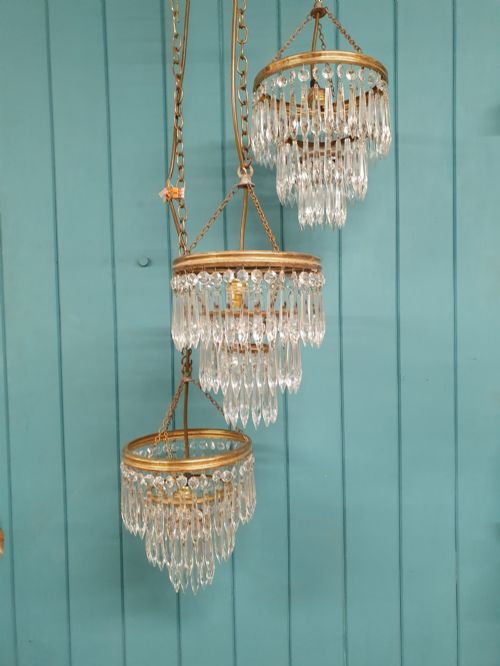
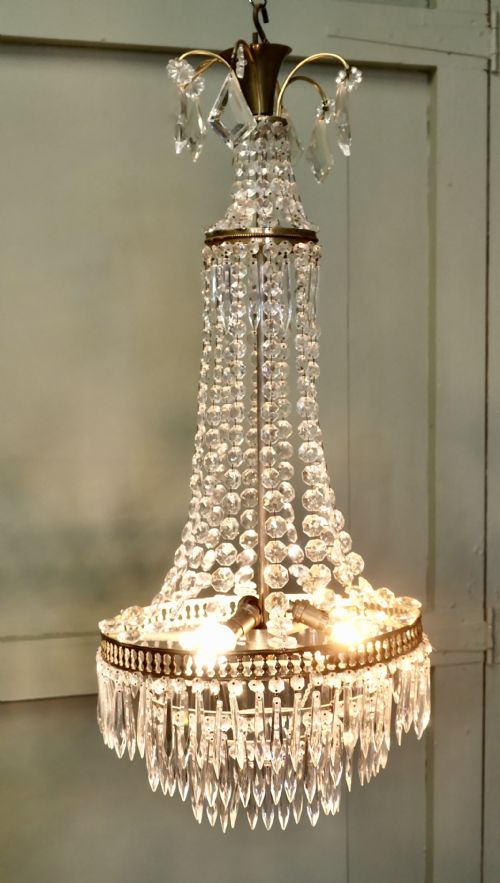
When buyers search for tiered glass lamps, they are usually examining multi-level chandeliers and pendant lights rather than standard table lamps. These pieces arrange glass and crystal drops across successive decks or rings of brass, gilt bronze, and iron.
The selections span the Edwardian era through the nineteen-thirties, incorporating French Empire, Regency, and French Chateau styles. Examples range from compact spike and drip chandeliers to large ballroom fixtures with numerous lights.
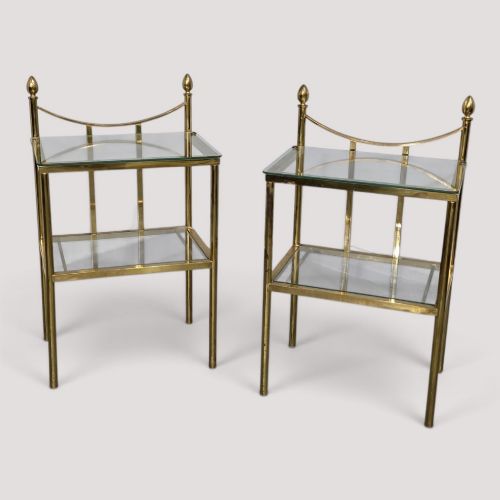
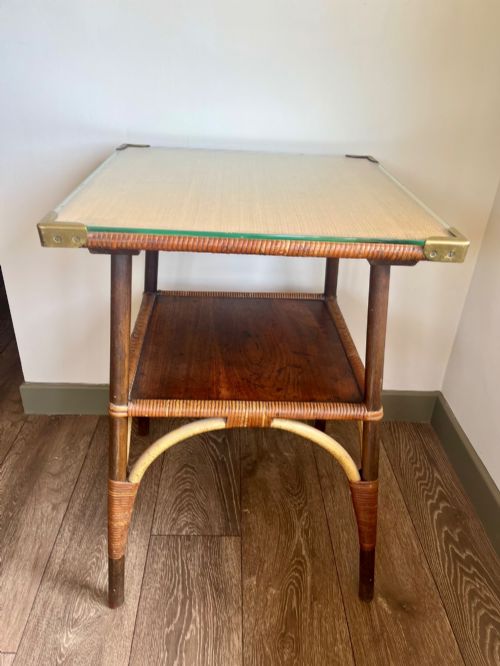
Buyers also encounter occasional lamp tables and side tables featuring glass and metal construction. The multi-tiered chandelier remains the dominant form within these configurations.
Materials and construction
Makers constructed the structural frames from brass, gilded bronze, cast iron, and metal. These metallic armatures support cascading arrangements of crystal glass, cut-glass drops, and beaded arms.
Specific forms utilise specialised decorative elements such as glass bunches of grapes, swag draperies, and waterfall crystal arrays. Metal components receive gilt or dark framing finishes to complement the reflective glass.
Tiered Glass Lamps Retail Price Guide 2026
Typical asking prices for tiered glass lamps among the pieces listed under this phrase on Sellingantiques today, from the lower quarter to the upper quarter. They describe what is for sale here now, not the wider market.
Some Edwardian chandeliers incorporate glass bunches of grapes among the crystal drops, adding a whimsical touch to the illumination.
Evaluating quality and proportion
Quality rests upon the density and cutting precision of the crystal drops and the weight of the brass or gilded bronze framework. Substantial frames hold multiple tiers securely without distortion.
The complexity of the tier configuration dictates the character of the piece, distinguishing simple drip or spike designs from expansive ballroom chandeliers with numerous lights.
Dryad Leicester
The Tiered Glass Lamps Glossary
- Tent and waterfall chandelier
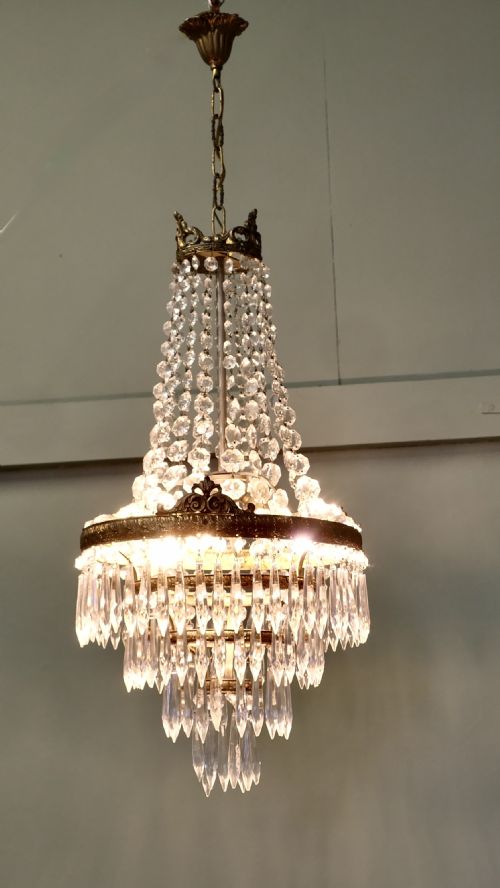
- A lighting fixture featuring an upper conical tent of strung beads cascading into a wider waterfall of crystal drops. This style defines many French Empire examples.
- Spike chandelier
- A compact multi-tiered hanging light characterised by an upright central spike supporting glass drops. These smaller fixtures often measure under ten inches.
- Gilded brass
- Brass treated with a thin layer of gold or gilt finish to enhance the metallic lustre of the frame. This material appears frequently on French chandeliers.
- Drop chandelier
- A light fixture heavily adorned with cut-glass or crystal pendants hanging from the tiers. The configuration amplifies light refraction.
Tiered Glass Lamps: Frequently Asked Questions
What periods do these glass lamps come from?
The pieces span from the late nineteenth century through the nineteen-thirties, including Edwardian and early twentieth-century examples.
Design influences draw heavily on French Empire, Regency, and French Chateau traditions.
How are multi-tiered chandeliers structured?
They feature successive horizontal decks or rings constructed from brass, gilt metal, or iron. These frames support arrangements of crystal glass drops, beads, and candle arms.
Smaller versions utilise spike or drip configurations, while larger pieces form extensive tent and waterfall structures.
Where should a tiered pendant light be hung?
These fixtures suit rooms with adequate ceiling clearance, such as living spaces, halls, and dining areas. Compact spike chandeliers fit smaller spaces, whereas large ballroom pieces require significant vertical room.
Matching lamp tables with glass and metal surfaces can coordinate with the lighting overhead.
What materials make up the frames?
Frames consist primarily of brass, gilded bronze, gilt metal, and dark-framed iron. These metals provide the structural support necessary for heavy crystal drops and multi-light arrangements.
Glass elements include cut-glass drops, beads, and decorative bunches of grapes.