



Tiered Dinner Stand
These tiered dinner stand pieces are sturdy serving furniture designed to hold dishes close at hand during formal meals.
Tiered Dinner Stand
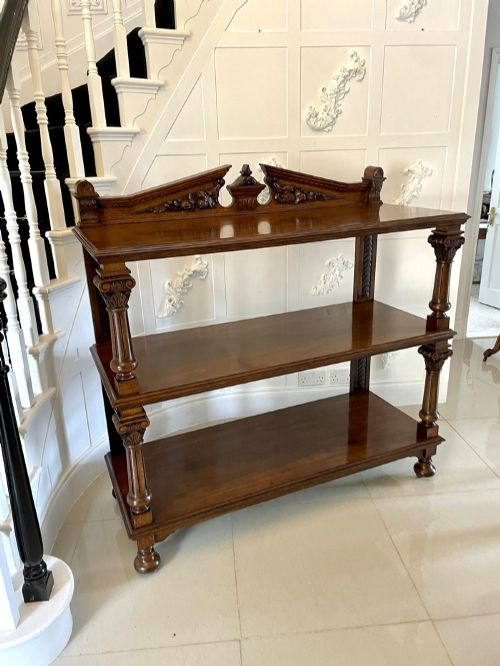
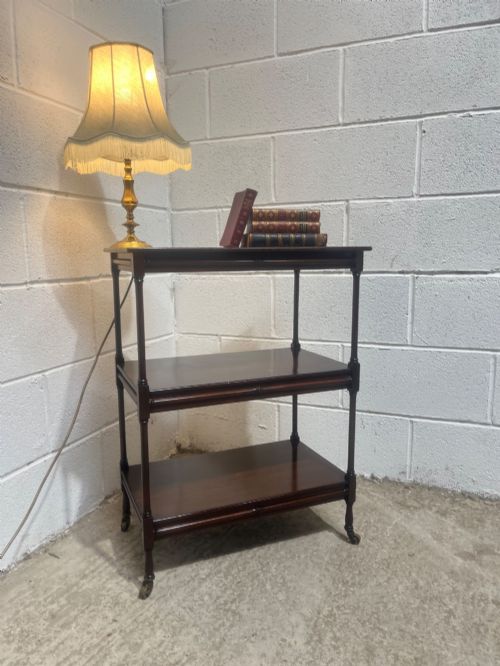
A tiered dinner stand typically takes the form of a buffet, dumbwaiter, or trolley with multiple shelves for holding food and tableware. These items range from mid-nineteenth-century examples up to pieces made around eighteen-eighty.
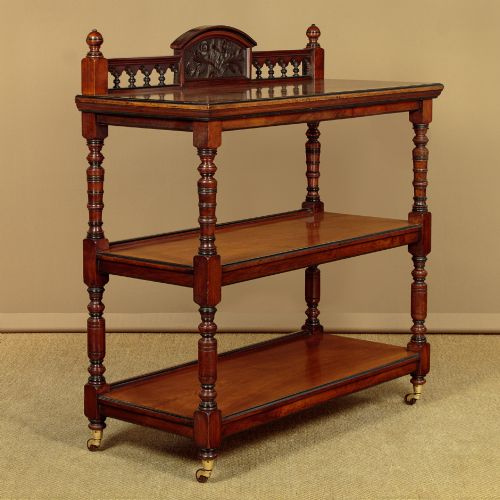
The versions most commonly met here include three-tier mahogany trolleys and walnut buffets. Makers produced these stands to assist with serving during large gatherings in dining rooms.
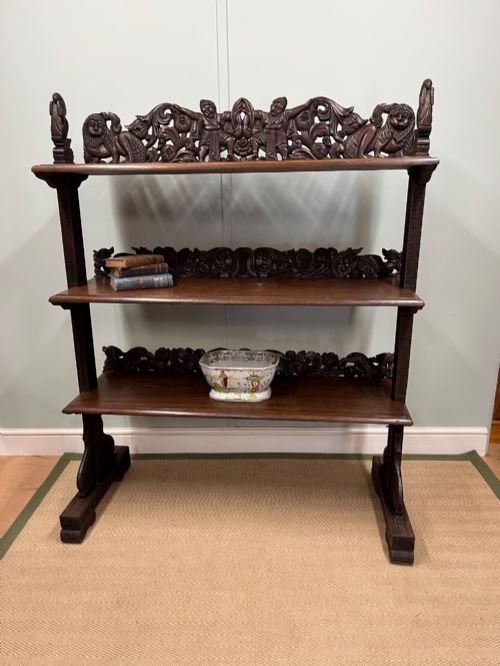
Formats vary from simple three-tier stands to adjustable buffets and rolling trolleys. Oak, teak, and walnut also appear alongside the more usual mahogany constructions.
How they were made
Cabinet makers constructed these stands using hardwoods such as mahogany, walnut, oak, and teak. Selected timbers provided the necessary strength to support multiple heavy serving tiers.
Brass fittings appear on adjustable mechanisms and castors, allowing the stands to move smoothly or alter in height. Carved details adorn the structural uprights on specific Victorian and Aesthetic Movement examples.
Tiered Dinner Stand Retail Price Guide 2026
Typical asking prices for tiered dinner stand among the pieces listed under this phrase on Sellingantiques today, from the lower quarter to the upper quarter. They describe what is for sale here now, not the wider market.
Some Victorian diners relied on adjustable tiers to keep the pudding warm while the meat course was cleared.
What varies in quality
The refinement of the timber grain and the crispness of any carved decoration set finer examples apart from standard utility pieces. Richly figured mahogany and walnut command greater attention from collectors.
Mechanical complexity also dictates value, particularly on fully adjustable stands where brass ratchets or screw mechanisms must operate smoothly. Maker attribution, such as work originating from Maple and Co, elevates a piece further.
Maple and Co
The Tiered Dinner Stand Glossary
- Dumbwaiter
- A multi-tiered piece of dining room furniture used for holding food and plates without the need for extra servants. These stands feature stacked circular or rectangular shelves supported by a central column or corner posts.
- Buffet
- A side table or shelving unit designed for food presentation and service in a dining room. Victorian versions often incorporate three tiers for maximum storage capacity.
- Trolley
- A serving stand fitted with castors for easy movement across dining room floors. The addition of wheels distinguishes this form from stationary dumbwaiters.
- Aesthetic Movement
- A late nineteenth-century design style focusing on visual beauty rather than narrative meaning. Furniture from this period often exhibits clean lines and dark walnut timbers.
Tiered Dinner Stand: Frequently Asked Questions
What is a tiered dinner stand used for?
These pieces served as auxiliary storage for dishes, cutlery, and food during large Victorian meals. They kept extra plates within arm's reach of the dining table.
Hosts utilised them to clear courses quickly without burdening dining room staff. Today they function well as display furniture in living spaces.
How do I identify a Victorian stand?
Look for dense hardwoods like mahogany and walnut paired with characteristic nineteenth-century construction methods. Turned columns and brass castors often point to this era.
Stylistic cues such as Aesthetic Movement carving help narrow down the date further. Most pieces originate from the middle to late nineteenth century.
Are these stands difficult to maintain?
Routine care involves dusting the timber and applying appropriate wax to nourish the polish. Avoid placing them in direct sunlight to prevent the wood from fading.
Brass components benefit from gentle cleaning if tarnished. Keeping the wood away from extreme temperature changes protects the joints.
What woods were used for these pieces?
Mahogany is the most frequent material found across these serving stands. Walnut, oak, and teak also appear in various nineteenth-century examples.
Cabinet makers selected these timbers for their durability and grain pattern. Brass hardware often complements the dark wood tones.