




Tiered Book Rack
A tiered book rack brings order to a room through stacked wooden shelves designed to keep volumes within arm's reach.
Tiered Book Rack
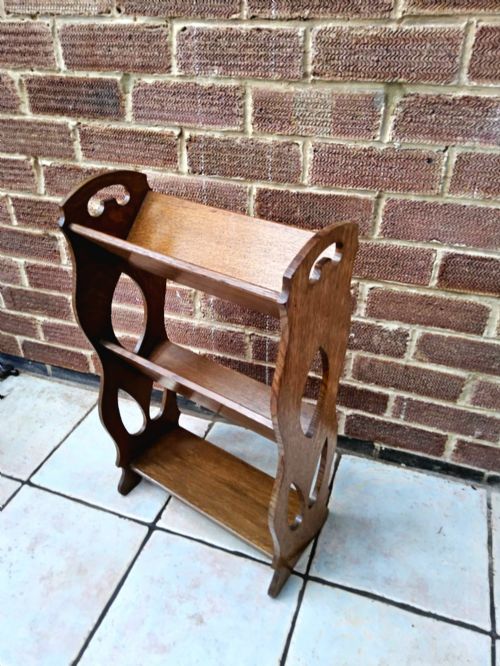
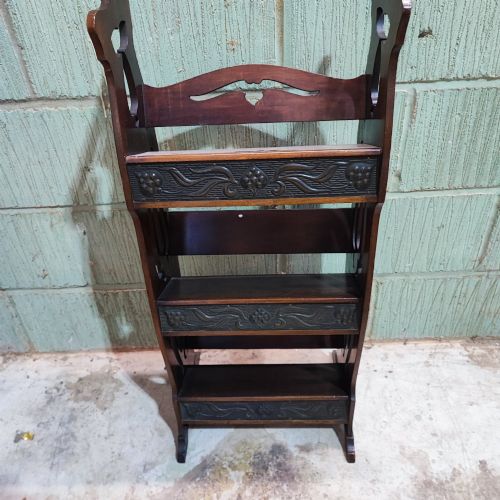
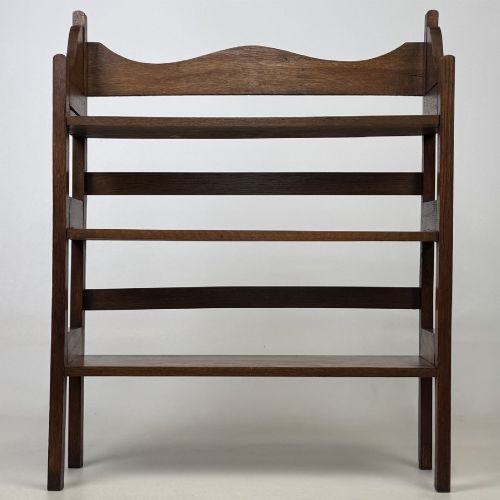
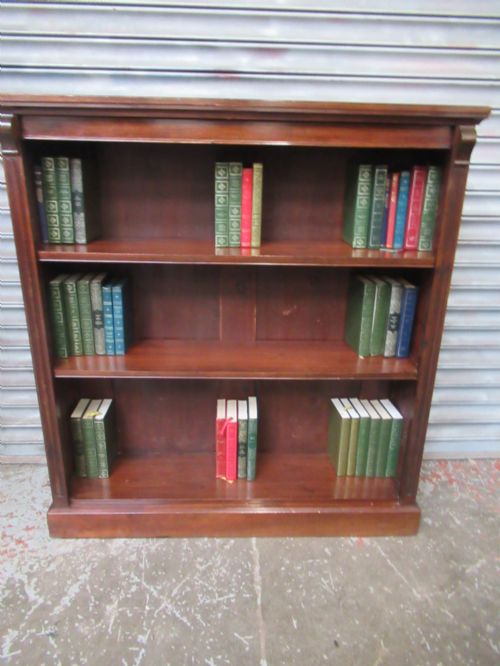
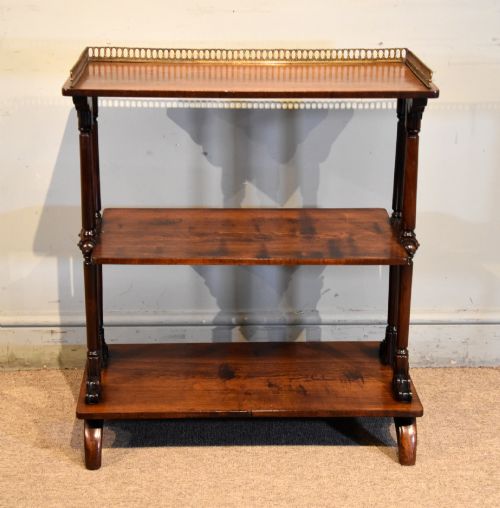
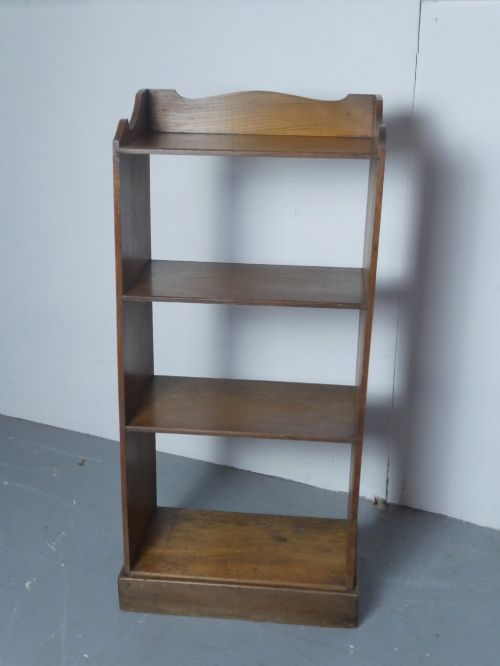
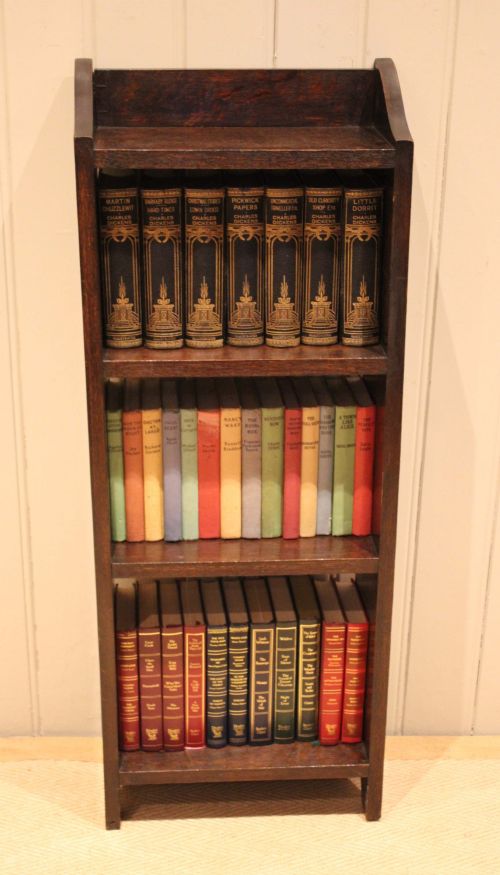
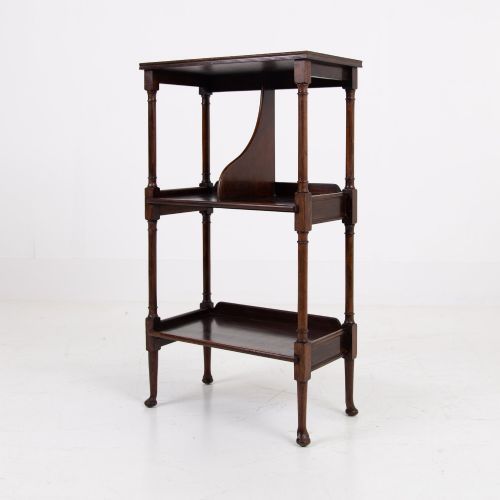
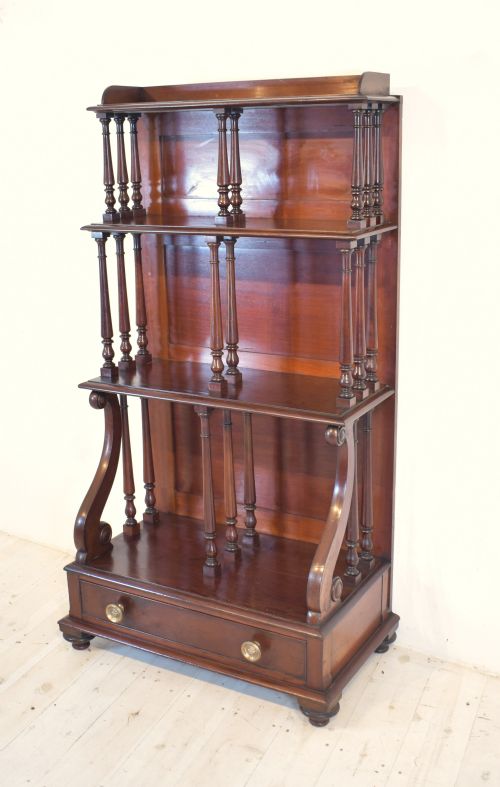
A tiered book rack groups volumes and papers across multiple horizontal levels to display or store texts efficiently in domestic spaces. These pieces appear across periods from the nineteenth century through the Edwardian era, taking forms such as open bookcases, whatnots, book troughs, and wall shelves.
Makers adapted the form to suit Victorian libraries, Edwardian parlours, and Arts and Crafts interiors alike. The resulting variety spans simple functional shelving to decorative display pieces with inlaid woods and brass galleries.
Materials and construction
Makers relied primarily on hardwoods like mahogany, oak, and rosewood, sometimes incorporating satinwood for contrast or walnut and paint for alternative finishes. These timbers provided the structural rigidity needed to support rows of heavy books across multiple shelves.
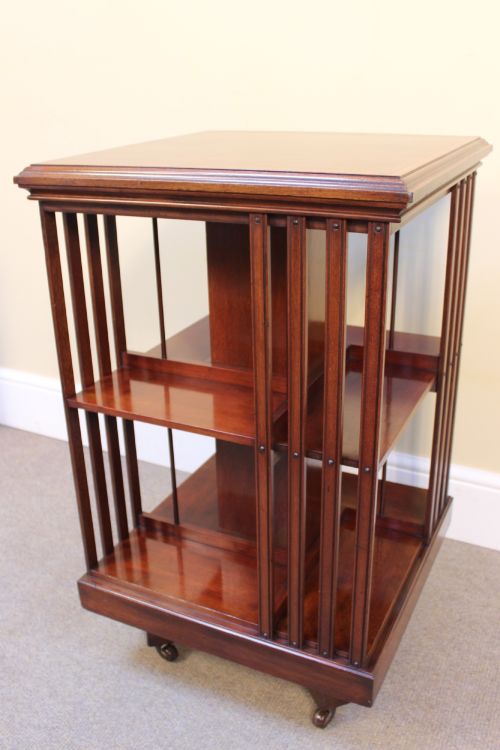
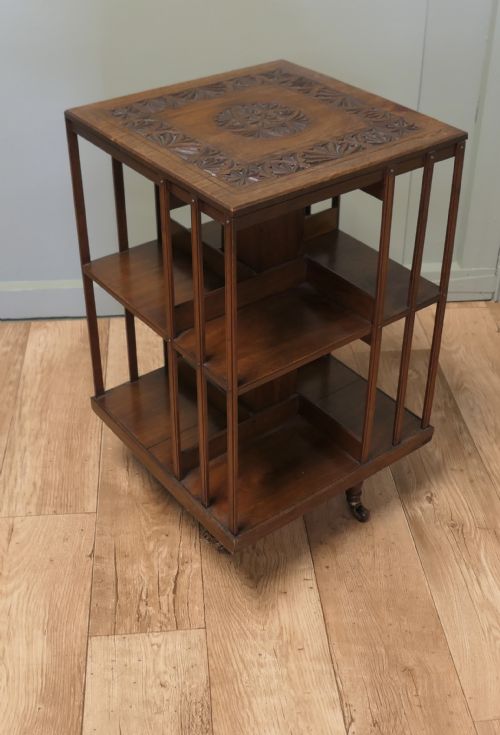
Metal components appear in brass galleries, iron details, and cast iron mechanisms that allow certain bookcases to revolve smoothly. Inlaid decoration, carved details, and raised galleries finish the edges of shelves to keep volumes secure.
Tiered Book Rack Retail Price Guide 2026
Typical asking prices for tiered book rack among the pieces listed under this phrase on Sellingantiques today, from the lower quarter to the upper quarter. They describe what is for sale here now, not the wider market.
Some nineteenth-century makers added brass galleries simply to stop dictionaries from sliding off when the cat jumped over.
Qualities of construction and finish
The refinement of the timber and the crispness of any carving or inlay separate standard utility pieces from more ambitious commissions. Grain matching across shelves and the integration of brass galleries indicate greater care during manufacture.
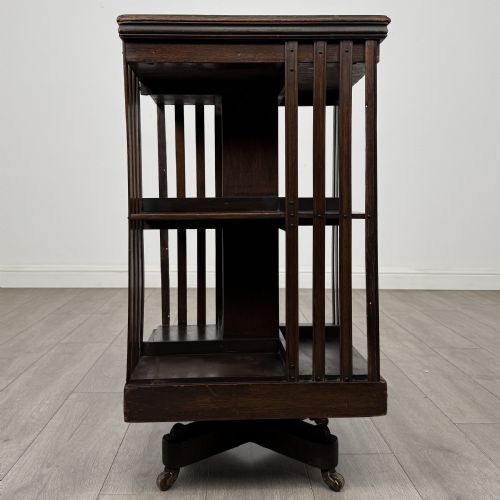
Mechanisms on revolving stands operate with smooth rotation and steady balance when loaded with weight. Joinery details, such as dovetailed boards and sturdy vertical supports, ensure long-term stability for heavier book collections.
Waring and Gillows
The Tiered Book Rack Glossary
- Book Trough
- A V-shaped or open-fronted trough designed to hold books upright or at a slant for easy browsing. These units frequently sit on desks, tables, or hearths.
- Whatnot
- A multi-shelved piece of furniture used for displaying ornaments, books, or small possessions. They appear in configurations of two or more tiers.
- Revolving Bookcase
- A freestanding bookcase mounted on a pivot mechanism that allows the unit to spin. This enables access to books from all sides without moving the piece.
- Raised Gallery
- A low decorative railing or rim around the top edge of a shelf or table. It prevents books and objects from sliding off the surface.
Tiered Book Rack: Frequently Asked Questions
Where should I place a tiered book rack?
These pieces fit naturally beside reading chairs, on top of sideboards, or mounted directly to walls depending on the specific form. Floor-standing revolving models work well beside sofas where access from multiple angles is useful.
Smaller trough formats sit comfortably on desks or tables to keep current reading material close at hand without taking up excessive floor space.
How do I distinguish Edwardian pieces from Victorian ones?
Victorian examples often employ heavier rosewood or mahogany timbers with deeper mouldings and occasionally marble tops or brass inlay. The proportions tend to be robust and formal in keeping with nineteenth-century interiors.
Edwardian pieces frequently utilise lighter mahogany or oak, often incorporating simpler inlaid lines, slatted sides, or delicate wall-hanging brackets suited to brighter rooms.
What is the difference between a bookcase and a whatnot?
A bookcase is primarily structured for the vertical or horizontal storage of bound volumes with dedicated shelf space. They focus on holding heavy reading material securely.
A whatnot is generally lighter and designed for display, featuring open tiers that accommodate books alongside decorative objects, ceramics, or small ornaments.
Can these racks hold heavy modern books?
Most solid wood iterations in oak and mahogany possess sturdy timber construction capable of supporting standard hardcover volumes. However, checking the thickness of the shelves and the strength of the vertical supports is wise before loading heavy art folios.
Revolving stands distribute weight over a central pivot, so balancing heavier books evenly across the compartments ensures smooth rotation.