

Three Stone Diamond
Three stone diamond pieces offer a historical lineage of trilogy designs spanning Victorian, Edwardian, and Art Deco periods.
Three Stone Diamond
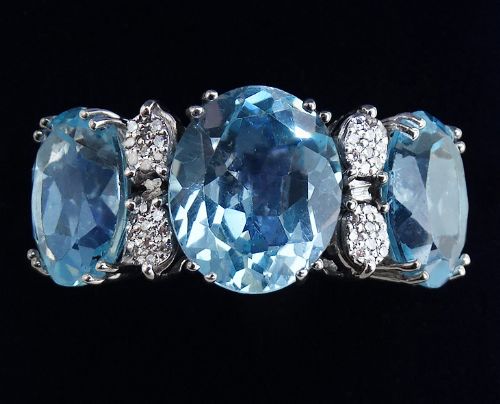
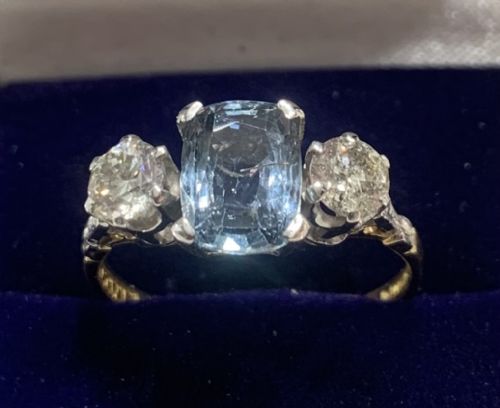
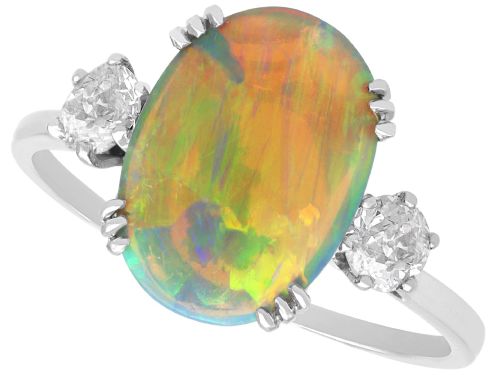
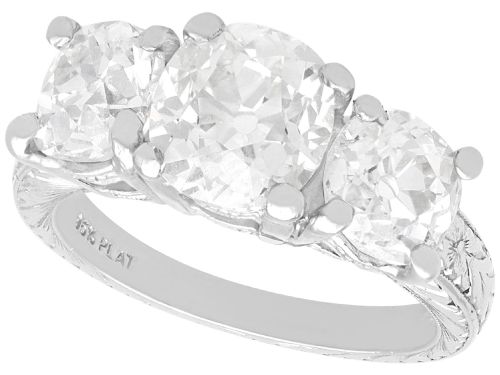
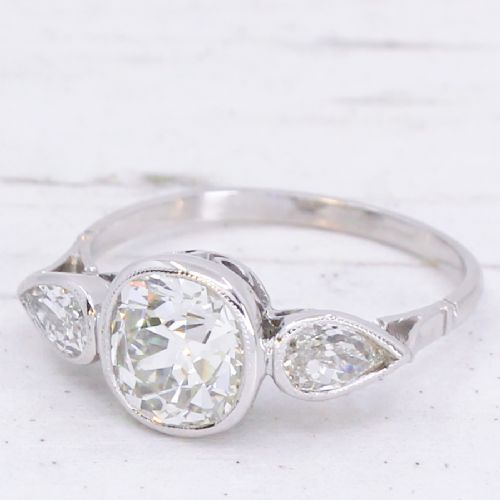
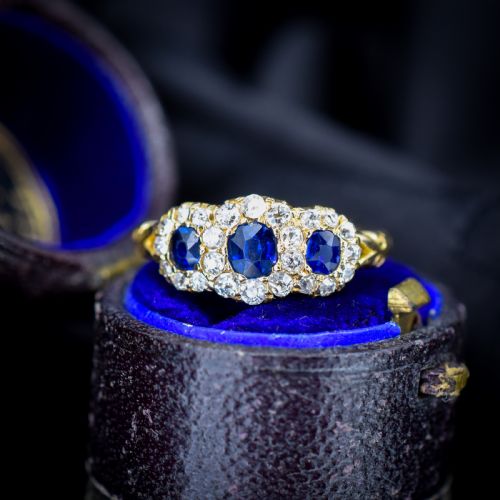
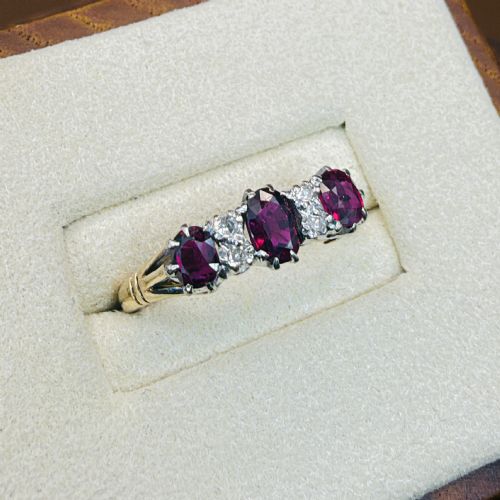
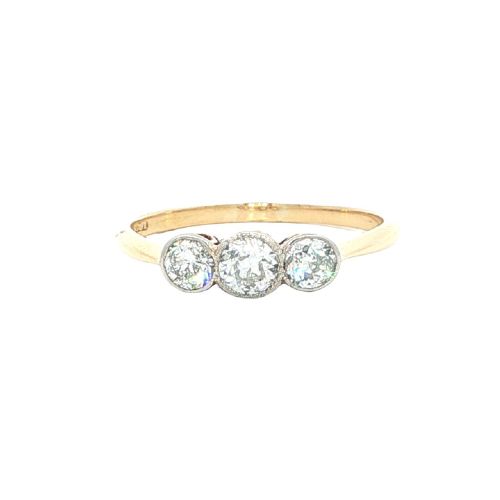
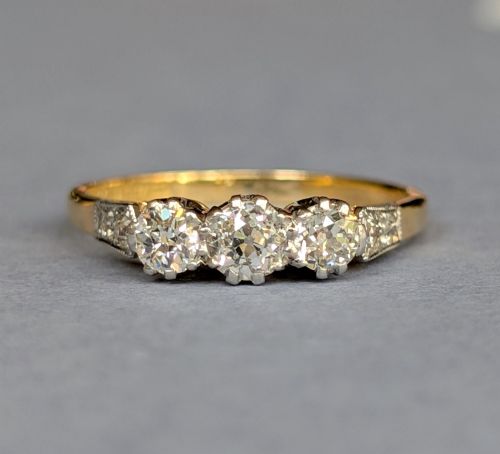
A three stone diamond search typically reveals antique and vintage rings and pendants featuring a central stone flanked by two side gems. These items appear frequently in Victorian, Edwardian, and Art Deco forms.
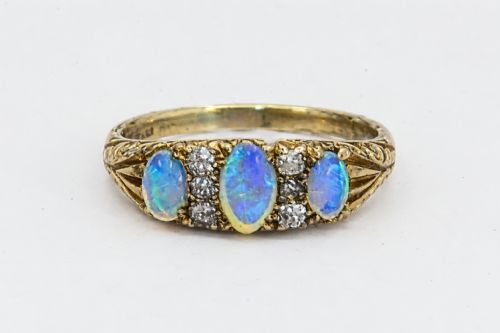
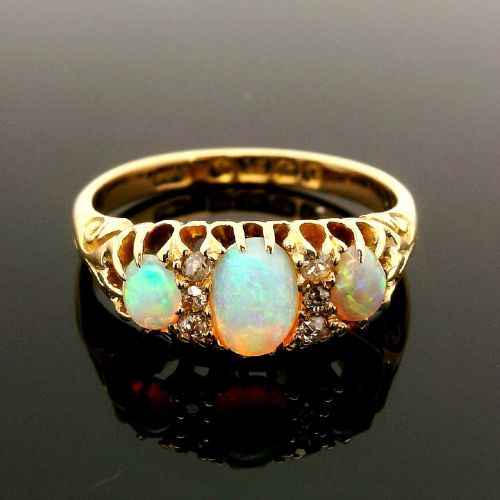
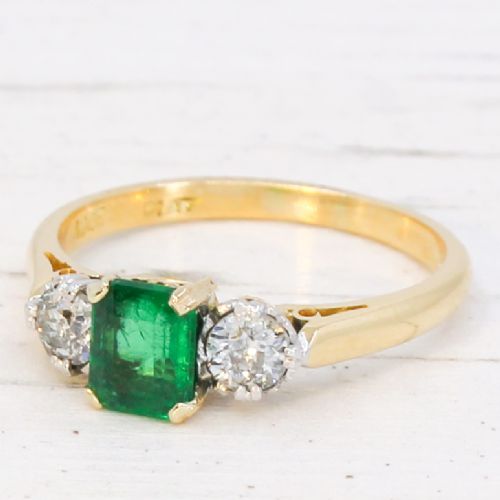
The selection ranges from traditional diamond trilogy configurations to combinations incorporating rubies, sapphires, emeralds, and opals.
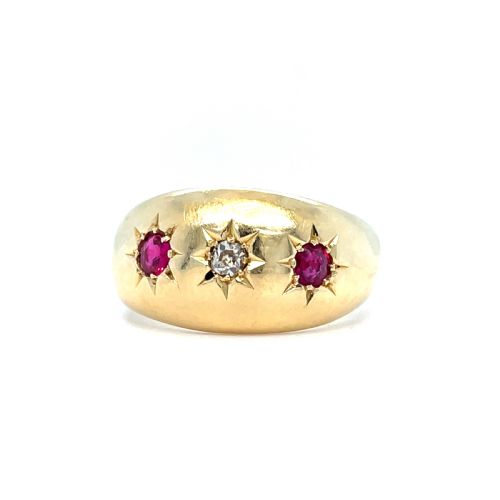
Makers often utilised yellow gold, white gold, and platinum to mount these stones in boat, gypsy, or cluster arrangements.
Materials and Craftsmanship
Goldsmiths constructed these settings using 18ct yellow gold, white gold, and durable platinum, frequently combining metals to highlight the stones.
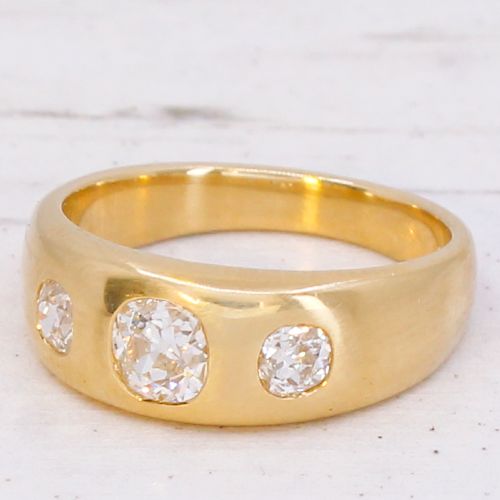
Diamonds were hand-cut into old cushion, old mine, or old cut shapes, then secured alongside coloured gems like sapphires and rubies.
Techniques such as gypsy setting and claw setting defined the silhouettes across the nineteenth and twentieth centuries.
Listings span from the 19th century through the Victorian, Edwardian, Art Deco, and Mid-Century periods.
Assessing Quality and Character
The standard of a piece depends on the matching and proportion of the three primary stones, particularly old cut diamonds.
The integrity of the original metalwork, whether platinum or 18ct gold, dictates the longevity and preservation of the setting.
Subtle details in hand-carved shoulders and hallmarks provide context on the origin and period authenticity.
The Three Stone Diamond Glossary
- Trilogy ring
- A ring set with three stones, often representing the past, present, and future. This layout is central to many historical designs.
- Old cut diamond
- A diamond cut by hand before modern machinery, characterised by a smaller table and high crown. These stones produce a softer candlelight sparkle.
- Gypsy ring
- A style where stones are flush-set directly into the band rather than raised in claws. It was popular in the Victorian and Edwardian eras.
- Platinum
- A dense, white precious metal frequently utilised in Edwardian and Art Deco jewellery for its strength and fine detailing.
- Boat ring
- A navette-shaped setting that curves across the finger, often incorporating multiple stones in a horizontal line.
Three Stone Diamond: Frequently Asked Questions
How do I identify a Victorian three stone ring?
Victorian examples often use 18ct yellow gold and feature old cut diamonds, sometimes combined with turquoise, opals, or rubies in gypsy or cluster settings.
Hallmarks and the specific hand-formed contours of the metal help confirm this nineteenth-century origin.
Are Art Deco three stone rings made of platinum?
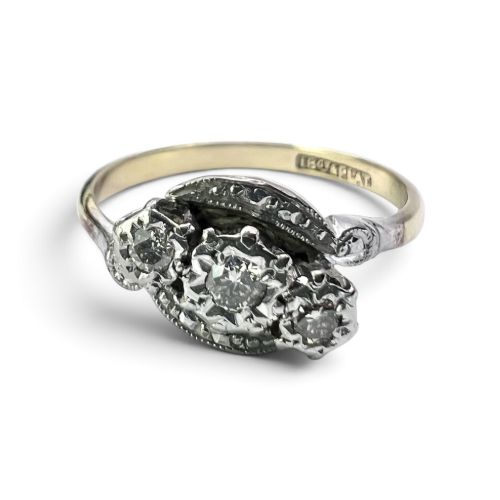
Art Deco pieces from the 1920s frequently utilise platinum for its strength, allowing for precise geometric settings around the diamonds and sapphires.
Some pieces from this period also combine platinum tops with 18ct gold bands.
Can I wear a vintage trilogy ring daily?
Many buyers wear these historical rings daily, provided the setting and metal are checked for wear.
Consider the hardness of any accompanying side stones like opals or emeralds when planning frequent wear.