

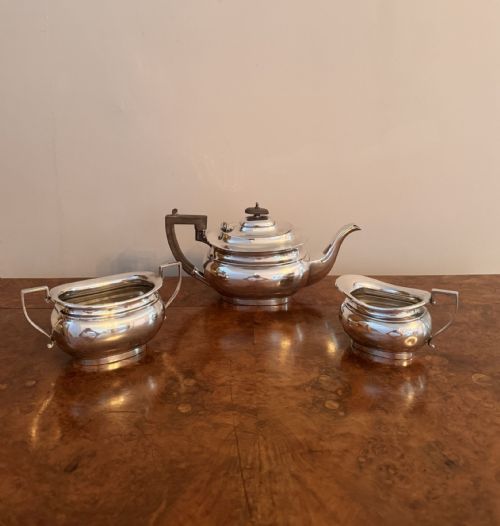
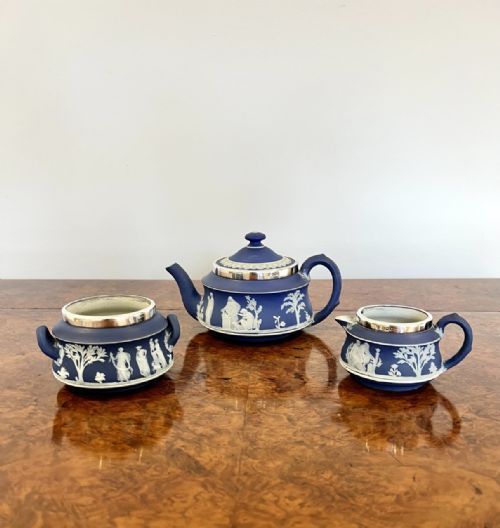


Three Piece Silver Tea Set
A three piece silver tea set brings the ritual of formal afternoon hospitality straight to the table with enduring style.
Three Piece Silver Tea Set
A three piece silver tea set comprises a teapot, a milk jug, and a sugar basin, forming the core vessels required for tea service. Buyers searching for a three piece silver tea set encounter examples spanning the Victorian, Edwardian, and later twentieth-century periods.
The configurations appear in both solid silver and silver plate, frequently reflecting Victorian or Edwardian design aesthetics. Many surviving services originate from renowned manufacturing hubs such as Sheffield and London, alongside specialist maker workshops.
The form adapts to different scales, ranging from compact bachelors sets intended for smaller households to substantial family services. These groupings capture the domestic tastes of nineteenth and twentieth-century dining.
Materials and construction methods
Silversmiths utilised solid sterling silver or applied silver plating over base metal substrates, shaping the bodies through spinning, hammering, or casting. Handles often incorporate insulating materials such as ebony, ebonised wood, or standard wood to prevent heat transfer during use.
Surface decoration relies on traditional techniques including embossing, chasing, and engraving to produce floral motifs, scrolls, or geometric patterns. Specialised components like Jasperware ceramic inserts appear in specific Victorian configurations alongside metal frameworks.
Three Piece Silver Tea Set Retail Price Guide 2026
Typical asking prices for three piece silver tea set among the pieces listed under this phrase on Sellingantiques today, from the lower quarter to the upper quarter. They describe what is for sale here now, not the wider market.
Factors determining quality
Quality rests upon the crispness of the chased or embossed detail and the structural integrity of the joints connecting handles and spouts to the body. Heavier gauge metalwork and balanced proportions distinguish finer services from standard commercial production.
The preservation of the original silver plating or the purity hallmarks on solid silver pieces dictates the long-term desirability of the set. Well-executed maker marks from established firms further elevate the standing of an individual service.
Walker & Hall·Goldsmiths & Silversmiths Co.·Atkin Brothers·Elkington·Charles Stuart Harris·Asprey & Co·Harrods
The Three Piece Silver Tea Set Glossary
- Silver Plate
- A thin layer of silver bonded to a base metal core through electroplating or older fusion methods. This technique allowed makers to offer affordable alternatives to solid sterling silver.
- Bachelors Set
- A smaller scale three piece tea service designed for individual use or intimate households. These compact sets typically feature reduced teapot capacities.
- Jasperware
- A type of fine stoneware developed by Wedgwood featuring a matte surface, most commonly seen in blue with applied white neoclassical reliefs. It appears mounted within specific Victorian tea set designs.
- Chasing
- A metalworking technique where the smith hammers the exterior of the silver to push patterns into relief without removing metal. It creates intricate scrollwork and floral designs across the body of the pot.
- Hallmark
- An official stamp applied to precious metals indicating the standard of purity, the assay office, and the date letter. These marks provide definitive evidence of origin and age.
Three Piece Silver Tea Set: Frequently Asked Questions
What pieces make up the set?
A standard grouping consists of a teapot, a milk jug, and a sugar basin. These three vessels provide the essential components for serving tea with milk and sugar.
Additional items such as matching trays or kettles are sometimes associated with larger services, but the core configuration remains three pieces.
How do I clean silver tea sets?
Use a specialised silver polish applied with a soft cloth, working gently around engraved or chased details. Avoid abrasive materials that can wear away silver plating or scratch solid surfaces.
Rinse the vessels thoroughly in warm water and dry them completely with a soft lint-free cloth to maintain the shine.
Can I still use these for tea?
Many people continue to use silver and silver-plated services for daily or occasional tea service. Solid silver and plated vessels are food safe, provided the interior is clean.
Check for wooden or ebony handle insulators to ensure they remain secure and watertight before filling the pot with boiling water.
How do I identify the date?
Solid silver pieces carry hallmarks that include date letters corresponding to specific assay office records in cities like London, Chester, or Sheffield. These stamps allow precise dating down to the exact year.
Silver-plated sets rely on maker marks, registry numbers, or stylistic clues from periods like the Victorian and Edwardian eras to establish an approximate date range.