



Three Light Metal Pendant
A three light metal pendant brings focused illumination and period charm to a room, offering compact elegance for lower ceilings.
Three Light Metal Pendant
A three light metal pendant encompasses compact multi-arm chandeliers, hanging lanterns, and ceiling light fixtures designed with three distinct illumination points. Buyers seeking a three light metal pendant typically encounter fixtures originating from the nineteenth century up through the nineteen-thirties, spanning Edwardian, Art Deco, and revivalist European aesthetics.
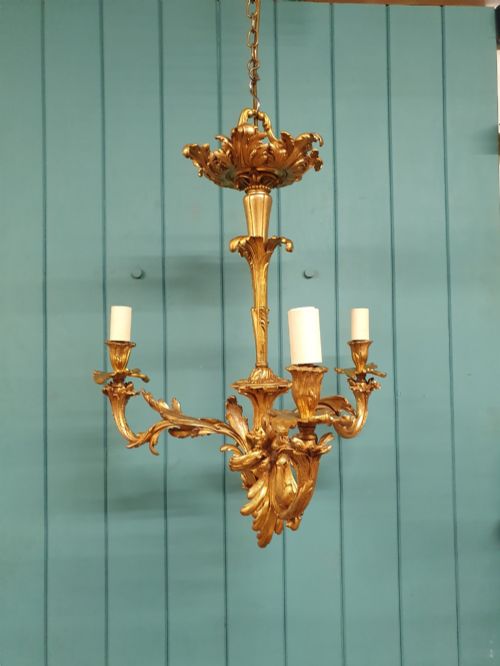
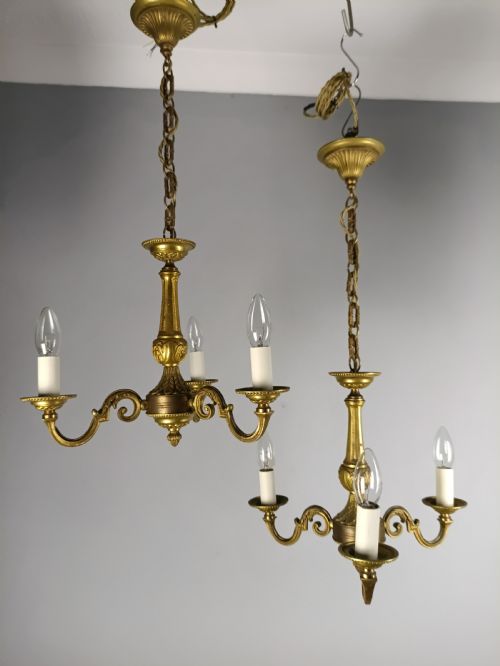
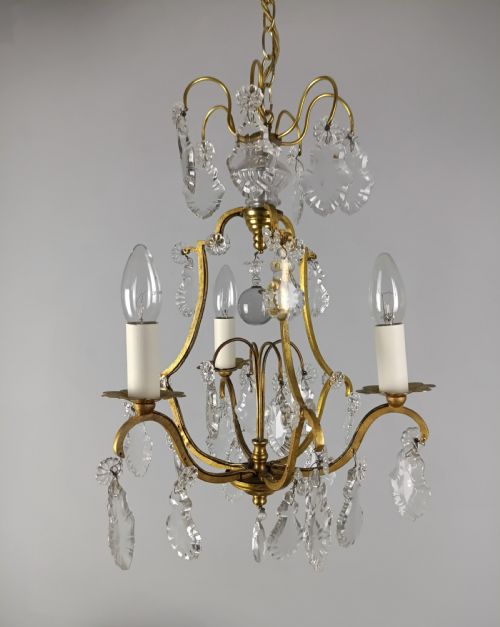
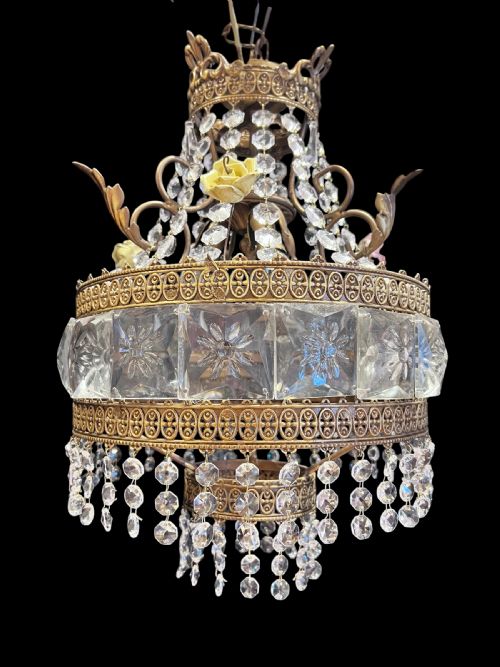
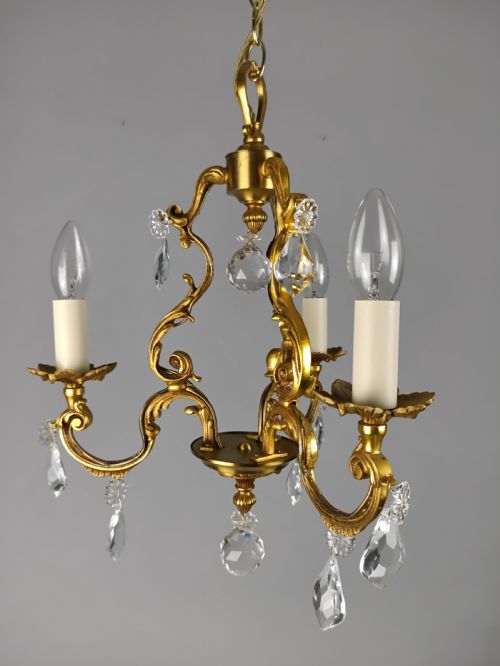
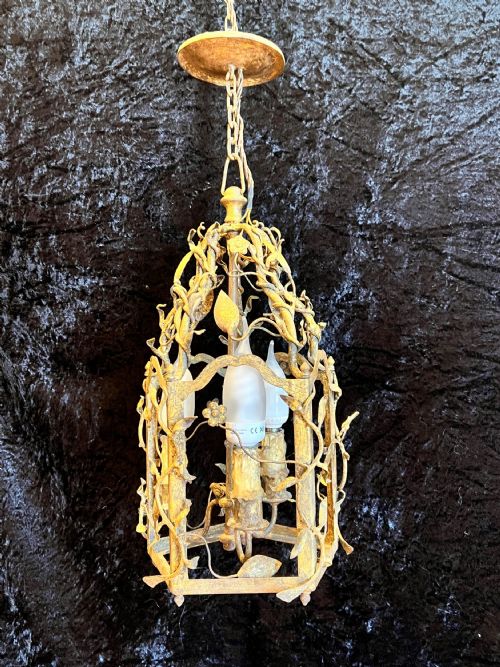
The selections on this page lean heavily toward continental European designs, particularly French gilt brass birdcage chandeliers and Italian rustic lanterns. These smaller scale fixtures provide sufficient brightness for intimate spaces while retaining the decorative presence of larger period fittings.
Materials and construction methods
Metalwork forms the structural backbone of these pieces, utilising cast and chased brass, gilt bronze, wrought iron, and plain metal frames. Artisans shaped these metals into structural arms, intricate birdcage frameworks, and decorative lanterns that support the electrical or candle-holding components.
Glass and crystal elements integrate directly into the metal armature, ranging from faceted crystal drops on French chandeliers to delicate porcelain flowers adorning Italian examples. These components reflect light through the fixture and soften the metallic finish of the primary frame.
Three Light Metal Pendant Retail Price Guide 2026
Typical asking prices for three light metal pendant among the pieces listed under this phrase on Sellingantiques today, from the lower quarter to the upper quarter. They describe what is for sale here now, not the wider market.
Some Italian lanterns come complete with tiny porcelain petals that rustle softly whenever someone walks beneath them.
Assessing quality in period fixtures
Quality rests upon the crispness of the metal casting and the depth of the original gilding or patination. Finer examples display sharp detail in chased bronze or brass surfaces, whereas simpler productions rely on plain metal or heavier, less refined castings.
The integration of decorative adornments dictates the upper tier of these pieces. Fixtures featuring hand-formed porcelain floral elements, intact crystal pendants, and balanced proportions demonstrate superior craftsmanship compared to basic utilitarian variants.
The Three Light Metal Pendant Glossary
- Birdcage chandelier
- A skeletal metal frame shaped like an avian enclosure, frequently hung with crystal prisms and drops. This form gained popularity in French lighting design during the early twentieth century.
- Gilt bronze
- Metalwork treated with a gold layer or mercury gilding to produce a rich, reflective golden surface. This material resists tarnish and was favoured in nineteenth-century formal salons.
- Rococo revival
- A nineteenth-century design style mimicking the asymmetrical scrolls, natural motifs, and ornate flourishes of the eighteenth-century French court. It appears frequently in Italian and French lighting.
- Wrought iron
- Iron heated and hammered into shape by a smith rather than cast in a mould. This technique yields sturdy, textured frames common in rustic or Arts and Crafts lighting.
Three Light Metal Pendant: Frequently Asked Questions
Where should I hang a three light pendant?
These compact fixtures suit hallways, dining nooks, or smaller bedrooms where standard multi-arm chandeliers overwhelm the square footage. Their limited spread allows for placement above furniture without obstructing movement.
Ensure adequate clearance from the floor while positioning the pendant as a central focal point in the room. Lower ceilings benefit particularly from the modest drop length typical of these fixtures.
How do I date a metal pendant?
Dating relies upon stylistic markers, material composition, and manufacturing techniques visible in the metal armature. Edwardian and nineteen-twenties pieces often display cleaner geometric lines or specific regional revival motifs.
Examining the wiring methods, joining techniques, and screw types helps distinguish nineteenth-century examples from later twentieth-century reproductions. Consulting the listed period provides the primary chronological anchor.
How do I clean a gilt brass chandelier?
Dust the metal framework gently with a soft, dry brush to prevent accumulation without disturbing the patina. Avoid abrasive metal polishes that strip away original gilding or surface finishes.
Crystal drops and porcelain flowers remove easily for gentle washing in warm soapy water before reattachment. Regular, careful maintenance preserves the historical surface integrity of the metal.